Multicultural influences balancing fantasy with reality
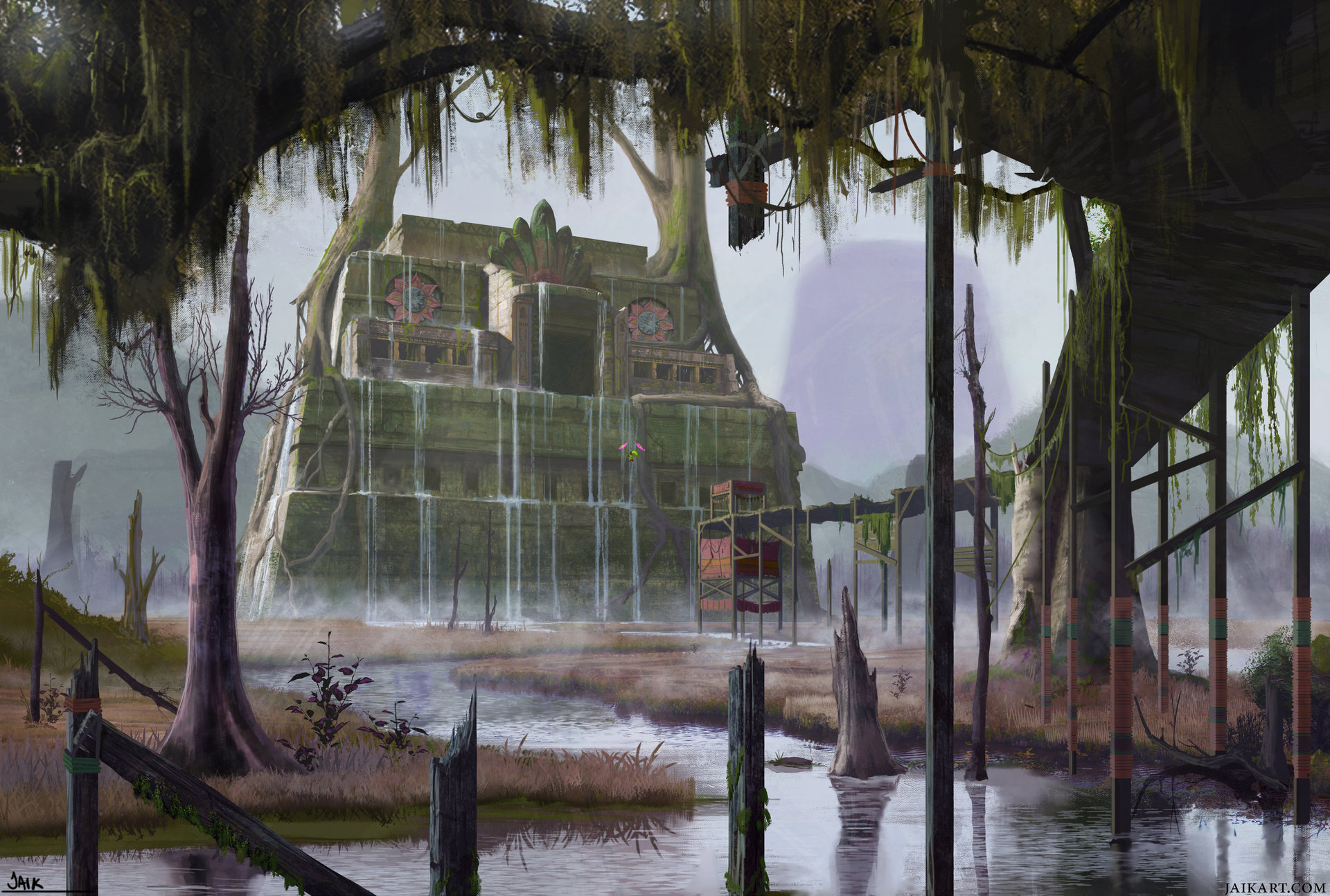
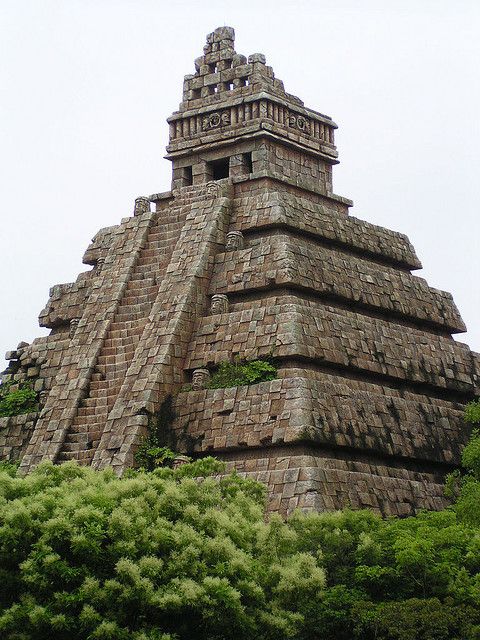
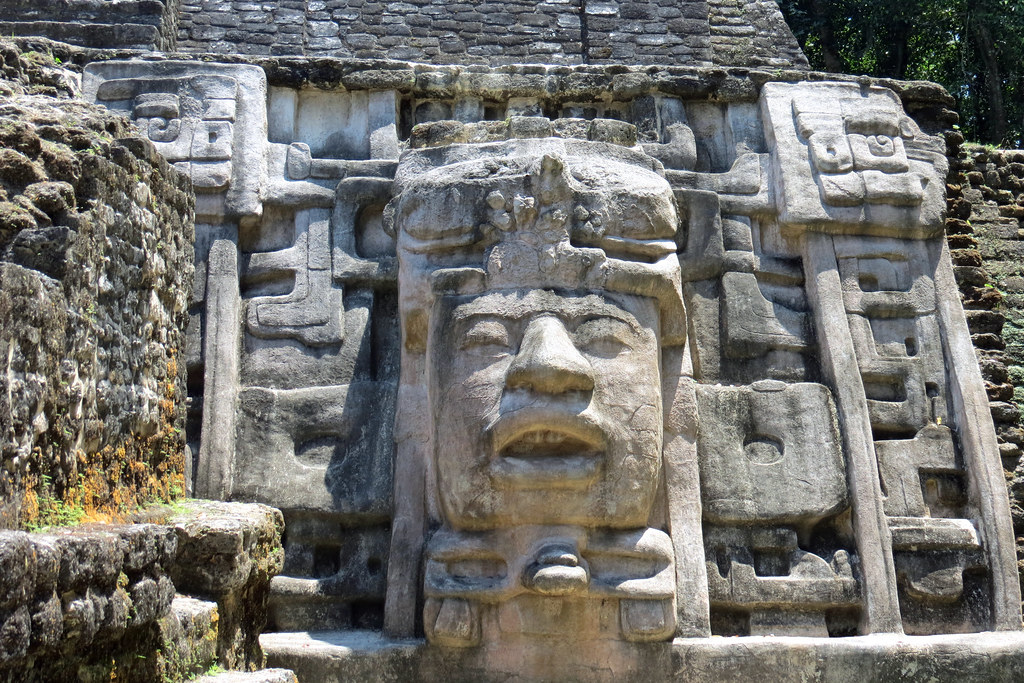
In typical Zelda fashion, the first of the four dungeons from Majora’s Mask is based around a forest/jungle motif, full of green landscapes, flowers and animal monsters. The Woodfall Temple, belonging to the Deku tribe, the new culture that is replacing the Kokiri, is a square shaped pyramid with a flat top, located at the top of the swamp mountain; it is designed around the prominent forms of ancient Mesoamerican architecture like the Maya and the Aztec cultures, which are significantly interrelated. These styles developed throughout the different phases of Mesoamerican history as a result of the intensive cultural exchange between the different people of the area through thousands of years. Nonetheless, Majora’s Mask is a more free form game than its predecessor, so it is even more flexible in the way it mixes elements from cultures. Anything goes basically as long as it feels tribal and jungle-like.
The temple also has a darkness motif, contrasting heavily with the very last dungeon in the game, in which the hero finally reaches the light. And of course the impurity of the waters we have been seeing all around the swamp will also play a part in the mechanics and puzzles we will encounter here; purifying the water is the first step. The help of the Deku soul Link carries will be fundamental to conquer the dungeon, it’s their temple after all. We will also have as a goal to rescue a princess, so it is business as usual for the Hero of Time.
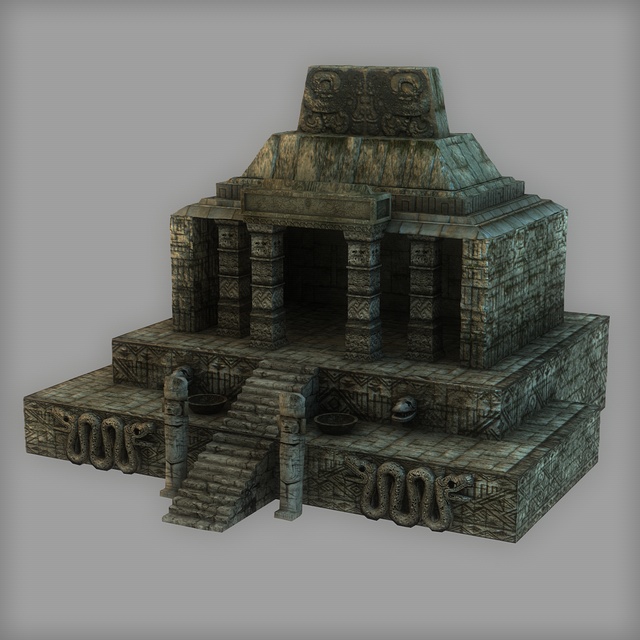
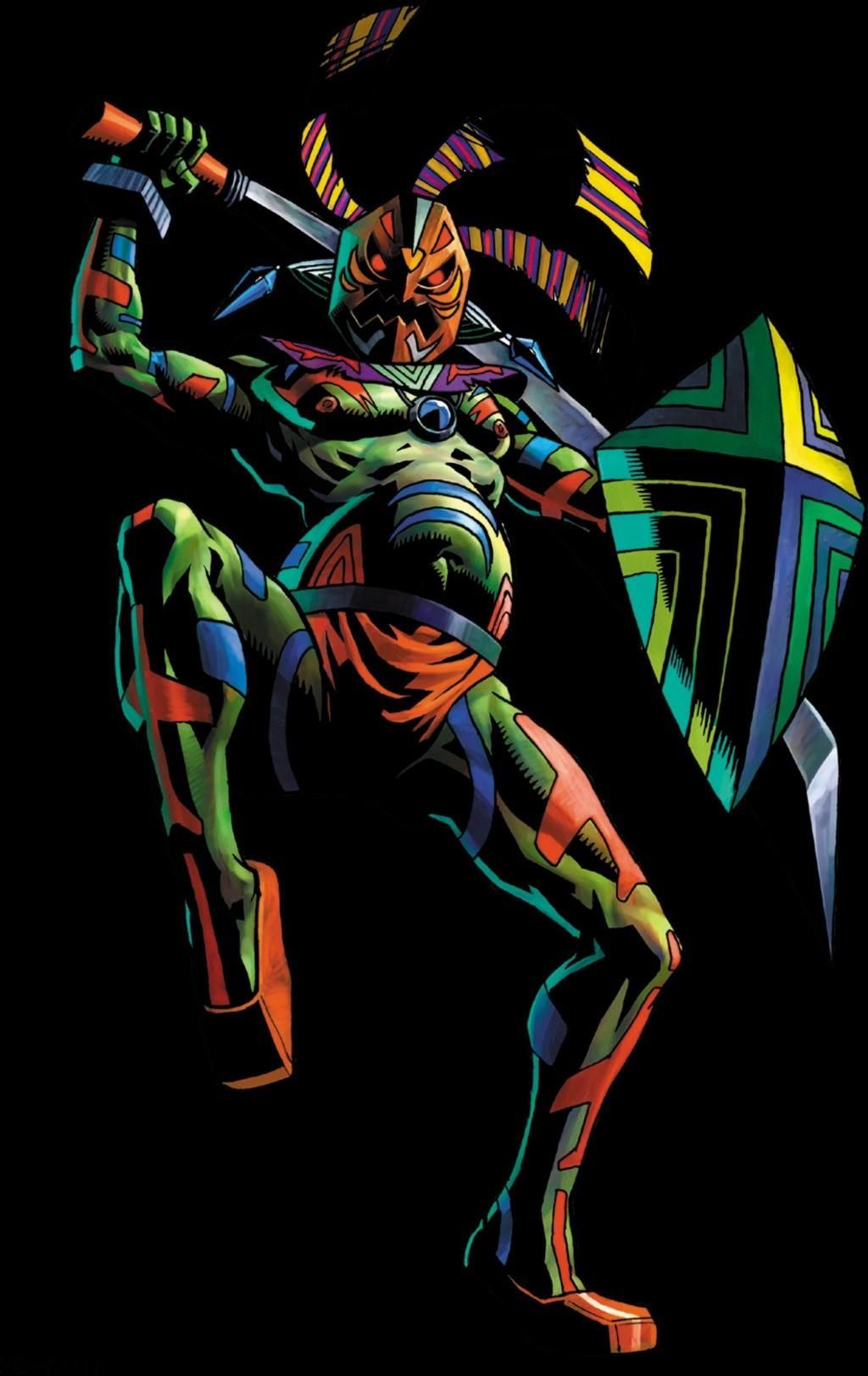
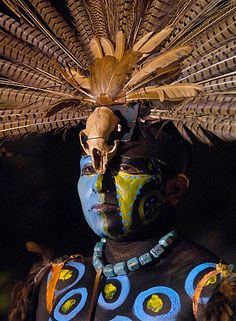
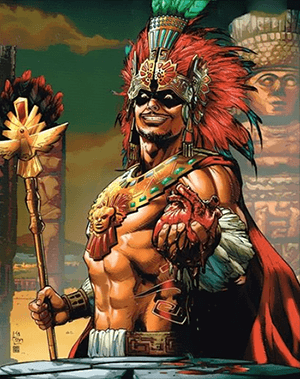
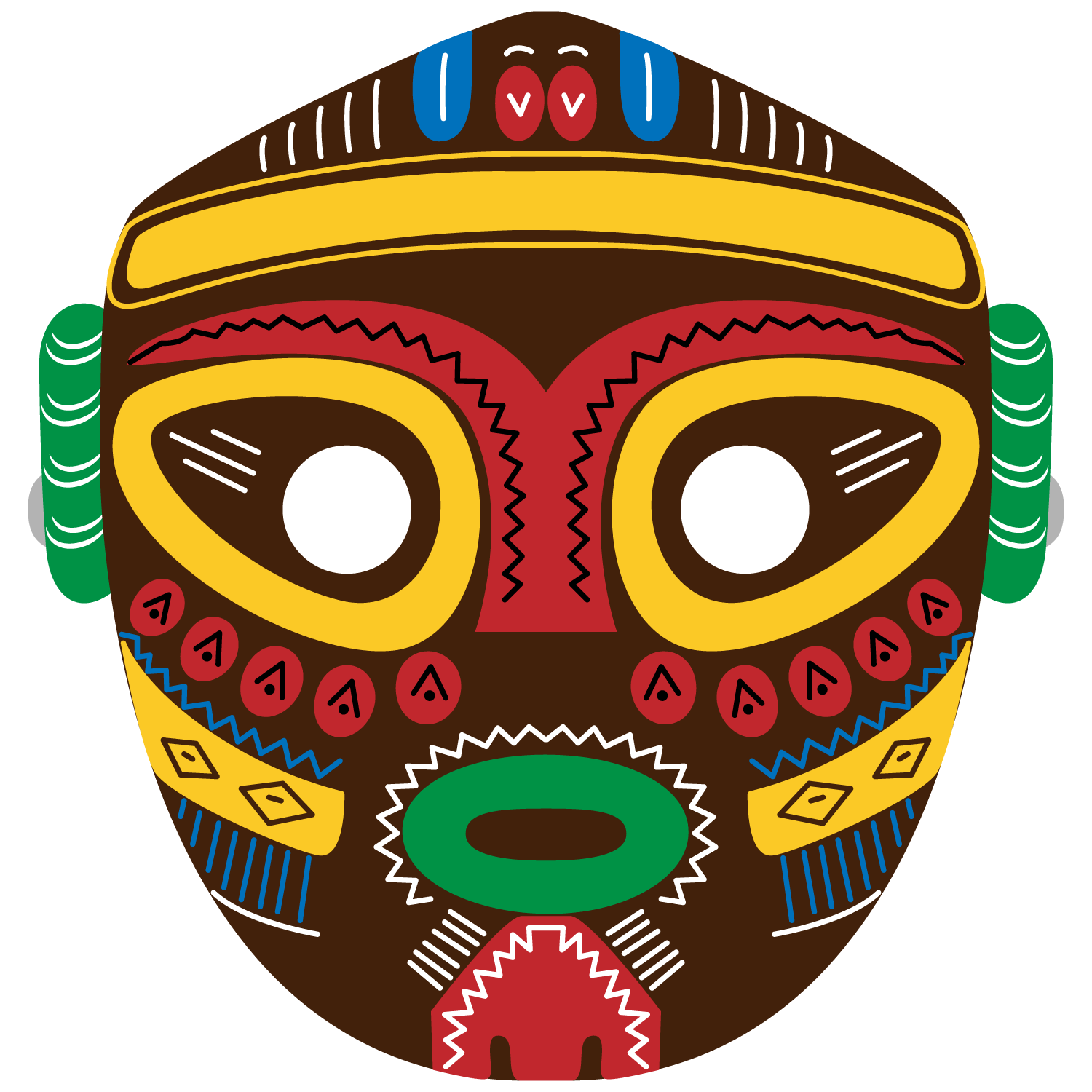
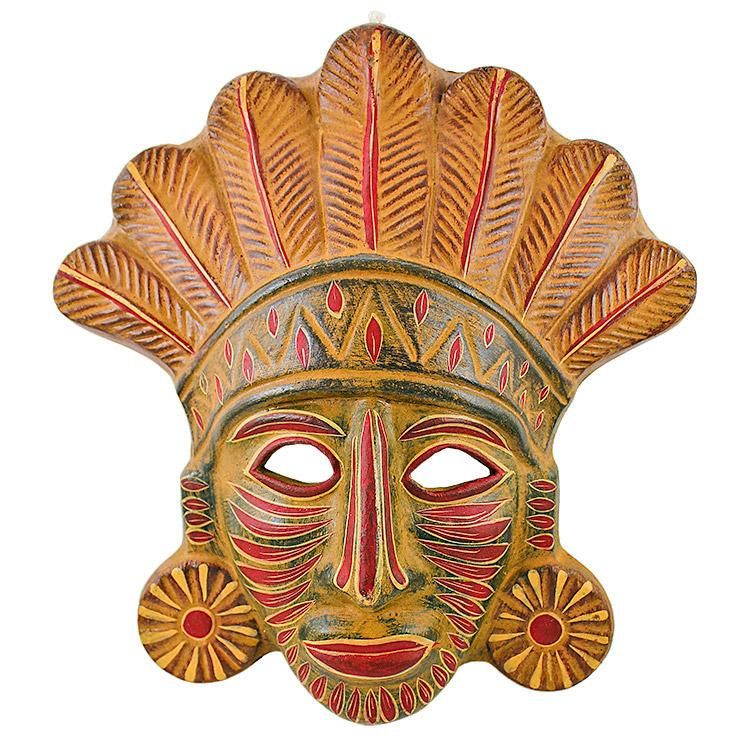
The overall design and layout of the temple doesn’t have a specific culture from which it got its inspiration. It actually mostly resembles cultures from the pre-classic and early classic period like Olmecs, Toltecs, Teotihuacans, Mayans and Aztecs; but it’s still somewhat ambiguous. The boss of the dungeon, Odolwa, also mixes the body paint and masks from Aztec and Maya culture.
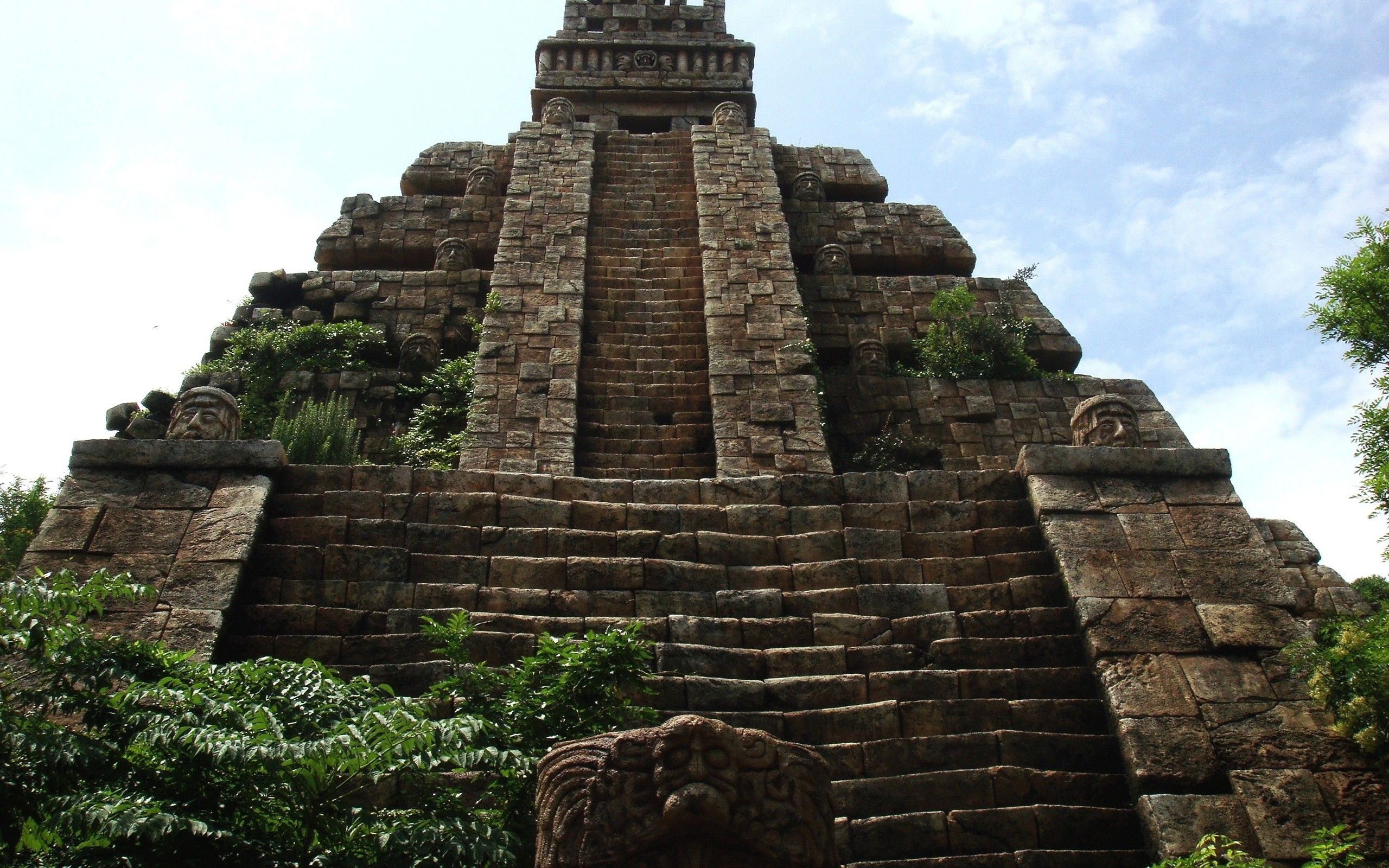

The music also has this freedom, thus it was just a matter of Koji Kondo looking into his sample libraries for sounds that could feel ethnic and exotic; from any indigenous people in the world. Most of the samples ended up coming from African cultures, where vocalization and percussion are given more prominence. Indeed, we have a case of ‘Mayincatec’ culture here—with a healthy doses of African culture—where all historical ancient Mexican, Central, and South American nations are lumped into one exotic and often barbaric people.
Nonetheless, as has been said, little of this matters for the purposes of musical discussion since Koji used mostly African samples in free form. Koji Kondo, showing his co-composer that he also has the chops to create a groovy drum beat, makes the track all about percussion with just any ethnic vocal sound added for atmosphere.
Music Analysis
Structure: Section 0 / Section 1 / Section 2 / Section 3 / Section 4
Time Signature: 4/4
Tempo: 120
Melodic and Harmonic Profiles: Eb Atonal
The first element we hear in the track, very very far away, is the Deku Palace music itself; played by the African shaker; the same rhythms originally played by the tambourines in the palace of the Deku will accompany us throughout our time in this dungeon, perhaps connecting the temple even more with the Deku or implying that the echo of the monkey-cooking party the barbaric Deku are having down there can still be heard, putting even more pressure on poor Link’s shoulders—the instrument also sounds like a bunch of leaves against the ground, possibly also bringing to mind the Deku people dancing with their skirts made of leaves.
The shekere is a West African percussion instrument consisting of a dried gourd with beads or cowries woven into a net covering the gourd. The Shekere was originated in a tribe in Nigeria called the Yoruba tribe. The instrument is common in West African and Latin American folkloric traditions as well as some of the popular music styles of the regions. In performance it is shaken and/or hit against the hands.
You can hear the real deal here:
Alternatively, the instrument may be mimicking the brooms used by various African tribes in rituals, shaking them and pushing them against the ground.
This first groove is then combined with the hypnotic rhythms of the Udu, an instrument that sounds just like bubbles in a swamp would if they were giant and made of poison, fitting for the Woodfall region and creating the certified Kondo ambience of blurring the lines between music, sound design and environment.
The udu comes courtesy of the Igbo people from Nigeria. In the Igbo language, ùdù just means ‘vessel’, which is what you get with this percussion instrument, a water jug usually made of clay with holes that creates slight pitch bends and was played by Igbo women with their hands for ceremonial uses. There are many ways that the pitches can be changed, depending on how the hand above the small upper hole is positioned. Koji kondo took two samples to complete two basic strokes for the instrument, a bass one and other with higher pitch.
Here is a showcase of the udu:
These two instruments form the basic groove of the track; what’s left is to populate the music with other percussion lines sporadically adding more flavor and other vocalization samples to make Link feel as if he really is inside the city of an ancient lost tribe.
You can hear exactly what Kondo plays on this slowed down version of the udu patter fro m the song:
From time to time, we see entering the high pitched conga sound similar to the bongo drum; Koji also took two samples in order to create variation on the groove. It plays three different rhythmic phrases, growing in complexity each time that it plays. Conga drums are classified according to their size, which correlates to their pitch: larger drumheads have a lower pitch and vice versa. Historically, terminology for the drums varies between genres and countries. In ensembles that traditionally employ a large number of drums. the ones heard on this track could be classified as quinto, which are typically about 28 cm across, or requinto, which can be smaller than 24.8 cm.
However, the pattern would sound ok with the younger brother of the conga, the bongo or bongos, which are an Afro-Cuban percussion instrument consisting of a pair of small open bottomed; basically mini congas that differ in some techniques. The congas on this track may be just that or they could be emulating any number of hand drums from the African region, including a high pitched frame drum. Kondo is looking to create a shuffle rhythm that consists of fast notes played with alternating articulations:
It is used as a learning device for the instrument, with performers competing for who can do it faster.
You can hear and compare the three different grooves Kondo plays here:
The last drum in the mix is the African talking drum—also heavily featured on the soundtrack for Black Panther (2018)— coming straight from their use on the Rosa Sisters troupe of musicians, the talking drums now feels more at home among their indigenous and ethnic instruments.
The talking drum is an hourglass-shaped drum from West Africa, whose pitch can be regulated to mimic the tone and prosody of human speech. It has two drumheads connected by leather tension cords, which allow the player to change the pitch of the drum by squeezing the cords between their arm and body.
Here is how one of these drums sounds:
Just like with the high pitched conga, the order of the day here is creating interesting, stand alone grooves that color the track.
The rest of the track is filled with sound effects of African origin, like vocalizations and bird calls, which sometimes humans from these tribes can mimic; the characteristic long, wavering, high-pitched vocal sound resembling a howl with a trilling quality, known as Ululation, could perfectly be coming from Odolwa, the tribe warrior Link fights in this temple—the fact that the sound is very muffled gives support to this notion. This sound is produced by emitting a high pitched loud voice accompanied with a rapid back and forth movement of the tongue and the uvula. In Africa, the sound is part of all kinds of religious rituals, battle cries and animal hunting. It is the oldest cliche in the book if you want to convey indigenous people outside civilization, specially if they are about to attack you; it is not exclusive to African cultures though but almost universally found spontaneously all over the world in one way or another— If any reader happens to be an expert ornithologist hopefully he or she can provide the names of the bird species from which these samples are taken from.
As always, the goal for Kondo is making the player feel as if they are truly there, inside the world through aural expression. Contrary to popular belief, the Nintendo developing team is one of the most concerned about realism; internally consistent realism that is, from movement, to physics, to environment and sound design and of course connecting the world and the characters through music (in this case, the Deku with their ancient temple), populating their fantasy worlds with strong anchors to real life and nature that contribute to a sense of immersion that only lacks the sense of smell. The dungeons from Majora’s Mask strive for this environmental realism as opposed to cultural realism.
Either that or perhaps Koji Kondo simply didn’t have a clue about what Maya or Aztec music sounded like, since we only have weak references from Spanish conquistadores about the music and instruments from these ancient civilizations plus archaeological evidence; no written music has survived and for a Japanese composer it would be too difficult to research the Indigenous Mesoamerican music heard today. But just like Andean music, it probably has too much influence for Spanish music by now.
Samples used on this track:
- High Tuned Congas: African/Contemporary – Partition I – CONGAS 2 – -CONGAS 1 from the library Spectrasonics Supreme Beats
- Ululation: African – African Vocal Phrase 2/21_34_02 from the library Zero-G CE21 Ethnic Flavours
- Bird Calls: Voice – Voice Samples – Breaths/moans/screams – awkBird1 and awkBird2 from the library A Poke in the Ear with a Sharp Stick II

Help to keep the rites going around here by supporting the shrine:

Media Files, requests and support for more interactive content

Thou shall donate since this is a cult and you are now a sheep

Help staying awake analyzing game tracks and writing posts or else everything will end up being written by A.I
- Inside The Score – The Legend of Zeda: A Link to the Past – End Credits / Staff Roll
 The land rests As the last few minutes of this extensive journey that has now come to an end fly by, the nostalgia and reflective mood kicks in. Because such a massive enterprise as a Zelda game or a Lord of the Rings movie require multiple endings to convey everything… Read More »Inside The Score – The Legend of Zeda: A Link to the Past – End Credits / Staff Roll
 - Inside The Score – The Legend of Zelda: A Link to the Past – Ending / Epilogue ~ Beautiful HyruleFinal of the fantasy The Triforce has been touched. A wish has been granted. For the occasion, the newly undeceased king of Hyrule has commissioned a march in honor of the legendary hero to the Hylian Sousa, who might as well be composer Nobuo Uematsu since this piece is very… Read More »Inside The Score – The Legend of Zelda: A Link to the Past – Ending / Epilogue ~ Beautiful Hyrule
- Inside The Score – The Legend of Zelda: A Link to the Past – Triforce Chamber / Power of the GodsTake your boots off your feet And thus the Triforce spoke to men. And it became present in history. And you better treasure and contemplate this moment seldom witnessed in the course of the series. The elusive opportunity to interact and touch the most important artifact. You are now in… Read More »Inside The Score – The Legend of Zelda: A Link to the Past – Triforce Chamber / Power of the Gods
- Inside The Score – The Legend of Zelda: A Link to the Past – Ganon Battle / Prince of DarknessProgressive evil En Garde! And you better be prepared since you are about to duel the iconic enemy of the series at perhaps his canonically most powerful incarnation. Right after having touched the sacred Triforce which allowed him to conquer all of the Golden Land and whose evil and darkness… Read More »Inside The Score – The Legend of Zelda: A Link to the Past – Ganon Battle / Prince of Darkness
- Inside The Score – The Legend of Zelda: A Link to the Past – Boss Battle / Anger of the GuardiansQuick mayhem Ah, the simpler times when boss battles where not a multi epic orchestral suite but just an ostinato more basic that even what became the music for standard battle encounters out there. We are a long way from each boss having his own personalized track. And this early… Read More »Inside The Score – The Legend of Zelda: A Link to the Past – Boss Battle / Anger of the Guardians
- Inside The Score – The Legend of Zelda: A Link to the Past – Dark World Dungeon / Dungeon of ShadowsMemento mori We are getting closer to Ganondorf (or at least the wizard Agahnim who ultimately fulfills the same human side of evil role in this game) and that means getting closer to the profiles and motifs of his own theme song (which naturally was the theme of Agahnim at… Read More »Inside The Score – The Legend of Zelda: A Link to the Past – Dark World Dungeon / Dungeon of Shadows