Forbidden chants coming from the core of the earth
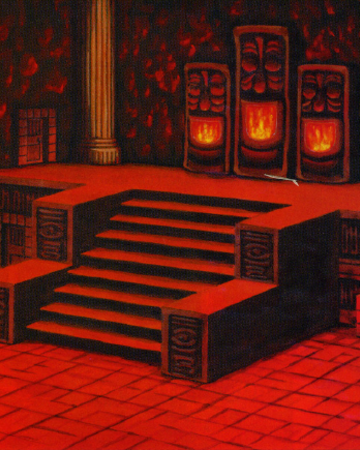
By now, the story of the infamous Fire Temple track is very well known among gamers and Zelda fans alike. In short, Koji Kondo originally had in mind to put another chant from a different culture, similar to what he did on the Forest Temple music, to give the temple that sacred connotation with a tinge of spookiness. Shortly after the first batch of cartridges was produced, Nintendo realized that the inclusion of this particular chant had violated their own policy of not including religious elements or references on the games released on their consoles; it was pointed out that the chants were of Islamic origin and included excerpts taken from the Quran, the Basmala prayer and the Takbir as well. All this meant that Koji Kondo had to prepare a brand new track for subsequent versions of the game, replacing the Islamic chants with the generic choirs used throughout the game. So, what could have been the though process behind this piece?
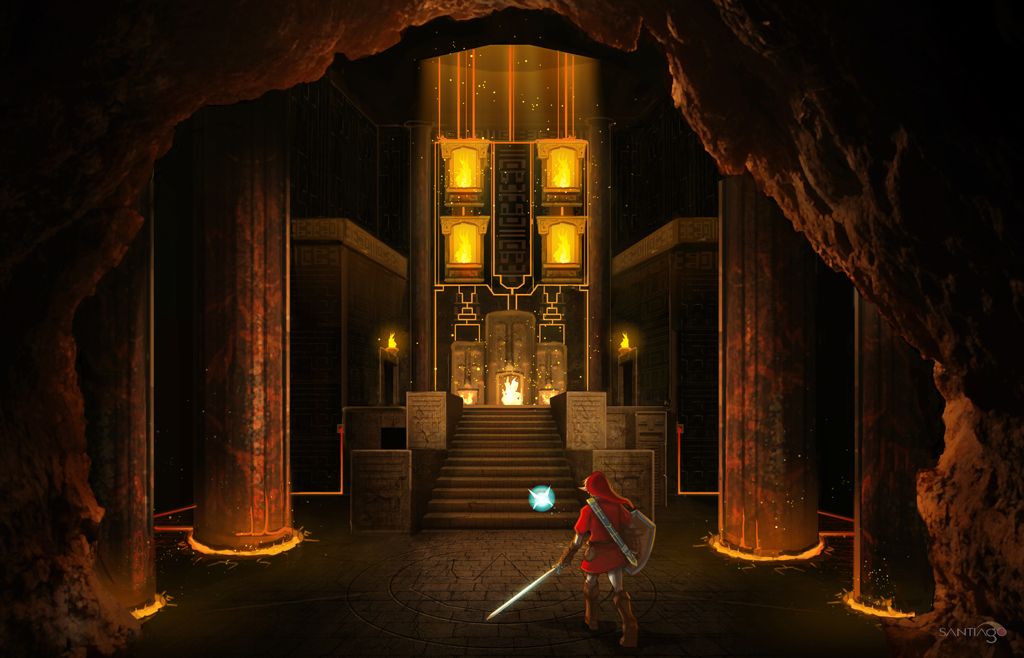
The Fire Temple, located inside Spectacle Rock at the base of Death Mountain, has even more temple-like elements than the previous Forest Temple dungeon, which was more influenced by haunted mansions and ancient, abandoned castle narratives. This location has shrines, various symbols, statues, altars and a more ritualistic sounding soundtrack.
In line with its element, the dungeon features obstacles of molten rock, enemies engulfed in flames and an item that can withstand the tremendous heat of the place, with almost the same destructive power as the bombs. It also works as an ancient prison and varies the pace respect to other dungeons by making Link acquire keys by liberating the imprisoned Gorons that used to live in Goron City. It is also a battle and survival focused dungeon, all elements together playing with the theme of power, which is another of the values associated with the triforce and the goddesses. It could be a temple built to worship dragon deity Volvagia, who, like Ganondorf, represents the power side of the balance and thus it is not a benevolent guardian spirit like the Deku Tree or Lord-Jabu-Jabu
Soundtracks for desert and lava themed levels in video games usually have numerous elements in common: the hypnotic percussion, plucked Middle-Eastern sounding instruments, together with high pitched and low pitched struck metallic or bronze sounds (the bubbling sound effects of lava are a must!) Koji Kondo himself might be one of the popularizers of the trend of using these particular styles on this type of video game stage, after all he even put the exact same track on both the volcanic and Egyptian themed levels on Super Mario 64 without a second thought:
The trend only goes on from there:
Koji Kondo may not even been the first to think about prayer chants for these kinds of places:
And to this day, Death Mountain locations on the Zelda series continue to be musicalized in these traditions.
Apparently, it seems different composers always arrive to this vibe for their fire worlds. An easy answer is saying that the desert is a very hot place and the volcano is an even hotter place, hence, both use the same music styles inspired by the real life people that live in deserts and that’s it. But sometimes real life has its own logic if you look close enough and stereotypes exist for a reason; desert dwelling people actually have a deep connection with the element of fire. It literally saves lives during the cold nights of these unforgiving places.
We have to remember that deserts have periods when it’s very cold, so it’s no wonder that fire came to be appreciated on a functional level on these locations; with time, this functional level usually gains a spiritual one and ends up with a cultural one.
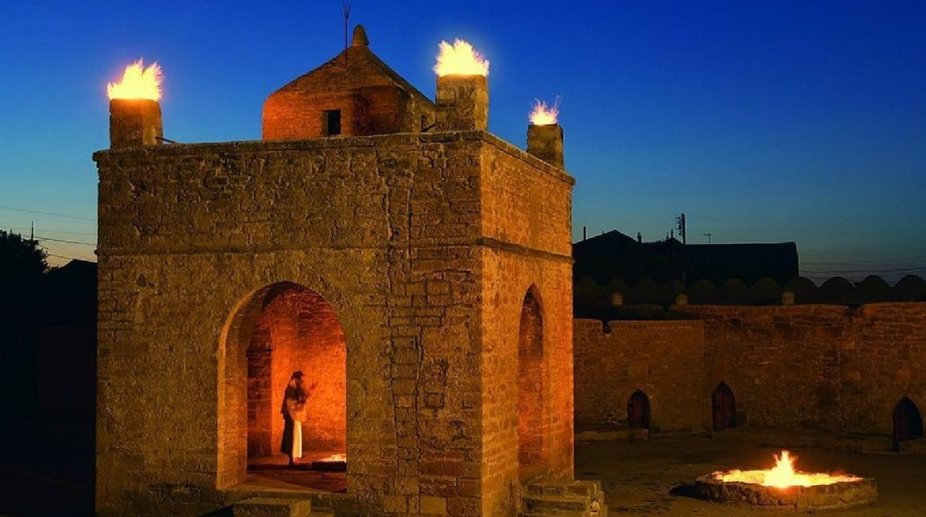
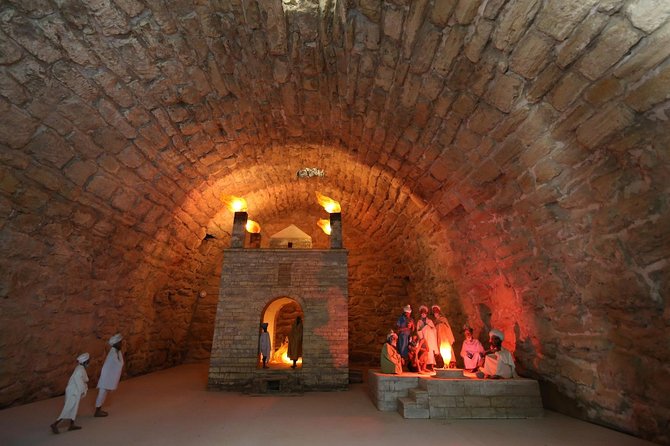
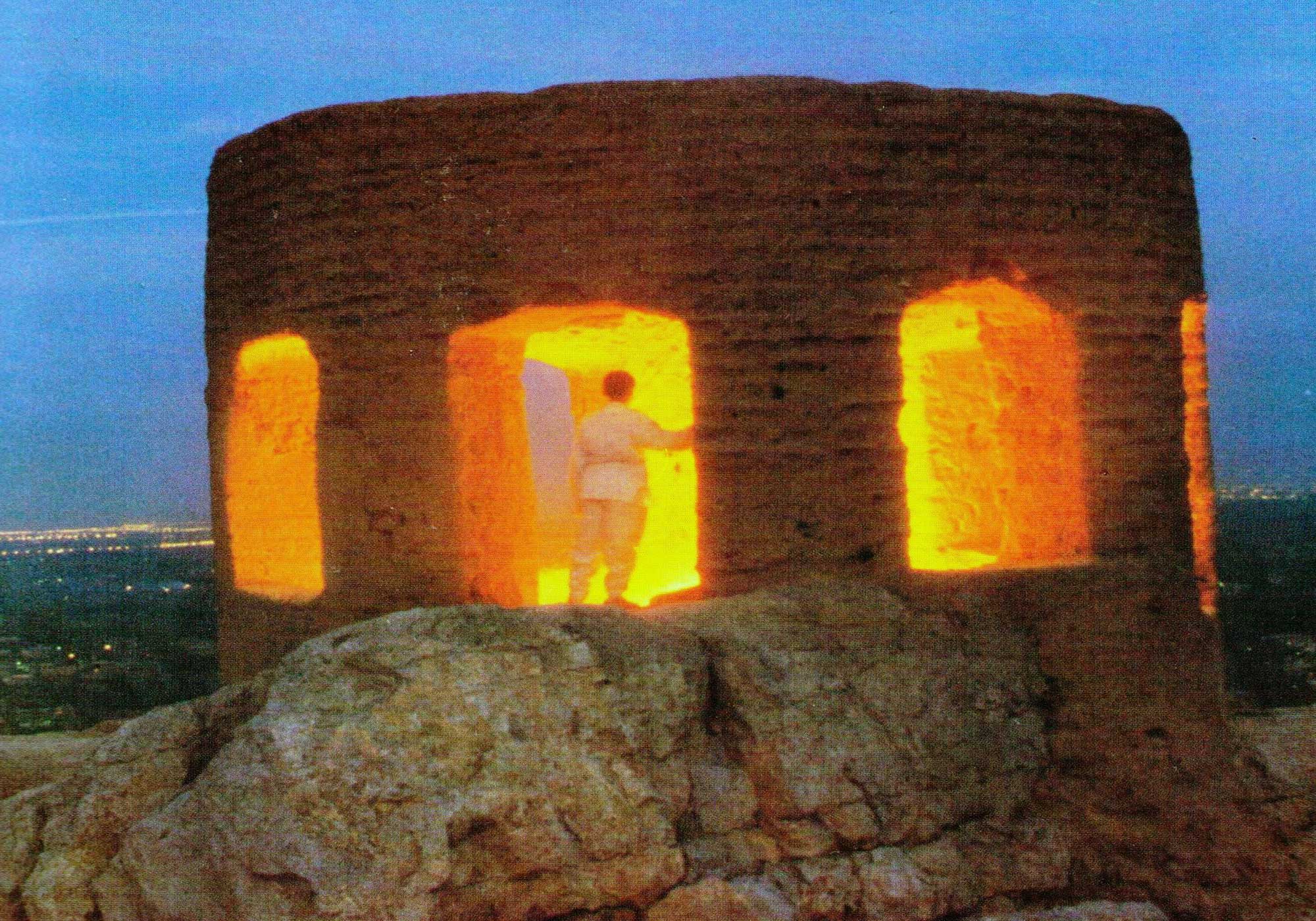
Archaeologically, evidence for Indo-Iranian fire worship is found from around 1500 BC. Thus, it’s West Asia the main suspect of the origin of all these video game music tropes and cliches. More specifically, it’s the kingdom of Persia and their ancient religion, Zoroastrianism, what has connected this region indelibly with the element of fire in popular culture.
In the collective imagination Zoroastrianism has even been simplified as just a fire worshiping religion; they have real life fire temples after all and possess sacred flames that must be preserved. In truth, fire for them simply exemplifies a medium for spiritual wisdom and purity, but it is not worshiped. An interesting note is that the complex mythology of the religion is practically an inversion of Hindu Mythology owing to their similar origins. All the cultural exchange of these regions, product of not having significant water borders, is reflected in their music as well, and blurs the lines of where a style begins and the other ends; many of Persia’s (modern day Iran) classical modes are related to those of its neighboring cultures.
What about their music? Here are compiled various examples of what it sounds like:
Composers have coopted all the sounds found in these West Asian regions to musicalize both fire and lava, often creating a collage of Persian, Arabic and Indian influences.
The Fire Temple design and concept in Ocarina of Time incorporates and mixes some of these ideas with the tribal nature of the Goron race, forging it all into the architecture and sound design of the area. Using metallic sounds, a steady percussion beat and instruments characteristic of these regions, Kondo brings additional atmospheric realism to this 3D fantasy world; even the chants could fit with the heritage of all these nations, since the composer was just going for a vibe without paying particular attention to the lyrics.
Music Analysis
Structure: Section 0 / Section 1 / Section 2 / Section 3
Time Signature: 4/4
Tempo: 113
Melodic and Harmonic Profiles: Atonal; C Whole Tone; E Phrygian; C Diminished
Like in Dodongo’s Cavern, the track features a drone wind sound played throughout—this time around it is an actual recording of wind, instead of a metal clang slowed down. This particular one seems even more hot and cavernous, with more bass added to give it a sense of heat. It is just one single note manipulated with extreme pitch bending to give it movement, like different volcanic gases passing through cavities. The audio in service of the immersion since we cannot feel or smell this air.
The second layer is provided by two samples taken from an oud and a riq (or daf) playing together in a recording—one sample has more of the lute mixed in, the other more of the tambourine—this gives the piece its rhythmic foundation and it’s used in a way as to sound ritualistic. These instruments could be representing any number of plucked strings and tambourines from the West Asia region, like the Iranian Barbat or Dayere. It’s not uncommon to see ensembles featuring these two instruments; the most well known in the Middle-East is the Takht.
The Goron tribe is represented too by not forgetting to employ their bass marimba; however, this time it’s played much lower, sounding more like a drum than a pitched percussion instrument. This deep marimba contrasts with the high pitched bronze bells, the two comprising the main melodic accompaniment to the piece (THE TUNED GONGS ARE NOTATED ROUGHLY BETWEEN A TRITONE AND A PERFECT FOURTH HIGHER THAN THEY SOUND FOR SOME REASON) All of the accompaniment tracks synchronize to create the hypnotic rhythm. The gong chimes are playing a figure reminiscent of the Dragon Boss Battle theme heard in Dodongos’s Cavern and in the battle against Volvagia we encounter here; their rhythmic and melodic profiles are similar, with ostinatos jumping a major second between the ending of phrases. They sound very soft and far away, perhaps foreshadowing the boss battle of the dungeon that is to come; here is a short example to hear the parallels:
The aforementioned prayer chants are the only sung lyrics found on this musical game (except they are going to be be sneakily reused on a different track). The sample is a solo male performance with a significant amount of reverb applied singing a rubato chant. Like on the Forest Temple cue, Kondo took three different samples of the performance to play with on his keyboard for maximum unsettledness. The samples are repeated, panned and mixed together, creating a complex musical texture that is distinctly out of synchronization with the rest of the ensemble. The voices fade in and out with volume automatization, an atmospheric effect that immerses the player in similar fashion to the Forest Temple. Here is the recording used as a basis:
The three partitions that Koji took from this were:
The sample not only evokes West Asian traditions, but also works in-game a a plea for help from the imprisoned Goron.
A full translation of the chant says:
| In the name of Allah the most gracious the most merciful |
| He is Allah, the One and Only |
| Allah, the Eternal, Absolute |
| Allah is the greatest and praise be to Allah |
The potential problems that could behest Nintendo for using these chants were indeed real, because as we will see, other game developers that fell prey to the alluring chants were not so lucky as to backtrack on time.
Like on other dungeon clues, Kondo eclecticism manages to synthesize real world influences with in-game narrative and concepts, creating an amalgam of sounds that ends up being unique and distinctive in Zelda and media music in general.
Samples Used:
- Wind Moan = 97 Wind Low Eerie Wind Moan Weather from the library Sound ideas Warner Bros SFX
- Oud and Req Ensemble (Takhr) = AFLAT LOOP 26 from the library Zero G Ethnic
- Gong Chime = Gongs – Fu Yin Gongs from the library OMI Universe of Sounds Vol. 2
- Prayer Chant = track 76 (Volks – prayer) from the library Best Service Voice Spectral
Revision
Structure: Section 0 / Section 1 / Section 2 / Section 3
Time Signature: 4/4
Tempo: 113
Melodic and Harmonic Profiles: Atonal; C Whole Tone; A Phrygian; C Diminished; B Locrian
Here we can visualize how Kondo managed to change the original Fire Temple cue, replacing the original prayer chants with the usual male and female choirs found in the game. They try to follow the melodic contour and phrygianisms of the original Muslim chants but nevertheless, the missing voices take out some of the temple identity with them; now the Fire Temple sounds slightly like the Shadow Temple.
As has been stated, the reason for the selection of the original samples possibly was to enhance the West Asian inspiration of the Fire Temple. Kondo probably wasn’t even paying attention to where the samples came from or what they were saying; they were there for the sake of atmosphere.
The samples only appear in the first editions of the game (version 1.0 and 1.1). There was a gossip stone saying that Nintendo had changed the music as a result of public criticism and backlash from the Muslim community following the release of the game, but in truth, this was strictly an internal affair for Nintendo; somebody affiliated to the company realized what the chants were saying and alerted Nintendo of Japan, they quickly proceeded to make the changes—the original Gerudo symbol and depictions of blood were also altered. Completion dates of the Ocarina of Time cartridges indicate that all of the versions of Ocarina of Time were finished before any games were sold. Nonetheless, the earlier production runs were still sold and are now collection items sought after.
Other composers have used the exact same sampls to signal all kinds of Middle Eastern locations in games: The Egypt Stage of Cruis’n World (1998), which predated Ocarina of Time’s release, uses the same recording:
Since Ocarina of Time was a high profile game and the chants were featured clearly at the forefront, sooner or later they would have been removed, so from a company point of view, it was the right call. The same sample generated a big controversy for Microsoft when it was included in the fighting game Kakuto Chojin Back Alley Brutal (2002). The problem escalated to the point that the company eventually chose to recall the product entirely, in all regions of its release, and it was not reissued.
A Microsoft senior geopolitical strategist consulted with an Arabic speaker within the company. This latter person vehemently objected against the release of Kakuto Chojin due to its incredible insult to Islam; the game still debuted in North America in the publisher’s belief that the content would not be noticed. They did
As can be gathered from all this, it was indeed a huge deal to feature something like this; they never even got the opportunity to modify the track, as many copies of the game reached places in which such material is particularly sensitive, like Saudi Arabia, where the issue became headlines news. Three months later, the Saudi Arabian government formally protested and the game was no more. Nintendo may have just dodged a bullet here.
Even in the modern times, developers who have not learned from the past, encounter problems like when the same sample was used in Capcom’s brand new Street Fighter V and the track had to be removed again.
Sample libraries are meant to be used by composers, consequently all the fault of these headaches lies on the company Best Service for sampling this sacred chant and producing this disruptively cursed CD.
Link consolidated his courage inside the Forest Temple, became more powerful on the Fire Temple and is now prepared to embark on his wisdom quest. The idea of wisdom for Japanese developers is one quite profound; difficult puzzle solving is just the tip of the iceberg…. speaking of icebergs….

Help to keep the rites going around here by supporting the shrine:

Media Files, requests and support for more interactive content

Thou shall donate since this is a cult and you are now a sheep

Help staying awake analyzing game tracks and writing posts or else everything will end up being written by A.I
- Inside The Score – The Legend of Zeda: A Link to the Past – End Credits / Staff Roll
 The land rests As the last few minutes of this extensive journey that has now come to an end fly by, the nostalgia and reflective mood kicks in. Because such a massive enterprise as a Zelda game or a Lord of the Rings movie require multiple endings to convey everything that the adventure represented. You… Read More »Inside The Score – The Legend of Zeda: A Link to the Past – End Credits / Staff Roll
 - Inside The Score – The Legend of Zelda: A Link to the Past – Ending / Epilogue ~ Beautiful HyruleFinal of the fantasy The Triforce has been touched. A wish has been granted. For the occasion, the newly undeceased king of Hyrule has commissioned a march in honor of the legendary hero to the Hylian Sousa, who might as well be composer Nobuo Uematsu since this piece is very similar to the main theme… Read More »Inside The Score – The Legend of Zelda: A Link to the Past – Ending / Epilogue ~ Beautiful Hyrule
- Inside The Score – The Legend of Zelda: A Link to the Past – Triforce Chamber / Power of the GodsTake your boots off your feet And thus the Triforce spoke to men. And it became present in history. And you better treasure and contemplate this moment seldom witnessed in the course of the series. The elusive opportunity to interact and touch the most important artifact. You are now in the presence of something truly… Read More »Inside The Score – The Legend of Zelda: A Link to the Past – Triforce Chamber / Power of the Gods
- Inside The Score – The Legend of Zelda: A Link to the Past – Ganon Battle / Prince of DarknessProgressive evil En Garde! And you better be prepared since you are about to duel the iconic enemy of the series at perhaps his canonically most powerful incarnation. Right after having touched the sacred Triforce which allowed him to conquer all of the Golden Land and whose evil and darkness are pouring out into Hyrule.… Read More »Inside The Score – The Legend of Zelda: A Link to the Past – Ganon Battle / Prince of Darkness
- Inside The Score – The Legend of Zelda: A Link to the Past – Boss Battle / Anger of the GuardiansQuick mayhem Ah, the simpler times when boss battles where not a multi epic orchestral suite but just an ostinato more basic that even what became the music for standard battle encounters out there. We are a long way from each boss having his own personalized track. And this early boss battle cue is one… Read More »Inside The Score – The Legend of Zelda: A Link to the Past – Boss Battle / Anger of the Guardians
- Inside The Score – The Legend of Zelda: A Link to the Past – Dark World Dungeon / Dungeon of ShadowsMemento mori We are getting closer to Ganondorf (or at least the wizard Agahnim who ultimately fulfills the same human side of evil role in this game) and that means getting closer to the profiles and motifs of his own theme song (which naturally was the theme of Agahnim at this point) on this dungeon… Read More »Inside The Score – The Legend of Zelda: A Link to the Past – Dark World Dungeon / Dungeon of Shadows