Ambiguous voices unseen in the depths of an ambiguous place
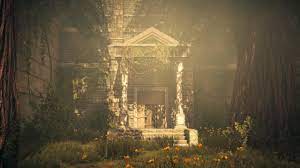
The Forest Temple, the first dungeon that opens the curtain to the adult act is an exceptional place that oozes atmosphere from the very first seconds. Here, all the elements of game design come together to cement that the stakes of the adventure have taken a leap in difficulty, uneasiness and mood. Both eerie and beautiful at the same time, this phantasmagorical castle/palace hybrid located deep inside the woods has a soundtrack to match its astounding mix of alluring and frightening aura.
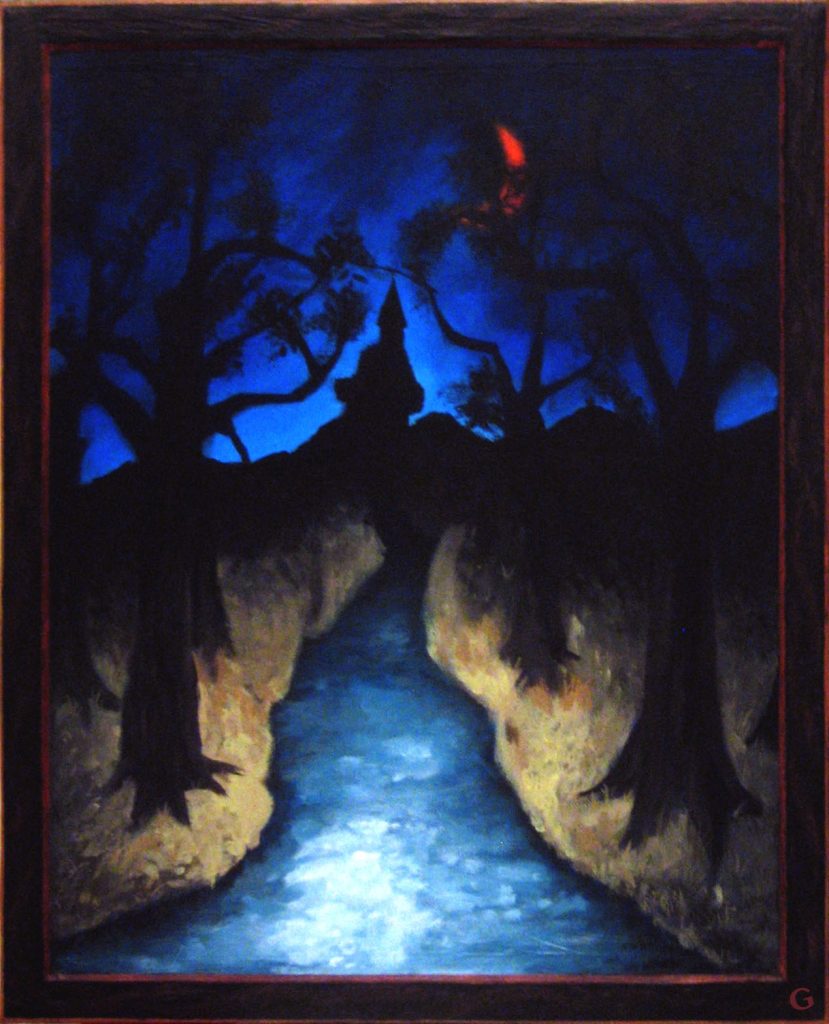
The first of a trilogy of temples that focus on each of the values of the goddesses, the Forest Temple is the test of courage, engulfed in ghost imagery and unseen dangers that both Link and the player will have to traverse in order to reunite, albeit for a brief moment, with their childhood friend. It is an extension of the Lost Woods imagery of the enchanted forest where the characters in a fairy tale find a haunted castle or house deep within the forest. Just like the Lost Woods confuses with its twisted corridors, the layout of the Forest Temple also changes to confuse you; it is an enchanted castle that has been taken over by the forest and one of the only structures of Zelda that can actually shapeshift. Is it an illusion? Just like with the Lost Woods, we cannot know.
Visually and thematically, the Forest Temple also seems to have some nods to literature, specially Edgar Allan Poe’s short story ‘The Fall of the House of Usher’ where a character also enters a haunted house in the middle of the forest, in which siblings reside and the house is decorated with paintings—this gothic author’s name also inspired the enemies called ‘Poe’, the protagonists of the dungeon— As a matter of fact, every haunted house out there (and the horror genre) owes a debt to Poe and the House of Usher; our very image of the haunted house, the idea of an oversized gothic manor that seems to be a living, breathing, haunted thing, comes from Poe’s vision. Furthermore, a different nod to literature is that the Poe Sisters are named after the main characters of the novel ‘Little Woman’
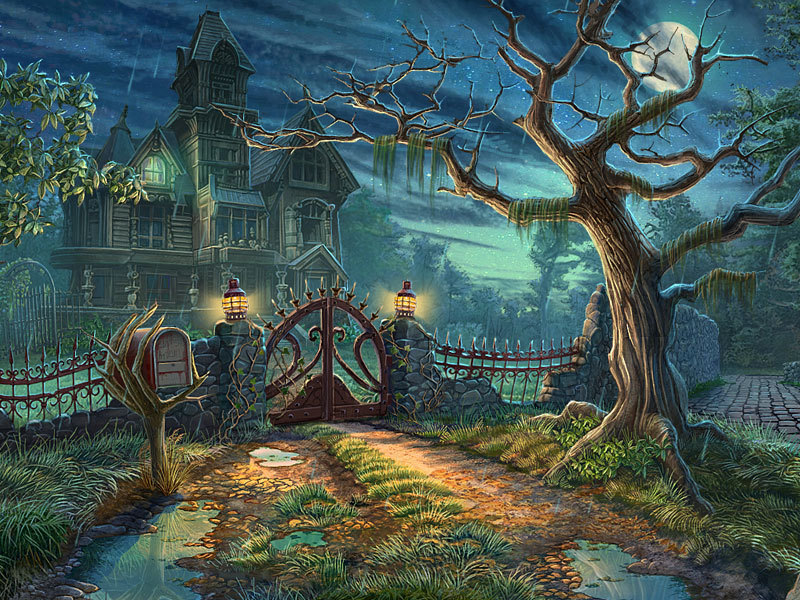
Even like some ancient palaces you also have a possibly man-made labyrinth right at the entrance through the groove, guardian dogs and some corridors with checkered tiled floors. Unlike some of the classic haunted palace tropes and games like Castlevania, the Forest Temple gains a more ethereal and mystical feel by actually being a setting with broad daylight permanently. The job of the music will be to try and capture the ghost atmosphere of the inhabitants and the mystical beauty of the fortress at the same time.
Music Analysis
Structure: Section 0 / Section 1 / Section 2 / Section 3
Time Signature: 4/4
Tempo: 94
Melodic and Harmonic Profiles: E Prhrygian Major; E Mixolydian
Koji Kondo had the difficult mission of capturing the ambiguity of this place; the elegant castle immersed in a dense flora that is haunted by forest spirits both good and evil. On this track Kondo designed a dense soundscape with just four sounds. For a long time, music has been more than just melody, harmony and rhythm; sound design of a composition has gained more and more prominence with each passing year (ever since music started to get recorded). The timbres Koji used on the Forest Temple cue have been immortalized in the minds of whoever has set foot on this ancient site.
In this cue, all the parts are rhythmically independent; sometimes they work together, sometimes against each other. The first layer in this auditory collage are the angklungs, an instrument of Indonesian origin that creates its distinctive sound by rattling bamboo chimes carved to have a resonant pitch. You can hear the real deal here:
The rattling of these bamboos is the ideal sonority to accompany the mischievous forest spirits. Not only is it reminiscent of shamanistic rituals made with leaves and the like but the sounds are probably meant to represent the spirits of the Japanese folklore knows as ‘Kodama’ pixie-like beings that inhabit trees who make an echoing sound effect. In fact, the original idea of their sound might have come from the seminal animated film ‘Princess Mononoke’ from Studio Ghibli (1997), a movie that has gone to influence the Zelda series time after time:
this Kodama design from the film along with their rattling sounds forms the basis for the design of the Korok race from The Wind Waker and beyond.
The sound is probably meant to represent the wind going through the branches of trees, making them rattle against each other.
The wacky panning of the angklungs plus the reverb gives the impression that Link is being observed from every corner. Do they mean harm?
The second layer is the ethereal choirs which also brings to mind the calling of spirits from beyond. They open with an E major chord—the same chord that ends both the Lost Woods theme and the Minuet of Forest— from there it goes to an implied F major chord (the main chord of the Lost Woods Theme, it almost sounds like a corrupted version the forest’s song), then back to the E, to the F and ends up with a Dm to E chord change: E – F – E – F- Dm – E; the notes of the chord and their rhythms are slightly altered throughout the piece, giving the impression that these are real voices dynamically speaking through the walls. The fact that Kondo does not use dissonant chords captures the strange pleasantness of this abandoned castle.
The two last textures added to the piece introduce the cursed nature cast upon phantoms, courtesy of the clever use of a sample library; a recording of an African dance that sounds like a call for help or an ancient tribal ritual. For composers in the mid 90s, getting their hands on as many different sounds and music styles from different CDs was part of their day job. in the process of scoring The Legend of Zelda Series, Kondo tried to be as eclectic as possible with his selections; always on the look for cool sonorities at the record store. The way a composer uses samples goes like this: you find music or a sound you like, then you cut a snippet of any length of the audio and input it on a sampler instrument, after that the sampler duplicates that sound across the entire keyboard range for you to play that sound in the different pitches that a piano has—it can be any sound, from normal instruments to even a toilet being flushed.
The dance in question is known as the ‘Nyanga dance’ from the people in Mozambique. A distinguishing feature of African music is its call-and-response nature; the Nyanga dance takes this tradition to its natural conclusion, where performers who play the Nyanga pan pipes respond to their instrument with their own voices:
It is hypnotic. Which is what you want in a ritual
Here we can see performers showing how the style is played:
Or some students practicing their steps:
In the context of the Forest Temple it sounds very eerie and unsettling. Koji Kondo took three different samples of the track. Partition A has mostly the pan flute alone, Partition B has the chanting and the flute mixed together and Partition C has mostly the vocals alone. In this configuration he can comfortably create the blend of vocals and flute with his keyboard to taste. The chant comes in and out at different volumes and configurations, coming closer and then stepping back, adding the final startling touch to the piece. This is another instance of Kondo blurring the lines between diegetic and non diegetic music in Ocarina of Time.
The melodies playing major thirds clash against the harmony and the rhythm, in Section 2 all the partitions play together creating a mesmerizing cacophony of sounds.
You definitively don’t need any visuals to notice that this place is haunted by creatures that materialize and disappear constantly.
The Forest Temple Is a showcase of Koji Kondo eclecticism, showing that his abilities go beyond writing pretty melodies; no matter if it is coming from harmony or timbre, he always seems to capture dissimilar feelings in a single track.
Welcome to your adult life!
Samples Used:
- Pan Flute Chant: Partition C – AFRICAFLUTES – FLUTE+VOICE from the sample ibrary Zero-G Ethnic 1 & 2
- Ethereal Choirs: CD 2 – PAD:SYNTH-PADS 2 – PAD:Synth-Pads 5 – PAD:SYN-PAD 6 from the sample library Best Service Gigapack
- Angklung: Bambremoro from the sample library Korg XSC-6S Ethnic
- As a fun bit of trivia, the same enigmatic sample was used on the TV show Ren and Stimpy with the appropriate name:

Help to keep the rites going around here by supporting the shrine:

Media Files, requests and support for more interactive content

Thou shall donate since this is a cult and you are now a sheep

Help staying awake analyzing game tracks and writing posts or else everything will end up being written by A.I
- Inside The Score – The Legend of Zeda: A Link to the Past – End Credits / Staff Roll
 The land rests As the last few minutes of this extensive journey that has now come to an end fly by, the nostalgia and reflective mood kicks in. Because such a massive enterprise as a Zelda game or a Lord of the Rings movie require multiple endings to convey everything that the adventure represented. You… Read More »Inside The Score – The Legend of Zeda: A Link to the Past – End Credits / Staff Roll
 - Inside The Score – The Legend of Zelda: A Link to the Past – Ending / Epilogue ~ Beautiful HyruleFinal of the fantasy The Triforce has been touched. A wish has been granted. For the occasion, the newly undeceased king of Hyrule has commissioned a march in honor of the legendary hero to the Hylian Sousa, who might as well be composer Nobuo Uematsu since this piece is very similar to the main theme… Read More »Inside The Score – The Legend of Zelda: A Link to the Past – Ending / Epilogue ~ Beautiful Hyrule
- Inside The Score – The Legend of Zelda: A Link to the Past – Triforce Chamber / Power of the GodsTake your boots off your feet And thus the Triforce spoke to men. And it became present in history. And you better treasure and contemplate this moment seldom witnessed in the course of the series. The elusive opportunity to interact and touch the most important artifact. You are now in the presence of something truly… Read More »Inside The Score – The Legend of Zelda: A Link to the Past – Triforce Chamber / Power of the Gods
- Inside The Score – The Legend of Zelda: A Link to the Past – Ganon Battle / Prince of DarknessProgressive evil En Garde! And you better be prepared since you are about to duel the iconic enemy of the series at perhaps his canonically most powerful incarnation. Right after having touched the sacred Triforce which allowed him to conquer all of the Golden Land and whose evil and darkness are pouring out into Hyrule.… Read More »Inside The Score – The Legend of Zelda: A Link to the Past – Ganon Battle / Prince of Darkness
- Inside The Score – The Legend of Zelda: A Link to the Past – Boss Battle / Anger of the GuardiansQuick mayhem Ah, the simpler times when boss battles where not a multi epic orchestral suite but just an ostinato more basic that even what became the music for standard battle encounters out there. We are a long way from each boss having his own personalized track. And this early boss battle cue is one… Read More »Inside The Score – The Legend of Zelda: A Link to the Past – Boss Battle / Anger of the Guardians
- Inside The Score – The Legend of Zelda: A Link to the Past – Dark World Dungeon / Dungeon of ShadowsMemento mori We are getting closer to Ganondorf (or at least the wizard Agahnim who ultimately fulfills the same human side of evil role in this game) and that means getting closer to the profiles and motifs of his own theme song (which naturally was the theme of Agahnim at this point) on this dungeon… Read More »Inside The Score – The Legend of Zelda: A Link to the Past – Dark World Dungeon / Dungeon of Shadows


wow…just wow. This was amazing to read znd i always wonder how or what that dungeon was base on. Zelda music is so amazing. Iconic dungeon song.