The exotic sound that widened what video game music could be
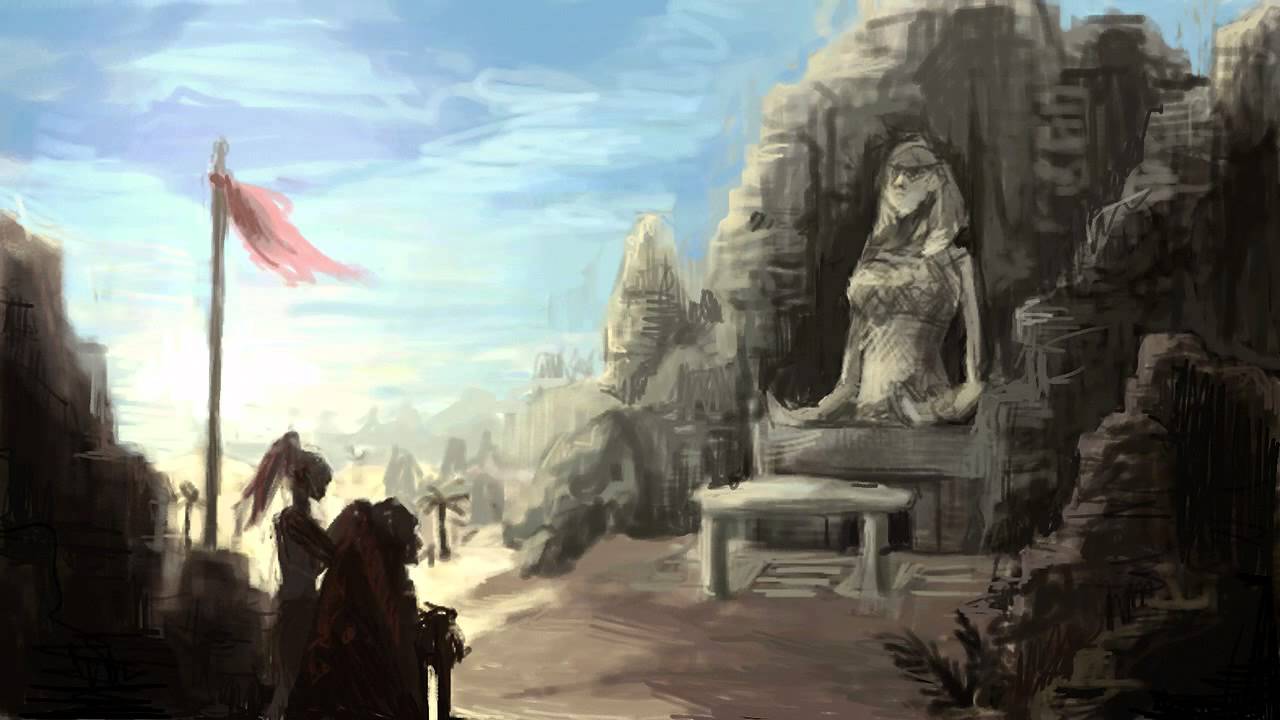
It is up to our boy Link alone to perform La Reconquista.
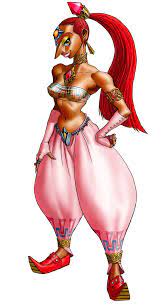
Located at the far west, we encounter the last of the cultures introduced to the game; the Gerudo people. Unlike the other races from the game; the Kokiri, the Goron, the Zora and the Hylians, who could have come from diverse fantasy traditions and would easily find their counterparts in other high fantasy works, the Gerudo find most of their influence in actual real world history and culture, adding an additional layer of realism and historicity to the Nintendo 64 entry. Never before or since an actual human culture represented the enemy in The Legend of Zelda (the Yiga clan being their successors but more cartoony and totally covered). This was Nintendo treading on dangerous waters and, as a consequence, the Gerudo race has had significant changes throughout the evolution of the series—even within Ocarina of Time itself.
Story-wise, the only fantastical element about the Gerudo is that they are an all-female race, where the legend says that a male is born every one hundred years; this man is deemed the leader of the tribe. This is sometimes said to be inspired by the Amazons—except for the patriarchy thing— a group of warrior women from Greek mythology that may or may not have existed in real life; and maybe this was indeed the original myth from where such an idea comes from. But, as we will see, it is only the most familiar to Westerners. The true influence of this development may have roots in Middle Eastern folklore.
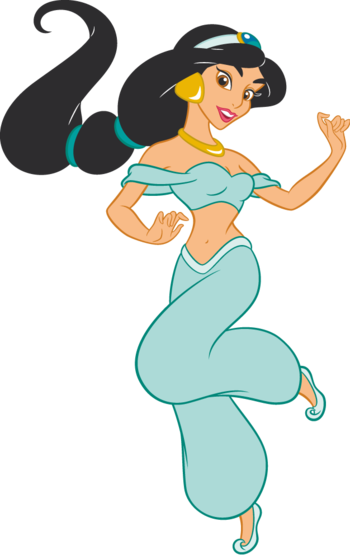
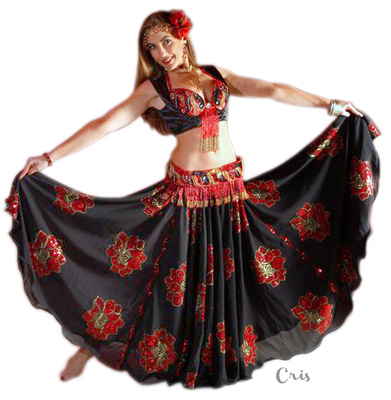
For the real world influences of the Gerudo we have, in not subtle ways, the Arab people and all the historical baggage that this culture brings with it, with a good deal of Romani imagery and dress code spliced alongside to complete the package of exotic otherness.
From the very first game of the series, The Legend of Zelda wanted to capture that European medieval fantasy feel and the developers even researched actual medieval wars. Still, no game came closer to reference real world events as Ocarina of Time did, being the culmination of the European fantasy, so much that the next game, its counterpart, decided to tackle the East since the traditional Western fantasy tropes were already exhausted here. When developing Ocarina of Time, the creators travelled to Europe to do research about its towns, castles and churches in order to make a world with fidelity, because even in fantasy, parallels with reality help to ground everything and the first 3D entry in the series strived for such depictions. There are traces of cultural conflict in the kingdom of Hyrule, mimicking the struggles of the middle ages in the European continent.
The darkness implicit in Ocarina of Time often goes unappreciated in favor of the likes of Majora’d Mask and Twilight Princess. But there are subtle storytelling hints of the struggles within the kingdom of Hyrule that involves all of its different inhabitants and clash of cultures. For starters, there are mentions of a Hyrulean civil war where the actual mother of our protagonist died and political alliances full of betrayals just like in real life as opposed to just mindless monsters that are pure evil and disappear in a puff of smoke. Between the lines of some locations we can also read that the Royal Family of Hyrule hides some sins of their own that they had to bury deep in their wells and temples; so not everything is as black and white as previous entries. There is plenty of political instability around the kingdom and someone like Ganondorf is ready to take advantage.
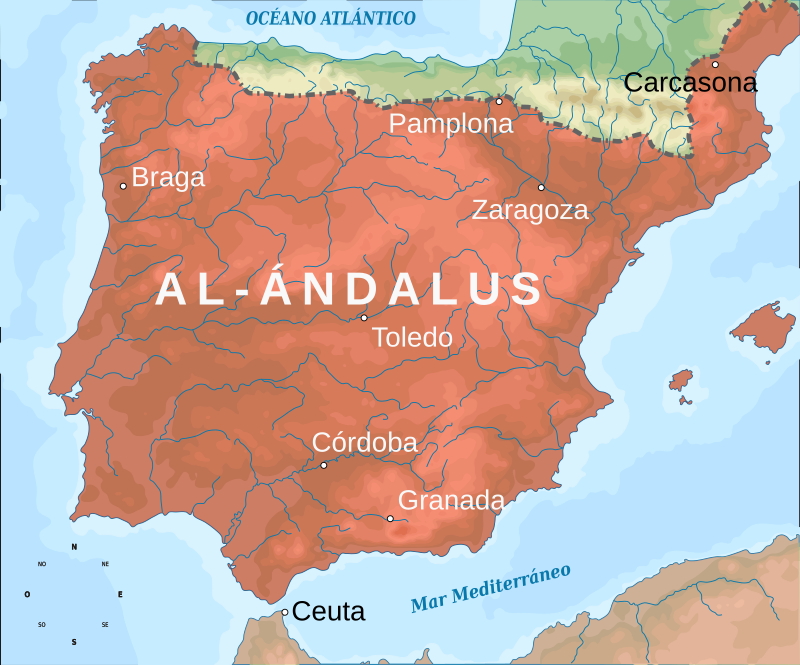
If you pull up the map of Hyrule you will notice that the Gerudo are located at the desert to the west of the rest of the kingdom. Based on their appearance and culture—at least before Nintendo toned it down—we can clearly see that they are meant to represent Moorish Spain, also known by its Arabic name Al-Andalus—also where the Andalusian cadence from the Zelda series originates and a fitting name since Andalus comes from the ones known as Vandals, which is where the word for vandalism comes from originally—This Arab civilization came from the African deserts and soon managed to take over much of the Iberian peninsula right in the middle of the middle ages.
Christian Europe fought against the rule of the Muslim Moors to retake their country in one of the most iconic settings of medieval history traditionally characterized as the Reconquista (‘reconquest’).
As for the fantasy elements that concern the Gerudo, not only is Ganondorf presented as the powerful caliph of the Gerudo presumably with his own harem as the cliche of exotic Arab rulers go, but the idea behind an all-female population is found in the famous island of Al-Wakwak legend from Arabic imaginative literature. In Arab versions this place is located in the China Sea, a queen rules the island and the population is entirely female, all born magically from a tree and considered a population rich in gold jewelry.
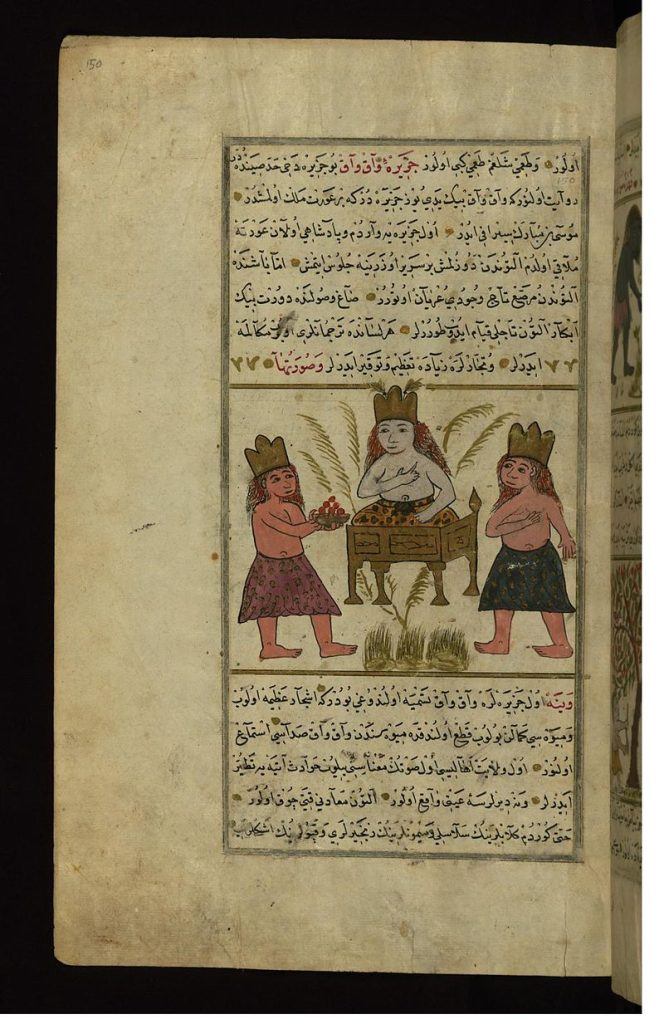
There are also plenty of stories of bandits coming from the desert in the tales coming from Arabs themselves as popularized in the collective consciousness by such landmark works as One Thousand and One Nights. The work actually tells us about that same Al-Wakwak island (seven islands in this version of the tale) that is inhabited by militant maidens and also filled with evil djinns, efreets, and spirits; a haunted wasteland. So the associations were already there to take from.
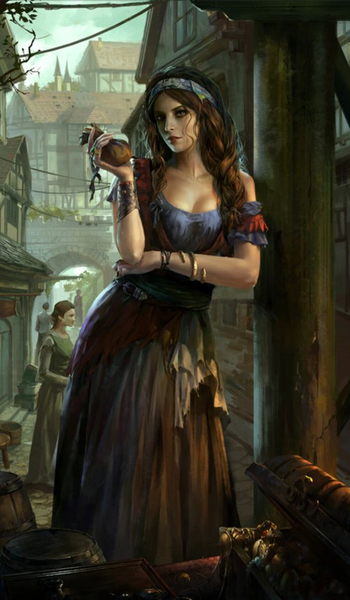
Speaking of exotic thieves, it is nothing new that the Romani, otherwise referred by the name of Gypsies, have been a popular subject in media due to the many colorful stereotypes associated with them. In fiction, Romani are usually depicted as dishonest: pickpockets, con artists, trespassers, and tricksters who wouldn’t think twice about taking everything you own; characteristics which are placed upon the Gerudo race inside the game. In Ocarina of Time, characters are afraid of them, they are known as a race of thieves, they kidnap men—only Nintendo knows what they were planning to do to those poor carpenter men— and the main bad guy of the game is their leader. They’re also portrayed as mysterious and magical people, inspired by the sheer number of Romani Fortune Tellers and Gypsy Curses pictured in popular culture; no surprise that this is the only race of the game that has Gypsy witches and performs dark magic.
This Roguish Romani stereotype originated from an actual facet of Romani culture. Namely that they originally only considered something to be personal property for as long as it remained on one’s person. This is no longer the case with Romani people nowadays.
Furthermore, the Romani usually appear as having dark skin, hypnotic hazel eyes and speaking with a weird accent, regardless of where they are and where they’re supposed to be from.
Since the Romani and the Arabs are a collection of ethnic groups found throughout Europe, the Americas, Africa and the Middle East, let’s try to pin down what might be what Nintendo was going for and how we ended up with the curve ball of a track that Koji Kondo threw.
As said, this was a case of putting Hyrule on a real word plane of existence and history. Bringing up the European-esque and Christian traits of the kingdom, the whole saga of the Gerudo parallels the history of Spain and the events that ensued due to it’s proximity to the desert located at the north of Africa; in-game Link literally traverses this desert and reaches the land fom which the Gerudo come from. Since it would be better to let a more qualified person to speak about the particulars of history, for now let’s limit ourselves to saying that the history of Spain with the people that reached the Iberian Peninsula through the desert is complicated. ‘Los Gitanos’ as they are called in Spain, is a word that evolved from egiptano, that is Egyptian. which was used for the ones coming from Africa. Hyrule has its own equivalent of Egypt in an blatant way in the form of the remote Dessert Colossus and the Spirit Temple—there are even enemies called Anubis and mummies— The implications being that the Gerudo came from deep in the desert to cause trouble for Christian Euro….excuse me, to Hyrule.
Basically, from the perspective of Christian Spain, and filtered through the lens of Japanese developers, anyone dark skinned who came from those far away lands, being African, Arab, Muslim or Indian was an alien threat to their customs.
So there it is, a long essay penned with superficial history and possibly wrong facts just to say that Gerudo Valley Is the representation of the collision of cultures that is Spain; one is at the very limits of Hyrule, the other at the very limits of Europe. All just to talk about how we ended up with one of the most unorthodox Zelda tracks. So the musical decision was no mere accident or Kondo just plugging music that he liked for the sake of it. This is the reason we got a flamenco tune for this location; the genre is closely associated with the Al-Andalus region, and maybe Gitanos of the Romani ethnicity who have contributed significantly to the musical style (even if of course the natives of that time never heard this style just like medieval ranchers never listened to bluegrass music). Or maybe we are reading too much into it and, alternatively, Miyamoto just told Kondo the Gerudo were going to be based around Gypsies, and the first thing that came to their mind was the group “The Gypsy Kings”. As we will see later, this is a very likely possibility.
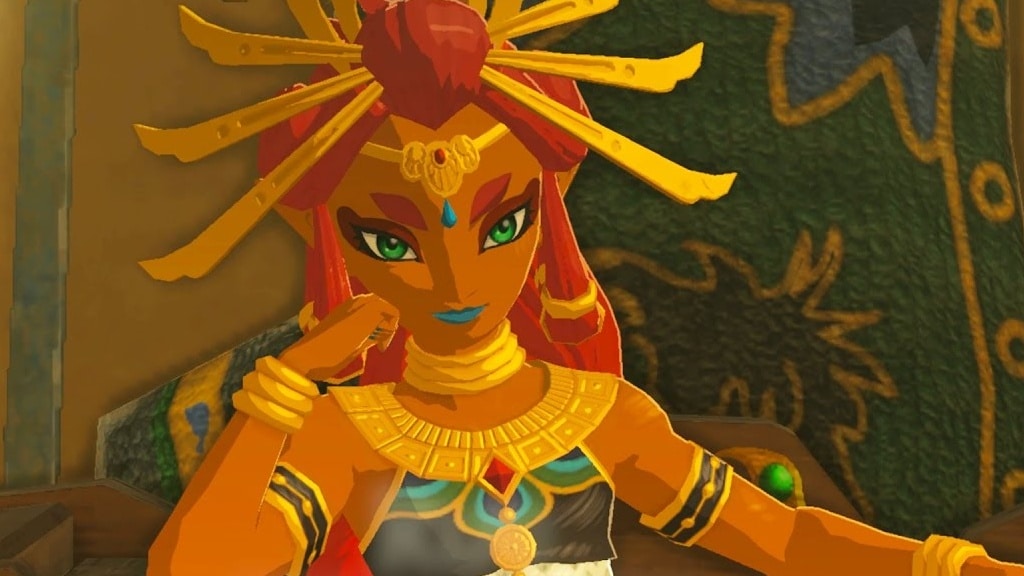
This was the first and only time that the Gerudo were portrayed in this fashion by Nintendo. After Ocarina of Time, these desert dwellers were toned down for the next installments—after even being completely abandoned from the desert of Twilight Princess, possibly due to how the realistic graphics would make their traits stick out more— Nowadays, they live as a peaceful tribe, not ruled by a man. Their normal human ears were replaced by the elfish ears characteristic of the Zelda series and overall fantasy, plus their eyes are now colored green; Nintendo (or Nintendo of America) probably realized that having a group of dark skinned, middle-eastern influenced group of robber Arab-Gypsy women being the main antagonists would not fly with modern standards of storytelling. All traces of overtly real influences were erased, including their original symbol of a crescent moon and star associated with the real life one of some Muslim states that was not present in Ocarina of Time newer versions. Ostensibly, another casualty was their iconic track that referenced directly the country of Spain, being replaced by more generic Arab sounding music.


Music Analysis
Structure: Section 0 / Section 1 / Section 2 / Section 3 / section 4
Time Signature: 4/4
Tempo: 120
Melodic and Harmonic Profiles: F# Aeolian/Minor; F# Harmonic Minor
The Gerudo Valley track is a culmination of sorts for the music of The Legend of Zelda. From the very beginning there was an Spanish sensibility to the series, as seen on its main theme and the plastering everywhere of the “major” Andalusian cadence (the fact that they were trying to put the piece ‘Bolero’ as the opening cue for the first game only confirms this). Now, Koji Kondo has finally decided to put a full blown flamenco track, a piece that would go on to become a standard of video game music and a fan favorite— it even has its own preferential spot on the official symphony concerts under the auspice of Nintendo, not being relegated to be part of a medley.
The track derives most of its power not only from an irresistible melody, but also from its exotic nature, this is a style that was almost never featured in a video game, much less a medieval fantasy inspired one; it causes immediate impact the moment the player sets foot in the desert region in account of its unexpectedness. The music opened the doors in future Zelda games for other composers to experiment with exotic world music traditions—Dragon Roost Island from The Wind Waker is among its sensibility spiritual successors.
The cue itself is a case of ‘Spexicanism’ where the Hipanic traits of both Spain and Mexico are fused into an amalgam of their general music features; the brass section and its harmonization adds strong Mariachi influences on top of the flamenco accompaniment.
The melodic phrases are very differentiated, with defined 4-bar phrases of question-answer pairs. The main rhythmic drive of the piece is provided by handclaps performed faithfully to the ‘palmas’ style characteristic of flamenco. Palmas is a tradition that helps to punctuate and accentuate the music, with polyrhythmic configurations that are not easily performed by someone unfamiliar with the genre. There are two clapping pars in the cue, each one is accentuating different beats; presenting two distinct rhythms simultaneously—the first one (right) is going 3 3 2 4 4 and the second one (left) goes 4 4 3 3 2:
.
The two rhythm guitars also perform slightly different parts, with the one on the left playing bass intervals in addition to the chords. The notes between the two are not perfectly aligned, giving authenticity to the performance. They play an standard flamenco progression: F#m, D, E7, C#7 throughout the entire track—yet again, another appearance of the Zelda-ish Andalusian-ish chord sensibilities (Just change the first chord back to major and bam!, music sounds like Zelda). Since you are now outside the domains of Hyrule you get a key further than the typical G profile, being now based around F# minor.
The track was most likely composed while the developers were listening to the group known as the ‘Gipsy Kings’ Kondo has gone on record saying that he enjoys listening to the group and there is even a photography from the era that shows that Shigeru Miyamoto was a fan too—the blue cover of the album ‘Mosaïque’ by the Gipsy Kings is seen in the background front and center:
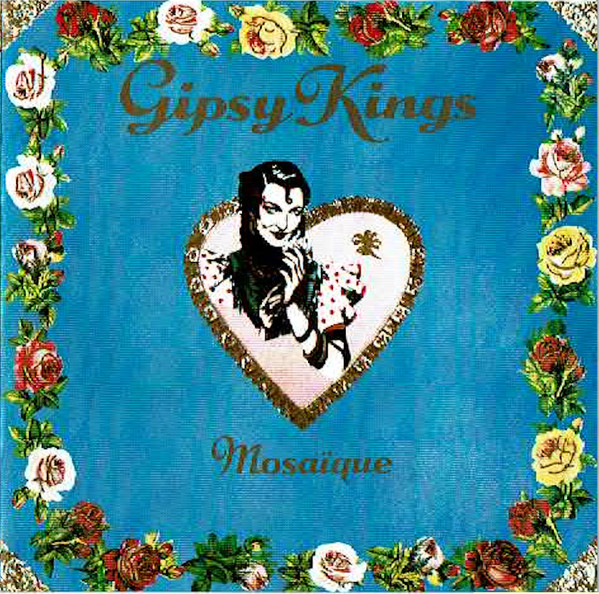

The flamenco inflected music of the Gipsy Kings might have left an indelible imprint of the soundtrack from Ocarina of Time:
There is also a possible more obscure inspiration for the main melody of the track, as very similar motifs and chord progressions are used in the anime for the series Dodge Danpei back in 1991:
Although the resemblance is undeniable, the use of transposed phrases repeated is so common in music that it may just be a coincidence.
Now with the last of the major areas of the game put into music and the story framework that inspired the central conflict taken care of, what was left for Kondo was to focus on the tracks of the memorable temples across Hyrule and finish the cues that accompany the main beats of the story. Soon, Link will not be a child anymore and his world will be a little less colorful.

Help to keep the rites going around here by supporting the shrine:

Media Files, requests and support for more interactive content

Thou shall donate since this is a cult and you are now a sheep

Help staying awake analyzing game tracks and writing posts or else everything will end up being written by A.I
- Inside The Score – The Legend of Zeda: A Link to the Past – End Credits / Staff Roll
 The land rests As the last few minutes of this extensive journey that has now come to an end fly by, the nostalgia and reflective mood kicks in. Because such a massive enterprise as a Zelda game or a Lord of the Rings movie require multiple endings to convey everything that the adventure represented. You… Read More »Inside The Score – The Legend of Zeda: A Link to the Past – End Credits / Staff Roll
 - Inside The Score – The Legend of Zelda: A Link to the Past – Ending / Epilogue ~ Beautiful HyruleFinal of the fantasy The Triforce has been touched. A wish has been granted. For the occasion, the newly undeceased king of Hyrule has commissioned a march in honor of the legendary hero to the Hylian Sousa, who might as well be composer Nobuo Uematsu since this piece is very similar to the main theme… Read More »Inside The Score – The Legend of Zelda: A Link to the Past – Ending / Epilogue ~ Beautiful Hyrule
- Inside The Score – The Legend of Zelda: A Link to the Past – Triforce Chamber / Power of the GodsTake your boots off your feet And thus the Triforce spoke to men. And it became present in history. And you better treasure and contemplate this moment seldom witnessed in the course of the series. The elusive opportunity to interact and touch the most important artifact. You are now in the presence of something truly… Read More »Inside The Score – The Legend of Zelda: A Link to the Past – Triforce Chamber / Power of the Gods
- Inside The Score – The Legend of Zelda: A Link to the Past – Ganon Battle / Prince of DarknessProgressive evil En Garde! And you better be prepared since you are about to duel the iconic enemy of the series at perhaps his canonically most powerful incarnation. Right after having touched the sacred Triforce which allowed him to conquer all of the Golden Land and whose evil and darkness are pouring out into Hyrule.… Read More »Inside The Score – The Legend of Zelda: A Link to the Past – Ganon Battle / Prince of Darkness
- Inside The Score – The Legend of Zelda: A Link to the Past – Boss Battle / Anger of the GuardiansQuick mayhem Ah, the simpler times when boss battles where not a multi epic orchestral suite but just an ostinato more basic that even what became the music for standard battle encounters out there. We are a long way from each boss having his own personalized track. And this early boss battle cue is one… Read More »Inside The Score – The Legend of Zelda: A Link to the Past – Boss Battle / Anger of the Guardians
- Inside The Score – The Legend of Zelda: A Link to the Past – Dark World Dungeon / Dungeon of ShadowsMemento mori We are getting closer to Ganondorf (or at least the wizard Agahnim who ultimately fulfills the same human side of evil role in this game) and that means getting closer to the profiles and motifs of his own theme song (which naturally was the theme of Agahnim at this point) on this dungeon… Read More »Inside The Score – The Legend of Zelda: A Link to the Past – Dark World Dungeon / Dungeon of Shadows