Before the organ, there was the human voice
The most pure form of worship. Using the fleshwind instrument that God packaged into every human being, people have been using this most basic of the tone producing methods probably since the beginning of the species. Being so universal, it is no wonder it is the most used to reach the divine or for courtship or for practically anything. Even other animals use it.
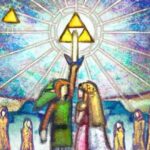
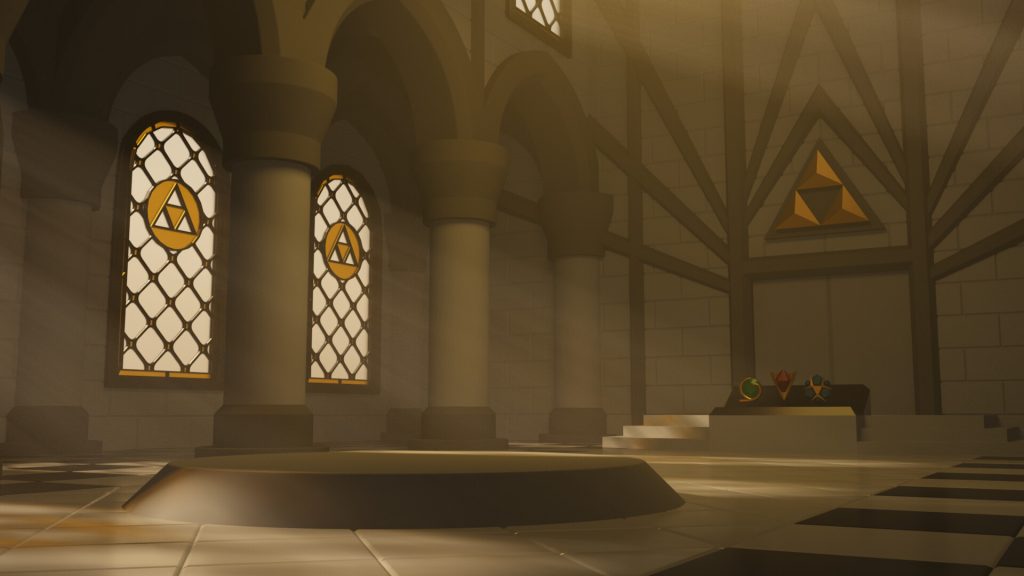
Just stepping right on the garden outside the temple, you know this is an important, serious place. The look is immediately recognizable as an European Catholic cathedral, the music immediately fades away even if you are technically still close to the market, and only the sounds of nature remain, already marking this building as something more solemn. It is after all the resting place of the sacred sword and the most important relic for Hyruleans, the Triforce; you will need the access key from all races to enter. As soon as you step in, the enormity of the building and its music unquestionably let’s you know there is also a sacred dimension to the world of The Legend of Zelda. You will spend quite a lot of time here hearing this cue since it will become the staring point every time you reset your game for the adult portion of the adventure.
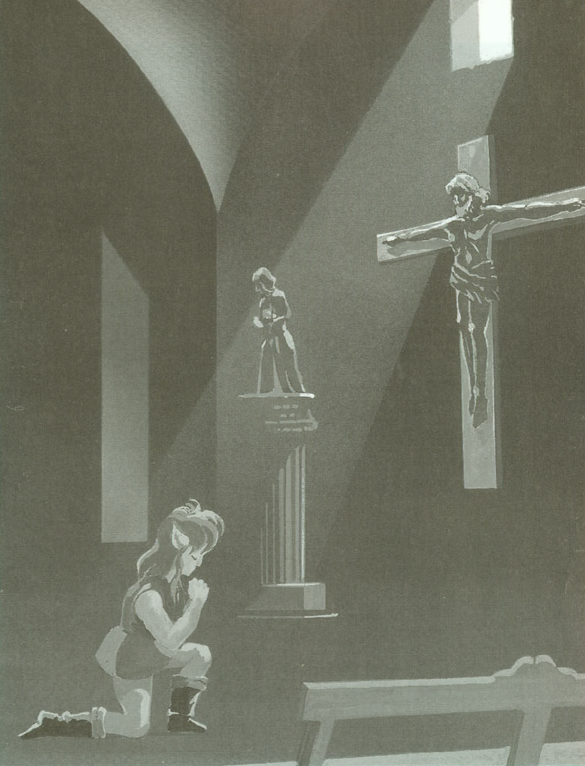
Ocarina of Time cemented the foundational mythos of the series showcasing its pantheon of goddesses, the Triforce origins and with its main temple dedicated to the concept of time, not only one of the main game mechanics around which the story revolves but also likely the property that concerns the goddess Hylia which would appear later in the series—in truth she was just a great fairy that mined timeshifting stones thus making people see her as a goddess but people are not ready for this conversation yet. Still, the Christian influences from the earlier entries manage to reappear due to the medieval European fantasy heritage; it is the main religion of that region after all. So we may not have an omniscient, omnipotent Triforce anymore and Link will not carry a Bible, cross and a crusader shield anymore but we can still partake in the musical and architectural influences in order to make this world more believable and connected with our real world experience; if it weren’t for the N64 limitation we would probably have gotten some Latin or pseudo-Latin chants in here. The developers did travel to Europe to study its locations after all.
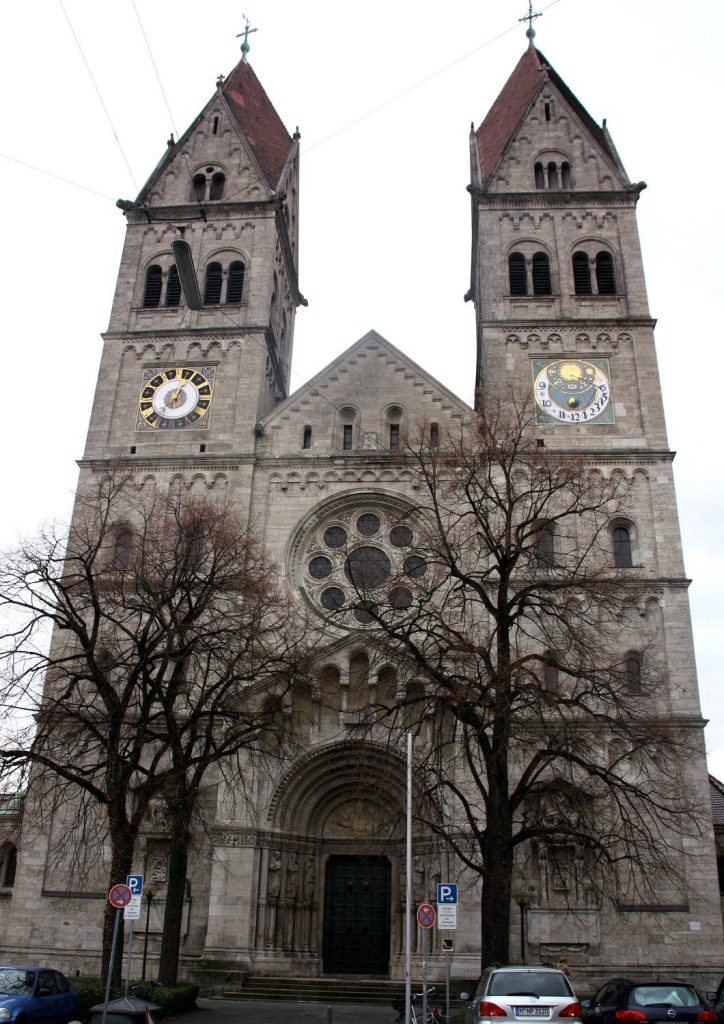
The imposing cathedral design feels like countless church scattered across the world but it is actually quite distinctive; though the building has influences from kind of Romanesque, pre-gothic architecture with those bricks, arches and windows like the central circular rose window, it also retains some castle-like design in the way that the central tower pillar is the tallest. In churches normally the side towers are the ones above the rest. Entering the church, Link is welcomed by what feels like an immense setting (where is even the celling on this thing!?). The 3DS version expanded on the romanesque design, with appropriate windows and columns. It is a cathedral through and through but it also has that chess-like floor usually found in castles and palaces of the renaissance era—also why Mario 64 and Super Mario Bros. 3 castles have this floor.
The Temple of Time cue, another location track based around one of the ocarina melodies, captures the sublime divine simplicity of the transcendental via the ancient plainchant tradition combined with the sacred Dorian profile.
Musical Analysis
Structure: Section 1 / Section 2
Time Signature: 4/4
Tempo: 75 (ritardando at the end of phrases between 60 and 44)
Melodic and Harmonic Profiles: D Dorian
Your steps reverberate through the high walls, a sound that will probably remain in the minds of players throughout their lives; you probably can recall it if you played through the game. The brief silence setting the mood for the sense of gravitas that this place commands. This is where the titular Ocarina of Time will fulfill its main role. You should respect this place. You certainly should not roll screaming with Link!. Savour its ambience, walk to the altar.
You are accompanied by a male choir singing a monophonic line—it is likely non-diegetic but there is a possibility this is actually sung at the temple. You can’t do wrong going with plainchant for a church setting. Gregorian chant, named after pope Gregory, is the central music tradition of the Roman Catholic Church—the same guys who popularized the magnificent cathedrals the Temple of Time is based upon— the church wants people to feel God through their five senses, and accordingly, have a developed aesthetic sense for each sense (yes, even smell), this includes music. cultivated throughout the ages. its development around the ninth century usually serves as the mark where Western classical music starts (as a cool fact, the first composer whose biography is known, was a Catholic nun and founder of scientific natural history named Hildegard of Bingen). Since you need consistency to praise God, the earlier chants had to be standardized somehow and preserved; religion is all about contemplating eternal values after all. So it was mostly through the influence of this institution that the continent developed progressively better methods of doing and preserving science, academy, architecture and art. There is a reason why the renaissance was kickstarted in Italy (if you want to imagine what a world without its influence would look like…you don’t need to, there was a separate continent isolated by an ocean that had a different conception of the world). Music benefited by evolving its written form, which allowed to preserve compositions for posterity. Monophony was the natural starting point.
It was inevitable that monks singing in Latin would come to identify divine power, spirituality, mystery and death in different kinds of media. And the Temple of Time, where the path to the Triforce lies, is the most sacred place in all of Hyrule. Koji Kondo says that working on The Legend of Zelda presents him with the opportunity to study different styles and cultures from around the world, and he certainly did his homework in adapting the specifics of plainchant.
The melody is taken from the Song of Time Link learns later in the game. It exhibits a slow, dynamic tempo, where each phrase seems to go with its own meter and starts and stops without paying attention to a time signature; it sounds very natural and faithful. The melody covers all the notes from the D Dorian mode (basically, all the white piano keys from D to D) a popular mode to emphasize the plainchant vibe—used again for the Halo series main theme which also starts as a monophonic chant—all phrases end on a D note, cementing the Dorian mode. Similar to plainchant, the piece avoids huge leaps in the melody for the most part; it’s easier to sing monophonically this way in a church with your fellow monks because you can slip to the note even if you don’t hit it right away.
There are just three phrases. The Song of Time repeats twice and then we find a second phrase that exemplifies the question-answer block format of a melody, with the third phrase exemplifying the long form melody format. The main rhythm motif is the slow gallop figure which is featured in all of the phrases (two eights, one quarter note). There is no strict rhythm between the phrases.
The piece is actually composed in a way that would be easy to sing for an actual male choir, augmenting the sense of fidelity. It is a song easy to remember for people in times in which music notation was very rough and with more freedom, just basic guidelines on melodic contour. The use of the Dorian mode for the sacred also calls back to a time before the modern major/minor conception of music; it sounds truly ancient (Ancient Evil = Phrygian Ancient Good = Dorian, the more Middle Eastern sounding a tune, the more likely you are to be on a lava world).
From a sound design standpoint, the huge reverb is created by mixing two choirs panned left and right, with a slight delay to the right choir. All this brings to live the ancient mythology and religious traditions of the people of Hyrule.
Musical Analysis: Door of Time
Structure: Section 1 / Section 2
Time Signature: 3/4
Tempo: 88
Melodic and Harmonic Profiles: D Aeolian/Minor, D Ionian/Major
Ameeeen
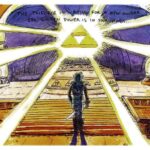
Ever wondered what the Gregorian chant heard inside the Temple of Time would sound harmonized? Well ,you don’t need to anymore because the short snippet that plays when you finally put the three spiritual stones on the pedestal of time presents both an harmony and a cadence to mark this special moment in the adventure. In real life monophonic chants lead to the organum which begun the path to polyphony in the Western art music tradition.
The catharsis when Link finally plays the Song of Time with his own hands at the altar of the Temple of Time. The piece that sounds after this stabilizes the rubato rhythm of the original and doesn’t have the time to reach the Dorian notes, staying on the D Aeolian/Minor Profile till the last part, when it goes unflinchingly towards that embellished amen cadence in D Ionian/Major; it could not be any other way inside a church. The same cadence is used for the track “Legend of Hyrule” connecting both with the tradition of the sacred. The piece is written with a descending bass line that mimics the chorale style (except that this time Koji decided to use strings instead of the choirs). It is also hinting the characteristic Andalusian progression that is all over the Zelda series.
The notes suggest the chord progression of: Dm – F – Bb – A – Gsus2 – D. Kind of a plagal cadence. It goes faster than the location cue, showing you that this is an exciting moment that only happens once in various lifetimes at this enclosure.
A pivotal moment in Link’s adventure, after opening the door of time there is not going back, the world is about to change for the worse..
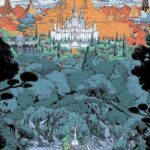
After church, another European standard is the huge fortresses known as castles, where royalty lives, the political power of the kingdom as decided by divine right. You would expect something as mighty and epic as the Hyrule Castle theme from A Link to The Past, but the funny scenes that ensue when trying to reach the princess makes Kondo go for silly cartoonish music to capture the gameplay scene (it is actually the favorite cue for the composer due to how perfectly it captures movement). Time to sneak past the guards as a mischievous child.
Help to keep the rites going around here by supporting the shrine:

Media Files, requests and support for more interactive content

Thou shall donate since this is a cult and you are now a sheep

Help staying awake analyzing game tracks and writing posts or else everything will end up being written by A.I
- Inside The Score – The Legend of Zeda: A Link to the Past – End Credits / Staff Roll
 The land rests As the last few minutes of this extensive journey that has now come to an end fly by, the nostalgia and reflective mood kicks in. Because such a massive enterprise as a Zelda game or a Lord of the Rings movie require multiple endings to convey everything… Read More »Inside The Score – The Legend of Zeda: A Link to the Past – End Credits / Staff Roll
 - Inside The Score – The Legend of Zelda: A Link to the Past – Ending / Epilogue ~ Beautiful HyruleFinal of the fantasy The Triforce has been touched. A wish has been granted. For the occasion, the newly undeceased king of Hyrule has commissioned a march in honor of the legendary hero to the Hylian Sousa, who might as well be composer Nobuo Uematsu since this piece is very… Read More »Inside The Score – The Legend of Zelda: A Link to the Past – Ending / Epilogue ~ Beautiful Hyrule
- Inside The Score – The Legend of Zelda: A Link to the Past – Triforce Chamber / Power of the GodsTake your boots off your feet And thus the Triforce spoke to men. And it became present in history. And you better treasure and contemplate this moment seldom witnessed in the course of the series. The elusive opportunity to interact and touch the most important artifact. You are now in… Read More »Inside The Score – The Legend of Zelda: A Link to the Past – Triforce Chamber / Power of the Gods
- Inside The Score – The Legend of Zelda: A Link to the Past – Ganon Battle / Prince of DarknessProgressive evil En Garde! And you better be prepared since you are about to duel the iconic enemy of the series at perhaps his canonically most powerful incarnation. Right after having touched the sacred Triforce which allowed him to conquer all of the Golden Land and whose evil and darkness… Read More »Inside The Score – The Legend of Zelda: A Link to the Past – Ganon Battle / Prince of Darkness
- Inside The Score – The Legend of Zelda: A Link to the Past – Boss Battle / Anger of the GuardiansQuick mayhem Ah, the simpler times when boss battles where not a multi epic orchestral suite but just an ostinato more basic that even what became the music for standard battle encounters out there. We are a long way from each boss having his own personalized track. And this early… Read More »Inside The Score – The Legend of Zelda: A Link to the Past – Boss Battle / Anger of the Guardians
- Inside The Score – The Legend of Zelda: A Link to the Past – Dark World Dungeon / Dungeon of ShadowsMemento mori We are getting closer to Ganondorf (or at least the wizard Agahnim who ultimately fulfills the same human side of evil role in this game) and that means getting closer to the profiles and motifs of his own theme song (which naturally was the theme of Agahnim at… Read More »Inside The Score – The Legend of Zelda: A Link to the Past – Dark World Dungeon / Dungeon of Shadows