Howling sounds through the cracks of the earth
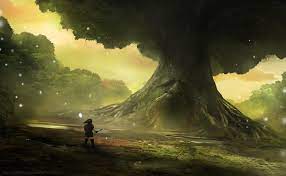
Time to become one with nature. And we are not talking about hugging trees but actually entering them. The Deku Tree himself who opened the curtain to the narrative of Ocarina of Time surprisingly serves as the very first “dungeon”, paying homage to the very first one from the original The Legend of Zelda. The guardian spirit of the Kokiri has the honor of kickstarting the dungeon side of 3D Zelda, teaching players the kinds of puzzles that the new dimension allows; there is a reason the developers force you to jump into a web from above, using the concept of gravity for a puzzle. Producer Shigeru Miyamoto was specially involved during these early stages as he feels they are key to the whole experience; if you get the beginning right, everything else is smooth sailing.
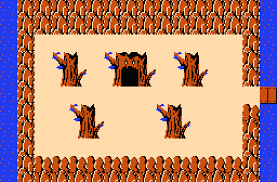
The child era dungeons are the organic ones, two of them being inside living creatures, the guardian deities of their respective cultures actually, and a cavern within a mountain. Proper dungeons built by men will come later. The music also takes a left turn; the previous Zeldas had some gothic tunes full of suspense and danger but here there is an eery calmness that is captured by the soundscape, an ambient track with only one sound that conveys the natural world.
For this Zelda, each and every dungeon will have its own cue that aims to mix the sounds of the environments with musical information, the line between sound effects and music gets blurred. The Deku Tree and the next dungeon Dodongo’s Cavern have the particularity that their cues are the only dungeon tracks that are reused for other locations in Hyrule (technically the Shadow Temple is also used for the well but it is implied it is the same location), this one also appearing in the grottoes of Hyrule and in the creepy house of the Skulltulas; it could be because they fit perfectly these locations or there was not more time to create more cues.
Musical Analysis
Structure: Section 0 / Section 1
Time Signature: 4/4
Tempo: 50
Melodic and Harmonic Profiles: B Mixolydian (MUSIC NOTATED A HALF STEP HIGHER BECAUSE OF THE SAMPLES USED!!!)
Listen closely, as thou shall be listening to the sound of nature itself.
This is not your typical Zelda underworld music. For the dungeons throughout the game, Kondo decided to capture as close as possible the atmosphere of the locations instead of opting for the usual danger and sense of hopelessness that was a staple in previous entries.
For the first dungeon in the game, the composer shows us its underrated talent for creating ambient soundscapes by instantaneously making us feel that we have entered a sacred place, not a church with their typical Gregorian chants, but something of an earthly, sacred nature. The Great Deku Tree was the closest being to a ‘Kami’ from shintoism that had come into the series until then, a guardian tied to the health of the forest and its people; the instruments Koji used represent this nature type of deity, using a mystic bamboo flute sample with the pitch lowered to match the enormity of the tree itself.
The sounds seem to be emanating from the place, going around in a circular pattern similar to the layout of the dungeon, a round, hollow trunk with stuff inside—even though Ocarina of Time was aiming for realism, being a game means you can get away with having ladders and torches inside a tree. The low flute could easily pass for the irregular breathing of the sick Deku Tree, and the high flute just seems to be improvising the melodies the wind produces as it naturally passes through the branches or holes in the earth; it feels eternal, difficult to pinpoint when does exactly the cue loops or what phrase is playing. The piece sounds a half step lower as notated, probably because Kondo knew he would be improvising and didn’t give much thought to the placement of the notes on the keyboard. It plays a single B7 chord that does not sound bluesy at all, just as a dominant without resolution. Kondo restricts himself to playing this dominant chord throughout multiple octaves, giving an unresolvable feeling to the piece and making it feel like the natural harmonics of the music scale are at play. The note F# serves as a pedal note throughout.
Since players spend so much time inside dungeons, Kondo avoids having catchy or repetitive melodies that may cause fatigue, just a background landscape that seems to evolve infinitely. The timbre itself is way more complex than a simple flute, being engulfed in reverberation and also fluctuating. This is the forest plainchant, where sound design plays a bigger role in the effectiveness of the cue than music.
You can listen here to the original sample:
Motifs from this song—plus even the same timbre—appear again in The Wind Waker and Twilight Princess where there could be remnants of the Great Deku Tree, an entity difficult to pull off in the photorealistic world of Twilight Princess (the reason there are no Kokiri anymore is because they guardian deity died). They are naturally used in the grottoes and shrines in Wind Waker and in the case of Twilight Princes, strangely it is used in none other than the Temple of Time, perhaps because it has been engulfed by the forest.
As a spirit of nature, the sickness of the Great Deku Tree has repercussions all across the forest. He is the first mentor figure to young Link and is currently tormented with a parasitic entity. This entity will serve as the first boss of Ocarina of Time. The game will seize the opportunity to continue showing off its 3D features, being a key component of the encounter with this boss. The battle music now gets action packed.

Help to keep the rites going around here by supporting the shrine:

Media Files, requests and support for more interactive content

Thou shall donate since this is a cult and you are now a sheep

Help staying awake analyzing game tracks and writing posts or else everything will end up being written by A.I
- Inside The Score – The Legend of Zeda: A Link to the Past – End Credits / Staff Roll
 The land rests As the last few minutes of this extensive journey that has now come to an end fly by, the nostalgia and reflective mood kicks in. Because such a massive enterprise as a Zelda game or a Lord of the Rings movie require multiple endings to convey everything… Read More »Inside The Score – The Legend of Zeda: A Link to the Past – End Credits / Staff Roll
 - Inside The Score – The Legend of Zelda: A Link to the Past – Ending / Epilogue ~ Beautiful HyruleFinal of the fantasy The Triforce has been touched. A wish has been granted. For the occasion, the newly undeceased king of Hyrule has commissioned a march in honor of the legendary hero to the Hylian Sousa, who might as well be composer Nobuo Uematsu since this piece is very… Read More »Inside The Score – The Legend of Zelda: A Link to the Past – Ending / Epilogue ~ Beautiful Hyrule
- Inside The Score – The Legend of Zelda: A Link to the Past – Triforce Chamber / Power of the GodsTake your boots off your feet And thus the Triforce spoke to men. And it became present in history. And you better treasure and contemplate this moment seldom witnessed in the course of the series. The elusive opportunity to interact and touch the most important artifact. You are now in… Read More »Inside The Score – The Legend of Zelda: A Link to the Past – Triforce Chamber / Power of the Gods
- Inside The Score – The Legend of Zelda: A Link to the Past – Ganon Battle / Prince of DarknessProgressive evil En Garde! And you better be prepared since you are about to duel the iconic enemy of the series at perhaps his canonically most powerful incarnation. Right after having touched the sacred Triforce which allowed him to conquer all of the Golden Land and whose evil and darkness… Read More »Inside The Score – The Legend of Zelda: A Link to the Past – Ganon Battle / Prince of Darkness
- Inside The Score – The Legend of Zelda: A Link to the Past – Boss Battle / Anger of the GuardiansQuick mayhem Ah, the simpler times when boss battles where not a multi epic orchestral suite but just an ostinato more basic that even what became the music for standard battle encounters out there. We are a long way from each boss having his own personalized track. And this early… Read More »Inside The Score – The Legend of Zelda: A Link to the Past – Boss Battle / Anger of the Guardians
- Inside The Score – The Legend of Zelda: A Link to the Past – Dark World Dungeon / Dungeon of ShadowsMemento mori We are getting closer to Ganondorf (or at least the wizard Agahnim who ultimately fulfills the same human side of evil role in this game) and that means getting closer to the profiles and motifs of his own theme song (which naturally was the theme of Agahnim at… Read More »Inside The Score – The Legend of Zelda: A Link to the Past – Dark World Dungeon / Dungeon of Shadows