Thy kingdom come
We are back at it with yet another track from the musically rich and ambitious The Legend of Zelda series, this time with none other than the main theme of the series in its original Bb key, which forms the cornerstone of the rest of the series music thanks to its heavily modal nature that mimics harmonically how the hero is taken to different lands, environments and has moments of triumph, thrill and danger. It is pure adventure in sonic form. For more on the music from Zelda you can read here.
Hyrule Castle
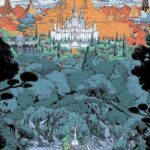
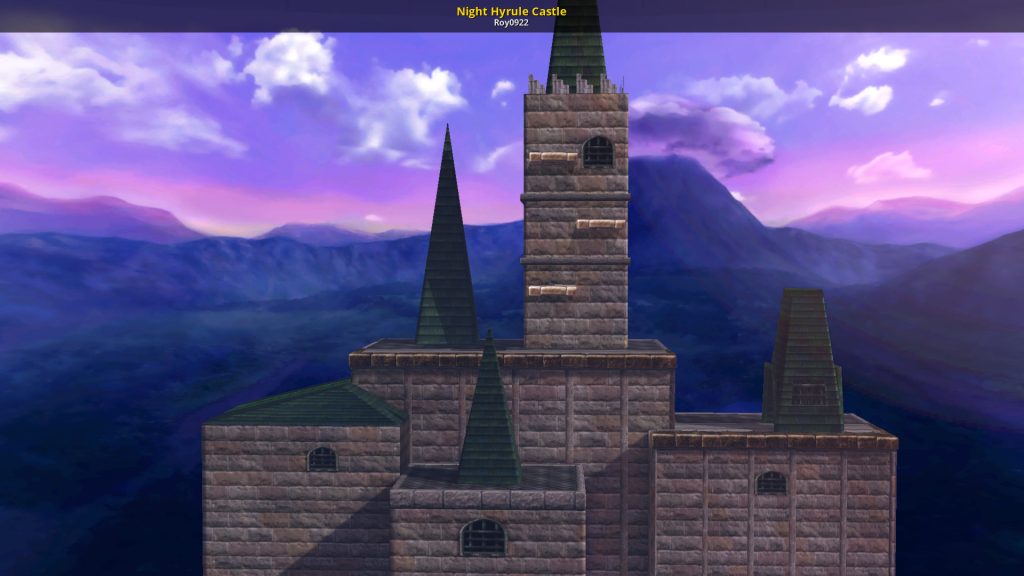
The design of the stage is based around the castle that appeared in Ocarina of Time, which was itself based on the very modern real life German castle known as Neuschwanstein Castle. The main difference is that this one has green roofs perhaps to make it clear that it is from Zelda which is green coded due to the attire of our protagonist. Why are tornadoes here? What do them have to do with Zelda? Well, at least on the very first game Link could surmount them to teleport across the land; so there is that. The stage’s background features Death Mountain as it appeared in Ocarina of Time too.
The overworld theme of the land of Hyrule was brough into existence by Nintendo in-house composer Koji Kondo, partially inspired by classic 1930s scores of swashbuckling films like those from Korngold and Alfred Newman. The composition takes its most characteristic feature, the Andalusian cadence [ i – bVII – bVI – V ], directly from the song ‘Ápril’ by Deep Pure, one of Kondo’s favorite progressive rock bands (he was actually in a cover band).
The song inspired the score of the first game, not only in the overworld music but also the underground dungeons which feature an arpeggio also found in this theme.
The catch is that the Andalusian progression used in Zelda music, which by itself sounds epic but still landing more on the side of danger, is made more triumphant and heroic due to using the tonic chord in major form as opposed to minor, giving the series a tone between major and minor from the get go which fits perfectly its blend of serious and whimsical.
The chords take us on a tour to the different locations of Hyrule. They change very consistently each bar unrelentingly accompanied by the militaristic snare drum straight from films such as ‘The Adventures of Robin Hood:
The theme gains its strong Mixolydian undertones thanks to the opening Bb to Ab progression; but at its core it is a song that borrows from multiple modes of Bb. When the main melody kicks in, the major Andalusian harmonic progression [Bb – Ab – Gb – F] takes an unexpected detour even further from home by replacing the F for a Db; Link is not in his cozy village anymore. However, the bright C to F cadence of the first section shows how Link is able to prevail, making his first return home from his little eight bar adventure. The second restatement of the melody brings yet another path, this time the road most fraught with danger, an even greater challenge to overcome. This is realized when the Andalusian cadence goes to the more dissonant E on the bass with a Gb chord on top; it goes to the tritone note of Bb, mimicking the fight with a final villain. The tritone chord clashes with the dominant chord F for a while before Link finally emerges victorious and returns home. It is the song of the hero after all.
Further analysis for the composition was already made for its version in Majora’s Mask:
Analysis here.
The arrangement found in Super Smash Bros features an standard version following closely the iterations heard in the original NES game and in A Link to the Past alongside some flourishes by the woodwinds. The descending synthetic trumpet interlude which ends its melody line is straight from the NES Title Theme though. The arrangement uses in place of the bass a famous sample that is known as an Orchestra hit, which is a short recording of the entire orchestra hitting a quick note, so everyone is featured in that small sample, from percussion to woodwinds in a single note. Some might recognize it better in the Metal Mario theme from Super Mario 64 and countless 80s popular song hits. Here is more info on the subject:
The director of the game did not known whether he should feature music from the Ocarina of Time overworld for the character of Link in Super Smash Bros. At the end of the day, the main theme is the main theme.
Link Victory Theme
The fanfare that plays whenever the hero of time, Link, from the Zelda franchise is victorious in one of his battles in the Smash bros series. The flourish is actually an amalgam of two different fanfares found in The Legend of Zelda. The first part can be thought of as either an excerpt of the main theme/overworld of the series music written by Koji Kondo or more precisely the Triforce collect fanfare that played when you get it at the end of the original NES game, which is anyway based around the same overworld theme; so already a sign of triumph for the hero. It is very short and only features the main opening motif—the longer full version appears in Smash bros Brawl and Smash U—and then a cadence to the note Ab. Of course, like its main theme counterpart, it is based around the Zelda Andalusian progression. However, the song does not end there, as on top of the already finished flourish and cadence in Ab the arranger decided to put a version of the ‘Small Item Get/Heart Piece’ cue from the recent Ocarina of Time, which is just the good ol’ Mario cadence favored by Koji Kondo whenever a success is happening.
The cadence is played in the key of Bb here [ Gb – Ab – Bb ] creating a piece with two cadences at the same time and giving the last chord a special flavor thanks to the Bb major on top of that Ab flat in the bass (basically a Bb and Ab major are playing at the same time at the end). Arranger Hirokazu Ando is clearly fond of ending his character fanfares in strange extended chords; this stylistic device was dropped in the subsequent Super Smash Bros. games where the themes resemble more closely the ones from their respective original games. So it remains a quirk of the Nintendo 64 version. The bass synthesizer is striving to imitate a tuba sound.

Help to keep the rites going around here by supporting the shrine:

Media Files, requests and support for more interactive content

Thou shall donate since this is a cult and you are now a sheep

Help staying awake analyzing game tracks and writing posts or else everything will end up being written by A.I
- Inside The Score – The Legend of Zeda: A Link to the Past – End Credits / Staff Roll
 The land rests As the last few minutes of this extensive journey that has now come to an end fly by, the nostalgia and reflective mood kicks in. Because such a massive enterprise as a Zelda game or a Lord of the Rings movie require multiple endings to convey everything… Read More »Inside The Score – The Legend of Zeda: A Link to the Past – End Credits / Staff Roll
 - Inside The Score – The Legend of Zelda: A Link to the Past – Ending / Epilogue ~ Beautiful HyruleFinal of the fantasy The Triforce has been touched. A wish has been granted. For the occasion, the newly undeceased king of Hyrule has commissioned a march in honor of the legendary hero to the Hylian Sousa, who might as well be composer Nobuo Uematsu since this piece is very… Read More »Inside The Score – The Legend of Zelda: A Link to the Past – Ending / Epilogue ~ Beautiful Hyrule
- Inside The Score – The Legend of Zelda: A Link to the Past – Triforce Chamber / Power of the GodsTake your boots off your feet And thus the Triforce spoke to men. And it became present in history. And you better treasure and contemplate this moment seldom witnessed in the course of the series. The elusive opportunity to interact and touch the most important artifact. You are now in… Read More »Inside The Score – The Legend of Zelda: A Link to the Past – Triforce Chamber / Power of the Gods
- Inside The Score – The Legend of Zelda: A Link to the Past – Ganon Battle / Prince of DarknessProgressive evil En Garde! And you better be prepared since you are about to duel the iconic enemy of the series at perhaps his canonically most powerful incarnation. Right after having touched the sacred Triforce which allowed him to conquer all of the Golden Land and whose evil and darkness… Read More »Inside The Score – The Legend of Zelda: A Link to the Past – Ganon Battle / Prince of Darkness
- Inside The Score – The Legend of Zelda: A Link to the Past – Boss Battle / Anger of the GuardiansQuick mayhem Ah, the simpler times when boss battles where not a multi epic orchestral suite but just an ostinato more basic that even what became the music for standard battle encounters out there. We are a long way from each boss having his own personalized track. And this early… Read More »Inside The Score – The Legend of Zelda: A Link to the Past – Boss Battle / Anger of the Guardians
- Inside The Score – The Legend of Zelda: A Link to the Past – Dark World Dungeon / Dungeon of ShadowsMemento mori We are getting closer to Ganondorf (or at least the wizard Agahnim who ultimately fulfills the same human side of evil role in this game) and that means getting closer to the profiles and motifs of his own theme song (which naturally was the theme of Agahnim at… Read More »Inside The Score – The Legend of Zelda: A Link to the Past – Dark World Dungeon / Dungeon of Shadows