Solemn sovereignty
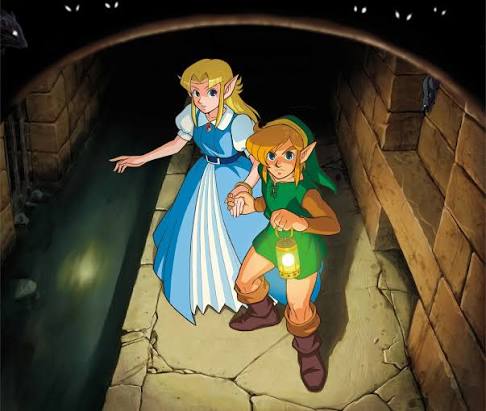
The might and predicament of the kingdom of Hyrule finally comes across after not even featuring in the original game. The official anthem of the royal family of Hyrule which has survived for millennia and struggled with all kinds of evils.
Ambiguity keeps pouring out of A Link to the Past, which means the royal family ends up with a motif that sounds both majestic and sinister, foreshadowing the sometimes implied darkness within the kingdom such as the Sheikah operating behind the shadows and war crimes; however, all this happened before all that was conceptualized, the intention being not actually to musicalize the royal family but the situation you find yourself in at the beginning of the game, where the dark wizard Agahnim betrayed and killed the king, you just watched your uncle die and are about to slash actual human knights that pledged alliance to the kingdom and are now brainwashed; they were perhaps even colleagues of Link and his uncle since they belong to the lineage of Knights. All this human genocide and sacrifice that takes place in the SNES era is made possible thanks to the cute, unrealistic sprites. So enjoy it while it last. Yet the implications are clear. This is truly the downfall timeline, the era of the decline of Hyrule full of greedy humans and this theme captures it all. Just compare the huge contrast between the cartoony way you get past the guards in Ocarina of Time to reach the princess and this and you will see how the music helps to set the tone and the stakes—rain and darkness helps the mood too.
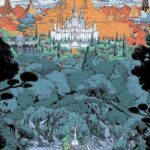
In any case this long cue has to accompany many situations, from being inside a palace to throne rooms to dungeons and secret passages. All the ambiences are captured.
Musical Analysis
The basis of the composition are the themes from the original The Legend of Zelda, using elements from both its main overworld theme and dungeon theme. These are combined with brass royal fanfares, making this the origin and companion piece to the Ikana Castle cue which was also based around fanfares, monolithic perfect fourths and ostinatos with parallel chord movements in chromatic fashion. The main difference is that here the riffs are played by brass not strings. Still, this is the sound established for kingdoms in the mind of the composer.
Right when you step inside the palace you are received with the royal fanfare of the kingdom that establishes most of the compositional philosophy for the remainder of the piece. You get all the instruments, including the cymbals and low brass which are only used in this intro fanfare. We get stacks of perfect fourths that form parallel sus2 chords that flirt with the Phrygian profile but not quite since this piece will always go for more dissonant movements. As usual the bass line moves slower than the trumpet fanfares, only managing to get in the G and Ab notes. The trumpets, which sound bigger than ever due to each note being doubled with an octave, play the faster movement of Gsus2 – Fsus2 – Absus2 – Bsus2 – Gsus2. If it followed the Phrygian profile we would get the Bbsus2 instead and the piece would still work but the B chord already introduces more tension and darkness, a trademark of this tune. The rhythm is typical of fanfares.
After this we get the intro establishing the progression and rhythm, rhythm that is based on the marching pace of the original accompaniment of the main theme of the series which features a triplet motif. The ostinato played with the trumpets are just perfect fourths. Like in the opening, it is a corrupted Phrygian profile; perhaps if Hyrule was not under attack we would get the proper Phrygian progression: G5 – F5 – G5 – Ab5 – F5 and again the piece would still work, but since it is under the influence of the dark wizard we get the tension filled chromaticism on the accompaniment so the last chord is actually F♯5. The melody is also the corrupted version of the series’ main theme opening notes, this one also beginning with a strong perfect fourth interval—in the SNES it is made via pitch bending the note—and then also making use of that chromatic F♯ that brings tension. This melody is featured in the context of call and response with trumpet fanfares that also sound sinister due to their heavy use of chromatic notes.
The figure is then transposed to C slightly tweaked in the melody with a jump from C to G and then up to its perfect fourth F. The rock music influences from the composer show in the way that parallel perfect chords are transposed to different starting points playing the same riff. The transposition only plays once and then goes back to G so we get two phrases in G then the more climatic phrase in C which sounds higher and then back to G.
Section 2 is a crescendo that repeats the same phrase various times and then in higher registers in a similar fashion to ‘Swan Lake’ from Tchaikovsky. The bass accompaniment stops being militaristic but keeps playing in fifths now in an arpeggiated way. The coda to this section plus the accompaniment make it a close relative to the opening narration cue which also had similar harmony movements at the end. The progression begins with the vamp Ab5 – G5 and then moves to Bb5 – Ab5 – A(b5) – D5. The call and response between string melody and trumpet fanfare keeps going. This figure also mimics in a corrupted fashion the cadence of the first phrase from the main theme of the series which also repeats the same rhythms within various chords and profiles. Here the unexpected note is the A natural. It ends on the dominant.
The theme keeps going with the climax arriving to its most sinister section yet since the melody here is actually based on the Dungeon Cue from the original Legend of Zelda which also delineates a Gm chord and then to its tritone note Db or a Gm♯11. The evil magic can be felt now. The Zelda marching rhythm with triplets comes back. And like the original Dungeon theme we also use the F♯ within the Harmonic minor profile. The full progression is:
Gm – A – F♯dim – Gm
Like on the dungeon theme the accompaniment is now in the high register and the melody in the low. It is the part of the film where the hero grasps the scope of the damage caused by Agahnim.
The coda is the fighting back that Link, princess Zelda and the kingdom of Hyrule as a whole represent, with the last section having the trumpets in the melodic role proclaiming their will to protect the kingdom; the task will be difficult and full of dangers so we still get minor chords:
Cm – Gm – Am7(b5) – Gm
Cm – Gm – Ebdim – Gm
And the loop restarts.
It is similar to Section 2 in that it takes a melodic figure and repeats it at different starting points but since this is the opposite to the climax it has a descending contour. The trumpets open with a melodic figure that also brings to mind the main theme of the series, the mini scale that plays after the opening descending perfect fourth, but here it is a minor profile scale. Featuring all these similar rhythms across the series is the cohesive tissue that makes the music sound from the same universe, alongside the reliance on modal mixture and never be content with the standard major/minor paradigm. This ambiguity ensues.
A memorable sequence for the era, with the rain, soldiers, rescuing the princess and escaping with her through the tunnels and dungeons of the castle. That is what you call an opening. The furthest thing from a pastoral tutorial for the game. It is pure action-adventiure full of tension captured with the music. It is the theme of the history of the royal family and the struggles against its enemies.
Please share other insights and memories in the comments.

Help to keep the rites going around here by supporting the shrine:

Media Files, requests and support for more interactive content

Thou shall donate since this is a cult and you are now a sheep

Help staying awake analyzing game tracks and writing posts or else everything will end up being written by A.I
- Inside The Score – The Legend of Zeda: A Link to the Past – End Credits / Staff Roll
 The land rests As the last few minutes of this extensive journey that has now come to an end fly by, the nostalgia and reflective mood kicks in. Because such a massive enterprise as a Zelda game or a Lord of the Rings movie require multiple endings to convey everything… Read More »Inside The Score – The Legend of Zeda: A Link to the Past – End Credits / Staff Roll
 - Inside The Score – The Legend of Zelda: A Link to the Past – Ending / Epilogue ~ Beautiful HyruleFinal of the fantasy The Triforce has been touched. A wish has been granted. For the occasion, the newly undeceased king of Hyrule has commissioned a march in honor of the legendary hero to the Hylian Sousa, who might as well be composer Nobuo Uematsu since this piece is very… Read More »Inside The Score – The Legend of Zelda: A Link to the Past – Ending / Epilogue ~ Beautiful Hyrule
- Inside The Score – The Legend of Zelda: A Link to the Past – Triforce Chamber / Power of the GodsTake your boots off your feet And thus the Triforce spoke to men. And it became present in history. And you better treasure and contemplate this moment seldom witnessed in the course of the series. The elusive opportunity to interact and touch the most important artifact. You are now in… Read More »Inside The Score – The Legend of Zelda: A Link to the Past – Triforce Chamber / Power of the Gods
- Inside The Score – The Legend of Zelda: A Link to the Past – Ganon Battle / Prince of DarknessProgressive evil En Garde! And you better be prepared since you are about to duel the iconic enemy of the series at perhaps his canonically most powerful incarnation. Right after having touched the sacred Triforce which allowed him to conquer all of the Golden Land and whose evil and darkness… Read More »Inside The Score – The Legend of Zelda: A Link to the Past – Ganon Battle / Prince of Darkness
- Inside The Score – The Legend of Zelda: A Link to the Past – Boss Battle / Anger of the GuardiansQuick mayhem Ah, the simpler times when boss battles where not a multi epic orchestral suite but just an ostinato more basic that even what became the music for standard battle encounters out there. We are a long way from each boss having his own personalized track. And this early… Read More »Inside The Score – The Legend of Zelda: A Link to the Past – Boss Battle / Anger of the Guardians
- Inside The Score – The Legend of Zelda: A Link to the Past – Dark World Dungeon / Dungeon of ShadowsMemento mori We are getting closer to Ganondorf (or at least the wizard Agahnim who ultimately fulfills the same human side of evil role in this game) and that means getting closer to the profiles and motifs of his own theme song (which naturally was the theme of Agahnim at… Read More »Inside The Score – The Legend of Zelda: A Link to the Past – Dark World Dungeon / Dungeon of Shadows