A heart of gold
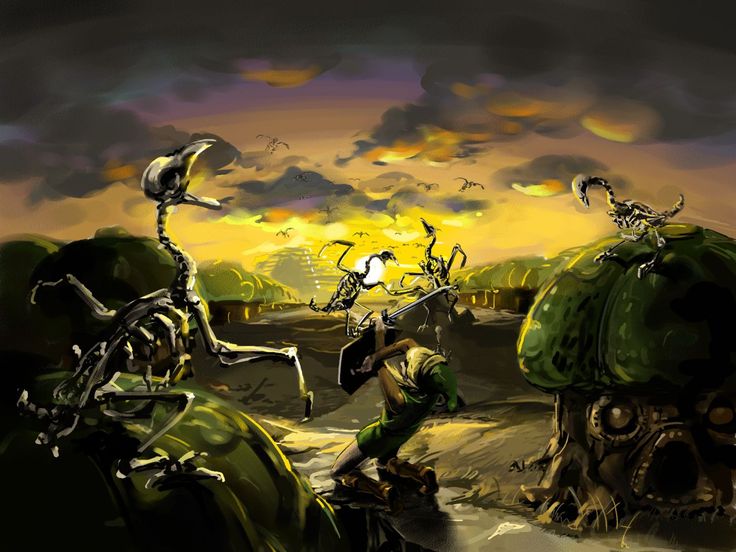
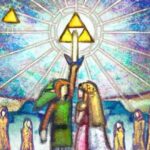
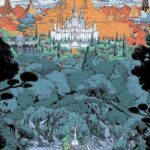
We have finally reached the Golden Land of legend for real this time. But we aren’t afraid no more, nor helpless. We are atop the golden pyramid surveilling what has become of the land of Hyrule and accepting our fate as the hero. Full of resolve we march for battle ready to tackle this new land full of dangers and bizarre creatures.
If the main theme of the series captures the adventure aspect this brand new overworld is the definition of pure courage against odds. It is the heroic spirit. It accomplishes this feat by combining minor profiles such as the sacred Dorian with the epic Mario cadence-like movement of the bVI – bVII – i. Just like the main theme of the series it also throws some dangerous chords to reflect that the quest is not smooth sailing. It is a minor theme indeed but not so minor as to be depressing. It is a parallel dark dimension with a valiant hero eager to fight for it, its only light shining after Ganon acquired the Triforce and shaped the land.
Nevertheless, since this is the Golden Land everything still looks so yellow. This was a place hyped since the opening of the game. What we did not know is that it was a mirror dimension to Hyrule. The origin of opposite worlds in The Legend of Zelda. Towns are destroyed, monsters and immorality runs rampant, and nature gets sick and twisted. It creates an uncanny valley sensation and a sense of loss by making you visit familiar places that now look corrupted. All these trademarks of parallel dark dimensions began here. And just like in Ocarina of Time, it signals the point in which the true quest begins and the bulk of the dungeons are to be found. We also get the iconic game mechanic of interacting between the two worlds to affect one another. Naturally, an actual mirror is the gateway. Parallels of the parallel world abound in mythology, with some texts saying we are actually living in the imperfect world and concepts such as the Sitra Achra from the Kabbala talking about a sort of evil mirror image of God’s creation of the real world.
Musical Analysis
As for the music, of course we are now focusing on a minor chord Cm, however the main progression is with its IV major chord, a Dorian device that is the origin of the hope. We are in the sacred Golden Land after all. The iconic ostinato that serves as the intro and the transition between parts is a pedal C note where the remaining two notes of the triad keep climbing through the Dorian profile making the harmony progression feel as: Cm – F – Cm7 – F. It still shares its DNA with the main theme due to the marching rhythms in the bass notes and percussion that are combined with fanfare like triplets.
Here we get the closest we have gotten to a proper bass guitar sound in Zelda due to the composer using a single note piano for the low voice that grounds the harmony.
Just like the main overworld has the iconic opening melody interval of the descending perfect fourth full of conviction this one goes the opposite way with its opening interval being the ascending perfect fifth between C and G; the melody is harmonized with a lower voice. Still, this is a brand new track with a brand new melody. Not everything needs to be based around leitmotifs or clever tricks playing with past melodies just to make a narrative point, specially prevalent in modern games so stepped in film scoring notions. Sometimes you just want to write a new banger.
The melody follows the Dorian profile, a mode composed of two minor tetrachords for both head and tail; the use of the A natural making everything less depressing by making the fourth degree major and discarding the minor second interval between G and Ab in the traditional minor scale. But within the accompaniment we get the proper Aeolian/Minor Mario cadence movement also used a lot in Zelda which is the origin of the heroism. The full harmony for Section 1 would be something like:
Cm – F – Abmaj7 – Bb – Cm
In contrast with the series’ main theme which has the descending major Andalusian progression I – bVII -bVI all over it.
The main ostinato serves as the interlude between the repeat of the phrase. In which a new countermelody is added—the beginning of this countermelody might be the origin of Midna’s Theme from TP since they are the same intervals.
Section 2 keeps similar rhythmic profiles and the Dorian melody, going towards higher and thus more triumphant notes. This is the hero finding his resolve, only the last chords introducing the dissonances that point towards this being a daunting task. New kinds of triplets are introduced in the accompaniment. The harmony is now:
Eb – F – Ab – Bb
Eb – F – Edim7 – D – Gm
The chromatic dissonances between F and E begin appearing and facilitate the key change to G Dorian/Minor via its harmonic minor dominant D chord. The ostinato now plays in Gm as a transition with the only change being that the last notes descend making it Gm – C – Gm7 – C.
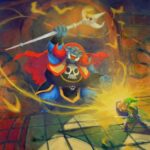
The last section signifies the battles of the hero and the tribulations on the road. The melody repeats the same rhythmic figure whose nature is changed due to each underlying chord; like the harmony it starts descending and finds its hope at the end by ascending. Its basis is a chromatic bass line that descends from Ab to as far as its tritone note D that will serve as the secondary dominant from which it will pivot to the original C minor profile via G. A proper chord is built on each of the chromatic bass notes making the full progression:
Ab – Gm – F♯dim – Fm – E – Eb – D7 – G – G7 – Cm –
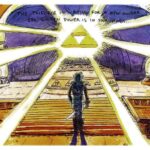
An epic descent from the golden pyramid—Why is Ganon even related to a pyramid anyway? Maybe this is the origin of his Gerudo Egyptian desert roots—For this section the trumpets replace the trombones as accompaniment fodder.
And the loop is connected successfully. Unlike the main overworld theme, this overworld, even though it is a famous piece from the series, has not seen much action or rearrangements since its inception, resurrecting only for the direct sequel in A Link Between Worlds, Four Swords and some spin off games. Be that as if may, if Link is all about courage this theme captures what that value sounds like in the face of literal darkness.
Should we go all in with the A Link to the Past soundtrack? Share any other insight about this track in the comments and what other tracks from the game you would like to see visualized and deconstructed.
Help to keep the rites going around here by supporting the shrine:

Media Files, requests and support for more interactive content

Thou shall donate since this is a cult and you are now a sheep

Help staying awake analyzing game tracks and writing posts or else everything will end up being written by A.I
- Inside The Score – The Legend of Zeda: A Link to the Past – End Credits / Staff Roll
 The land rests As the last few minutes of this extensive journey that has now come to an end fly by, the nostalgia and reflective mood kicks in. Because such a massive enterprise as a Zelda game or a Lord of the Rings movie require multiple endings to convey everything… Read More »Inside The Score – The Legend of Zeda: A Link to the Past – End Credits / Staff Roll
 - Inside The Score – The Legend of Zelda: A Link to the Past – Ending / Epilogue ~ Beautiful HyruleFinal of the fantasy The Triforce has been touched. A wish has been granted. For the occasion, the newly undeceased king of Hyrule has commissioned a march in honor of the legendary hero to the Hylian Sousa, who might as well be composer Nobuo Uematsu since this piece is very… Read More »Inside The Score – The Legend of Zelda: A Link to the Past – Ending / Epilogue ~ Beautiful Hyrule
- Inside The Score – The Legend of Zelda: A Link to the Past – Triforce Chamber / Power of the GodsTake your boots off your feet And thus the Triforce spoke to men. And it became present in history. And you better treasure and contemplate this moment seldom witnessed in the course of the series. The elusive opportunity to interact and touch the most important artifact. You are now in… Read More »Inside The Score – The Legend of Zelda: A Link to the Past – Triforce Chamber / Power of the Gods
- Inside The Score – The Legend of Zelda: A Link to the Past – Ganon Battle / Prince of DarknessProgressive evil En Garde! And you better be prepared since you are about to duel the iconic enemy of the series at perhaps his canonically most powerful incarnation. Right after having touched the sacred Triforce which allowed him to conquer all of the Golden Land and whose evil and darkness… Read More »Inside The Score – The Legend of Zelda: A Link to the Past – Ganon Battle / Prince of Darkness
- Inside The Score – The Legend of Zelda: A Link to the Past – Boss Battle / Anger of the GuardiansQuick mayhem Ah, the simpler times when boss battles where not a multi epic orchestral suite but just an ostinato more basic that even what became the music for standard battle encounters out there. We are a long way from each boss having his own personalized track. And this early… Read More »Inside The Score – The Legend of Zelda: A Link to the Past – Boss Battle / Anger of the Guardians
- Inside The Score – The Legend of Zelda: A Link to the Past – Dark World Dungeon / Dungeon of ShadowsMemento mori We are getting closer to Ganondorf (or at least the wizard Agahnim who ultimately fulfills the same human side of evil role in this game) and that means getting closer to the profiles and motifs of his own theme song (which naturally was the theme of Agahnim at… Read More »Inside The Score – The Legend of Zelda: A Link to the Past – Dark World Dungeon / Dungeon of Shadows