Curse of the tomb
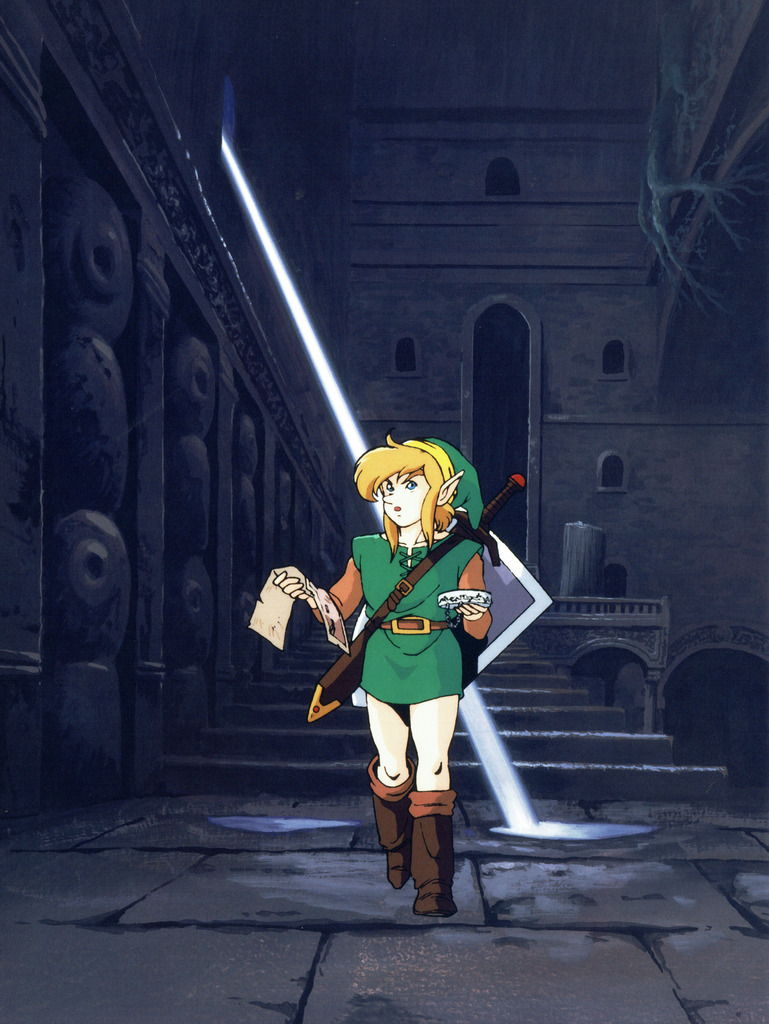
Claustrophobia at its mot pure; minor and major second intervals are the name of the game here. We can thank these intervals, the indisputable kings of the A Link to the Past soundtrack, for making these places feel exactly as their official name imply. You are truly lost, a little desperate and hopeless in ruins that are ancient and forgotten by time, forsaken and possibly carrying a curse for anyone who dares to disturb their sleep. Yet they are also full of wonders and forbidden relics.
This is what the first of only two dungeon themes in A Link to the Past conveys. Back when not every dungeon had its own personalized theme according to its environment—something that began with Link’s Awakening; before, we had only one standard dungeon theme and one for the final dungeon. Here we get two dungeon themes, one for each world. Following the gothic pattern established on the NES dungeons, both of them are sinister. But while the Dark World dungeon feels like a more standard evil villan’s lair full of its wicked minions scheming against you, this one feels more earthly, as if the nature and jinx that took over the ruins is the one that is out to get you. These alluring places are lost to time and you just awakened an ancient evil. There is unseen danger here. You can feel it.
Nevertheless, both use similar ominous profiles and an emphasis on minor seconds and diminished fifths.
Musical Analysis
The slow opening is akin to you just disturbing the pharaoh the moment you force the door open. You raise your lantern and are facing a downward ramp where light is not good enough to illuminate the tunnel. You and your team are deciding whether it is wise to explore it. For the hero there is no question, he must go down and face the dangers ahead, presented during the second section where the piece ramps up the tempo and steadies its pace with the low strings.
This sense of doubt is conveyed during the intro thanks to its slow tempo which almost feels like it is in free time (it is not, it is just at 34.2 bpm). Not only that, the notes are also hesitant, with each repetition adding one note more; first we get five, then six, then seven…as if Link is getting courage or pushed to move faster with each step. Naturally, the opening descending interval is a tritone followed by a minor second down; then we get a big leap one octave up and finish with another tritone. The notes are sustained for maximal dissonance. These profiles composed of minor seconds and diminished fifth will feature heavily on both dungeon tracks. The second repetition adds a major second up as a final note. Then the new question-answer block follows up ascending in chromatic fashion. The emphasis on tritones and minor seconds continue during this intro.
In fact, the entire melody of the Dark World dungeons is pretty much taken from this intro (or likely this could been the second track composed since it is more complex. In any case this one seems composed custom made for the Eastern Palace, the first dungeon), with both even having the same cadences made of ascending clusters of minor seconds—these cadences are also an integral part of the Ganondorf’s Theme. And it is with those clusters that the tempo accelerates, finishing on with a full six note chord that functions as the transition between parts.The name of the chord is not important, what is relevant is that there are lots of minor seconds and tritones in its configuration; super dissonant.
The hero then starts getting more desperate, he has been lost for quite a while, reaching the same place various times and is now running in circles. This is captured by the unrelenting bass line playing in descending chromatic fashion, each new note brought forward a new room you discover. Just like in Zelda dungeons the chromatic bass line sometimes backtracks, sometimes it reaches new places. Then we finally get a big leap, a big discovery; the bass line jumps a long interval and you are able to explore a new segment of the dungeon. This jump also raises the tension, you are getting closer to either treasure or your demise. In any case you are anxious.
This part is also where the archaism kicks in, with the string arpeggios that serve as the main melody begin to play their pattern based on the less sinister perfect fifth but still carry the ambiguity with the minor second. the relationship between the bass note and the upper notes will remain constant, with a ninth always separating the low end from the upper notes. The lack of tritones and ultimately minor nature of the harmony make the section closer to hopelessness than maliciousness. With the bass line the chords that would be implied here would be all minor 7/9 but without the fifth, beginning with Bm7/9 and so on in parallel chromatic fashion.
The trombones are used in the register of trumpets to play a countermelody that adds variety to the second repetition of the string patterns which technically transform their melody into an ostinato. It is a symmetric melody with defined question-answer blocks and some flourishes, also using close intervals like the minor and major seconds and then leaps. It repeats the same pattern twice, second time transposed a whole step down and then when the ostinato jumps to the Ebm7/9. If we can learn something from A Link to the Past is that major seconds, and their ninth counterparts, are the secret sauce to create ambiguity; not as dissonant as the minor second or the tritone. They are all over the place in its score.
Curiously, within the game files there is a second trombone harmonizing with this one in a very dissonant way. But maybe for that same reason its volume was turned all the way down. The initial idea was to create some kind of fugue because the second brass plays the beginning phrase of the melody while the first one begins to play its second phrase. The composer just did not manage to make them work together in a more pleasant way.
The motifs of this cue were used to great effect as the basis for the Shrine theme in the new era Breath of the Wild, shrines being the micro dungeons of the new gameplay style that evoke the mythical past when dungeons used to share music. Unsurprisingly since even in this original incarnation, this theme encompassed that special ancient atmosphere.
Help to keep the rites going around here by supporting the shrine:

Media Files, requests and support for more interactive content

Thou shall donate since this is a cult and you are now a sheep

Help staying awake analyzing game tracks and writing posts or else everything will end up being written by A.I
- Inside The Score – The Legend of Zeda: A Link to the Past – End Credits / Staff Roll
 The land rests As the last few minutes of this extensive journey that has now come to an end fly by, the nostalgia and reflective mood kicks in. Because such a massive enterprise as a Zelda game or a Lord of the Rings movie require multiple endings to convey everything… Read More »Inside The Score – The Legend of Zeda: A Link to the Past – End Credits / Staff Roll
 - Inside The Score – The Legend of Zelda: A Link to the Past – Ending / Epilogue ~ Beautiful HyruleFinal of the fantasy The Triforce has been touched. A wish has been granted. For the occasion, the newly undeceased king of Hyrule has commissioned a march in honor of the legendary hero to the Hylian Sousa, who might as well be composer Nobuo Uematsu since this piece is very… Read More »Inside The Score – The Legend of Zelda: A Link to the Past – Ending / Epilogue ~ Beautiful Hyrule
- Inside The Score – The Legend of Zelda: A Link to the Past – Triforce Chamber / Power of the GodsTake your boots off your feet And thus the Triforce spoke to men. And it became present in history. And you better treasure and contemplate this moment seldom witnessed in the course of the series. The elusive opportunity to interact and touch the most important artifact. You are now in… Read More »Inside The Score – The Legend of Zelda: A Link to the Past – Triforce Chamber / Power of the Gods
- Inside The Score – The Legend of Zelda: A Link to the Past – Ganon Battle / Prince of DarknessProgressive evil En Garde! And you better be prepared since you are about to duel the iconic enemy of the series at perhaps his canonically most powerful incarnation. Right after having touched the sacred Triforce which allowed him to conquer all of the Golden Land and whose evil and darkness… Read More »Inside The Score – The Legend of Zelda: A Link to the Past – Ganon Battle / Prince of Darkness
- Inside The Score – The Legend of Zelda: A Link to the Past – Boss Battle / Anger of the GuardiansQuick mayhem Ah, the simpler times when boss battles where not a multi epic orchestral suite but just an ostinato more basic that even what became the music for standard battle encounters out there. We are a long way from each boss having his own personalized track. And this early… Read More »Inside The Score – The Legend of Zelda: A Link to the Past – Boss Battle / Anger of the Guardians
- Inside The Score – The Legend of Zelda: A Link to the Past – Dark World Dungeon / Dungeon of ShadowsMemento mori We are getting closer to Ganondorf (or at least the wizard Agahnim who ultimately fulfills the same human side of evil role in this game) and that means getting closer to the profiles and motifs of his own theme song (which naturally was the theme of Agahnim at… Read More »Inside The Score – The Legend of Zelda: A Link to the Past – Dark World Dungeon / Dungeon of Shadows