Glittering soundscapes
Needless to say, Nintendo’s favorite monkeys had to swing into the bandwagon of 3D collect-a-thon platformers—more like ‘collect a ton’ due to the exorbitant amount of collectibles included in this game—courtesy of parent company Rare going overboard with the more is more philosophy. This means that, although this was technically a continuation of the Donkey Kong Country series and their characters, the game itself ends up being a spiritual successor to Banjo-Kazooie; all along this was the real Banjo-Threeie long promised that never was.
The project even started with the tentative title Donkey Kong Country 4, with development going underway with various members of the Donkey Kong Country team, including DKC 3 composer Eveline Fischer. It was meant to be in a similar obstacle course form to previous entries but then Banjo happened and producers decided to overhaul the project and get it closer to the spirit of explore-based platformers like Mario 64 and the bear and the bird. The main difference, and the way to one up the other mascots, would be the use of five different playable characters, each one with their respective quests and collectibles—and of course signature musical instruments and licks. A few of the Banjo team members entered the fold in order to provide support since they already had experience with a project of that nature and the Nintendo 64 hardware. Among them was Grant Kirkhope, who was initially just giving a helping hand since he was already busy with the games Banjo-Tooie and Perfect Dark. But he nevertheless ended up taking up the composition work thanks to his experience with the Nintendo 64; so he ended up making music for three N64 games at the same time. Traditional composer of the Donkey Kong series, David Wise, was apparently very busy scoring Dinosaur Planet, the game that ended up becoming Star Fox Adventures on the GameCube.
Like the game itself, the music ends up closer to the spirit of Banjo-Kazooie than to the synthesized atmospheres of the Donkey Kong Country series. This is due in large part to Grant selecting the exact same instrument palette for the two games like his mallets and saxophone plus some of his signatures harmonic movements; we also find the Banjo series way of rearranging a level main theme throughout the different environments and situations of the level. All thorough the use of dynamically changing music. There aren’t really many callbacks to previous musical motifs established on the past three games other than a new version of the swinging main theme for the first level. Still, the composer commented that he tried to retain the darker, atmospheric tone that Wise brought to Donkey Kong Country (indeed nothing is darker than the DK Rap). The main difference with Banjo-Kazozie is that here Kirkhope did not rely as much on the tritone or frantic oom-pah rhythms that are still the trademark of the Banjo series.
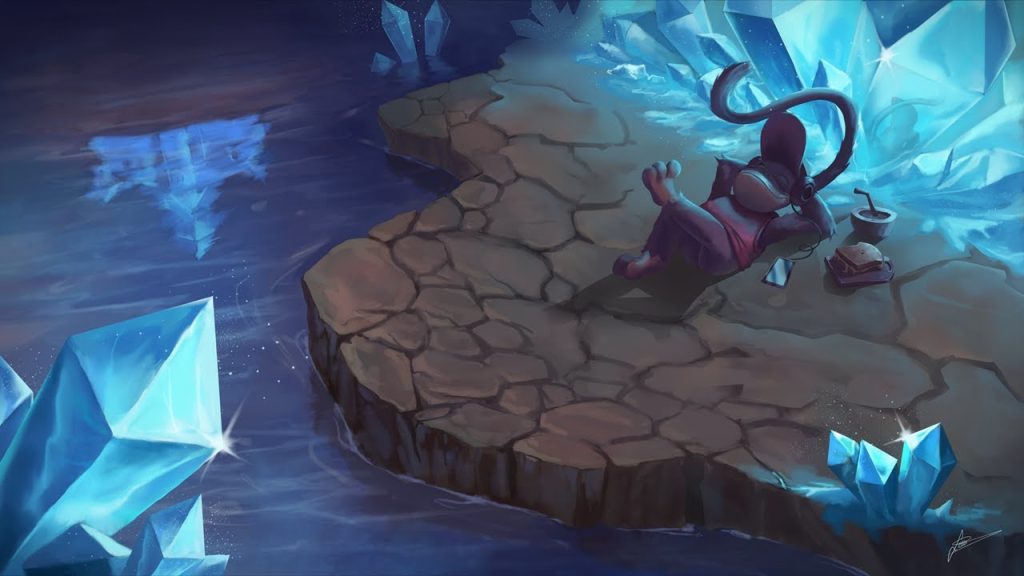
Ultimately, the closest that the game might have gotten to the Donkey Kong Country sound would be the more pensive track for the crystalline undergrounds level; just replace the mallets for synth sounds and add more atmospheric percussion. It is also the favorite track in the game for the composer. There is a sense of majesty and sacredness in the music as heard in similar purpose tracks like Serenade of Water from Ocarina of Time. This is achieved with the use of the modal mixture of major/minor and the Dorian profiles, with the instruments picked up for their plucky sounds that reflect the crystal, icy ambient. Grant cannot resist the impulse to bring all of his mallet arsenal or some of his most used progressions like the I to bVI movement which is at the center of the ambiguity between Ionian/Major and Aeolian/Minor or the quick succession of transpositions in order to build excitement—the sacredness of the song is also annoyingly disturbed by the giant Kosha that lurks at the highest part of the caves, raining stalactites down on the unsuspecting Kongs.
Musical Analysis
The piece opens up with strings samples playing with the tremolo technique (playing each note multiple times in a very fast manner) forming the tonic Cmaj7 chord cascading into the ears and washing all over the caves.
The presentation of the melody is also in typical question-answer forms. For Section A, Grant takes a melodic phrase and moves it to other starting positions, capturing the different profiles that arise from each starting note. The melody notes for this section could be deconstructed in this form:
{[ (F G A G F – CFF) – (E F G F E – BEE) ] – [ (D# F G F D# – Ab G Ab D#) – (GGFE – DEC) ]}
Which allows us to see the different melodic phrases and compare the two master question-answer blocks [ ], themselves composed of smaller question-answer blocks in a similar vein to those matryoshka dolls. We can see the first phrase that starts on the F note then transposed to begin on E in the exact same way; this brings the sense of repetition. For the second set of question-answer blocks which begin with D# the composer could have done the exact same figure; but that would be way too much repetition and in order to make a melody interesting it needs to find that balance between surprise and repetition. That means the D# mini question-answer block has a brand new different answer when compared to the previous two. The overall phrase beginning has been descending chromatically (F, E , D#) but this is balanced with the last one that goes up to G and brings a new phrase to close the full melodic line. Harmony wise the piece is full of the relaxing and elegant maj7 chords during this section, going Fmaj7 – Cmaj7 – Abmaj7 – Cmaj7. We begin to see the introduction of modal mixture with the I to bVI which borrows from the Aeolian profile.
The full melodic line repeats a second time on the pizzicato strings.
B section goes for the Dorian progression of i to V in G (parallel of C Mixolydian profile) which gives that sense of uncovering a sacred place; this is then combined with the Kirkhope flavored I to bVI progression giving us a full harmony consisting of:
Gm – C – Gm – C
Ab – C – Ab – C
The melodies follow this harmonic lead. The bass is allowed to stay in the note C as pedal during the Ab to C progression since it is a shared note between the two chords.
For the last new section we have an harmonic crescendo that picks specific, all major chords that allow some accompaniment notes and the melodic contour to climb in a steady fashion while the bass similarly descends. It is al about getting carried away with the circle of sixths that takes us on a journey through multiple keys until we arrive and the dominant of the C key by way of its secondary dominant D which is then deemed minor in order to transition into a reprise of the Dorian B section with another instrument as the lead.
The full harmony going bananas
A – F – D – B – Ab – F – D – G.
The chords are picked for their voice leading possibilities which allows the notes to climb towards a climax.
This Banjo game on steroids was the last we saw of the Donkey Kong world for a long time, giving players ample time to collect its 3821 collectibles before the series proper return eleven years later. it is said that some players are still trying to achieve the 101% to this day.
As a fun fact the guns for the kongs were initially conceived as realistic weapons ala GoldenEye 007. However this horrified series producer Shigeu Miyamoto who, on the spot, draw the coconut gun that fires in spurts as a proper, more playful alternative. Grant Kirkhope himself also provided the voice for Donkey Kong.

Help to keep the rites going around here by supporting the shrine:

Media Files, requests and support for more interactive content

Thou shall donate since this is a cult and you are now a sheep

Help staying awake analyzing game tracks and writing posts or else everything will end up being written by A.I
- Inside The Score – The Legend of Zeda: A Link to the Past – End Credits / Staff Roll
 The land rests As the last few minutes of this extensive journey that has now come to an end fly by, the nostalgia and reflective mood kicks in. Because such a massive enterprise as a Zelda game or a Lord of the Rings movie require multiple endings to convey everything… Read More »Inside The Score – The Legend of Zeda: A Link to the Past – End Credits / Staff Roll
 - Inside The Score – The Legend of Zelda: A Link to the Past – Ending / Epilogue ~ Beautiful HyruleFinal of the fantasy The Triforce has been touched. A wish has been granted. For the occasion, the newly undeceased king of Hyrule has commissioned a march in honor of the legendary hero to the Hylian Sousa, who might as well be composer Nobuo Uematsu since this piece is very… Read More »Inside The Score – The Legend of Zelda: A Link to the Past – Ending / Epilogue ~ Beautiful Hyrule
- Inside The Score – The Legend of Zelda: A Link to the Past – Triforce Chamber / Power of the GodsTake your boots off your feet And thus the Triforce spoke to men. And it became present in history. And you better treasure and contemplate this moment seldom witnessed in the course of the series. The elusive opportunity to interact and touch the most important artifact. You are now in… Read More »Inside The Score – The Legend of Zelda: A Link to the Past – Triforce Chamber / Power of the Gods
- Inside The Score – The Legend of Zelda: A Link to the Past – Ganon Battle / Prince of DarknessProgressive evil En Garde! And you better be prepared since you are about to duel the iconic enemy of the series at perhaps his canonically most powerful incarnation. Right after having touched the sacred Triforce which allowed him to conquer all of the Golden Land and whose evil and darkness… Read More »Inside The Score – The Legend of Zelda: A Link to the Past – Ganon Battle / Prince of Darkness
- Inside The Score – The Legend of Zelda: A Link to the Past – Boss Battle / Anger of the GuardiansQuick mayhem Ah, the simpler times when boss battles where not a multi epic orchestral suite but just an ostinato more basic that even what became the music for standard battle encounters out there. We are a long way from each boss having his own personalized track. And this early… Read More »Inside The Score – The Legend of Zelda: A Link to the Past – Boss Battle / Anger of the Guardians
- Inside The Score – The Legend of Zelda: A Link to the Past – Dark World Dungeon / Dungeon of ShadowsMemento mori We are getting closer to Ganondorf (or at least the wizard Agahnim who ultimately fulfills the same human side of evil role in this game) and that means getting closer to the profiles and motifs of his own theme song (which naturally was the theme of Agahnim at… Read More »Inside The Score – The Legend of Zelda: A Link to the Past – Dark World Dungeon / Dungeon of Shadows