The most anticipated epic adventure of the year… will never come to a theater near you!
Grandeur.
That is the word that, in a nutshell, encompasses everything the majestic Final Fantasy series strives to be. We are talking about a project that has been committed to the highest production values in visuals and sound that technology could afford at the different times of its storied series, becoming a pioneer of the Eastern RPG genre and popularizing it internationally. This was all doable due to the level of ambition of series creator Hironobu Sakaguchi whose final fantasy—literally named that way because the troubled production was the last chance of the development team to make it in the industry—brought together a team of people who cared deeply about their craft and went beyond duty to immerse players in a video game world in a way closer to films and epic literature like no other video game before. Music of course is bound to do heavy lifting on this enterprise.
When a series has a game of its own dedicated exclusively to its music (Final Fantasy Theathrym) and pretty much popularized the trend of video game live concerts following the example set by series’ inspiration and main competitor Dragon Quest, we know we are onto something. Releasing orchestral arrangements from its games even back in the 80s we can surmise how involved, ambitious and deeply caring prolific main composer Nobuo Uematsu is when it comes to the craft of video game music.
Famous even beyond the interactive medium, Nobuo Uematsu has gained popularity in classical music circuits thanks to his Wagnerian approach to these Tolkienesque worlds. Not too bad of a track record for a composer who didn’t really have any formal music education and is still self conscious about not being good at reading musical scores in his own sold out orchestral concerts full of professionally trained musicians. He is also part of the club of early video game composers who had to grow the medium from chip tunes to the fully orchestrated scores of today, forced to defend himself with the basic melody, accompaniment, bass and percussion components of the pure 8-bit era, constraints thst spur melodic inventiveness. Nobuo Uematsu is video game music royalty; a testament to this is that even with a rooster of talented composers in-house working for them, Nintendo decided to specifically call him as a freelancer to create the main theme song for Super Smash Bros Brawl which is a love letter to the medium of video game music in general.
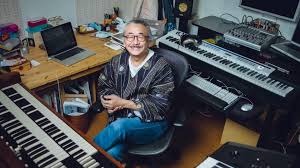
A self-taught piano player, Uematsu studied English literature at college and played keyboards in local bands thanks to his love for progressive and pop rock. He eventually found work as a composer for radio commercials by sending out his music demos to anything and everything while he sustained himself in a part time job as a cassette rental store employee. One day, some girl who came to a house party where artists of all kinds used to hang out recommended that he tried writing music for some games that were being worked at by her small group of up and coming developers that reunited in a former hairdresser’s salon like an afterclass club. There he began his partnership with boss Hironobu Sakaguchi working on various early games for computers developed by the company known as Square. All of them with poor results until the last chance, the final fantasy of the company. Uematsu at the time considered it also a side job, and he did not think it would become a full-time career; video game music composer was not even a proper job title. It was just a way to make some money on the side, while also keeping his part-time job at the music rental shop.
The idea for the series was to have deep storytelling with universal stakes and high production values in visuals and sound, that is, for the humble 8-bit NES at least. This level of ambition meant that Uematsu was not in for plain sailing. The music for Final Fantasy marked his 16th video game music composition. Still, when he presented to the director the music he was rejected out of hand, Sakaguchi telling him: ‘This is no good” Then he went away and just reprogrammed the order of the songs and was approved straight away for some reason —directors can be that way sometimes. In any case the project, released in 1987, was a great commercial success and spawned the parent series and supplementary media. Nobuo went on to write or co-write music for the international blockbuster series through 2002’s Final Fantasy XI, with the ninth installment being the last one he scored all by himself. Ever since the first entry, the composer had almost absolute creative freedom into the development of the music identity of the series.
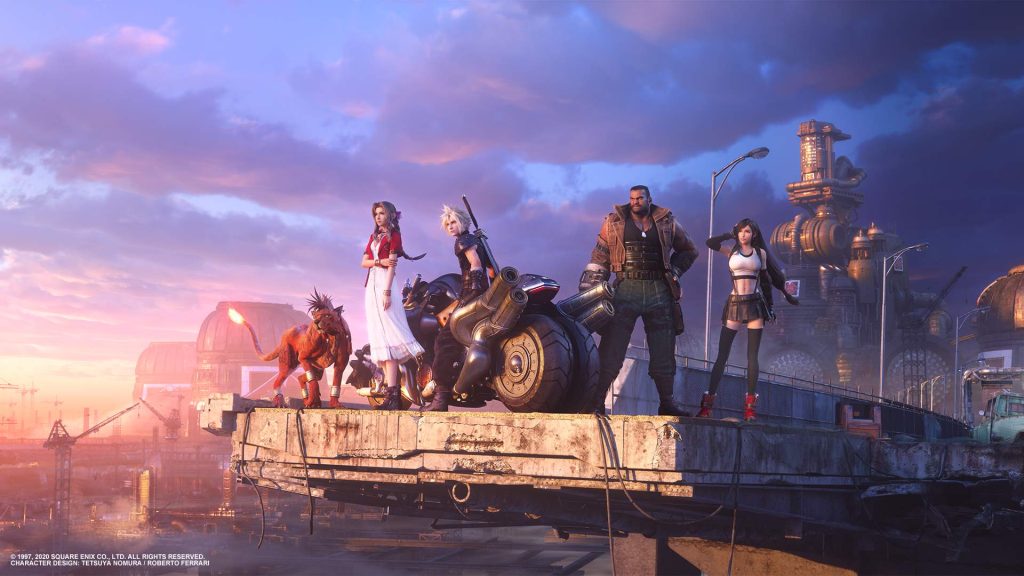
Final Fantasy VII
“Beyond the edge of reality, lies a story of ultimate conquest. A story of war, and friendship. A story of a love that could never be, and a hatred that always was. And now, the most anticipated epic adventure of the year… will never come to a theater near you!
But nevertheless, the cinematic aspirations of the seventh entry in Final Fantasy series are made clear right off the bat with the overture that used all the resources of the Play Station and the possibilities allowed by 3D graphics to realize the epic dreams that were always present from the very first entry: tell an all encompassing story of grand proportions that matches the feeling of a movie but with the length of a novel; something video games can do since they are not limited by the three hour length of matinee features. Add interactivity to the mix and you have one of the most difficult media projects to pull off.
The entire score for Final Fantasy VII amounts to more than 4 hours of music and the soundtrack release spanned multiple CDs showing how serious Square takes the music of the series. As with the previous entries, the game pushed production values of the time to their limit, going so far as abandoning the Nintendo 64 in favor of the new PlayStation whose CD-Roms allowed more storage and permitted the team to tell a more ambitious, cinematic story with pre-rendered videos inside the game, which allows us to see Uematsu incidental music skills when producing movie like scenes. It is also thanks to the CDs that we were able to hear a long real life choir for the final battle—which is not visualized yet since I’m still researching how to best present recorded audio. Despite consisting of 85 tracks the music was composed in less than a year, as opposed to the two-year period that the game’s predecessor FFVI had undergone.
Uematsu’s approach to composing the game’s music was to treat it like a film soundtrack and compose songs that reflected the mood of the scenes rather than trying to make strong melodies to “define the game”, as he felt that approach would come across too strong when placed alongside the game’s new 3D visuals; this is another aspect that brought video game music closer to film music. The soundtrack has a feel of “realism”, which also prevented him from using “exorbitant, crazy music ” or too many catchy video gamey music. The soundtrack covers a wide variety of musical genres, including rock, techno, orchestral, and choral since the story takes on some modern, technological topics, cementing the signature hybrid of fantasy and science fiction of the series. While the Super NES only had eight sound channels to work with, the PlayStation had twenty-four—that is if you wanted to use the internal sequence as opposed to live recordings— Eight were reserved for sound effects, leaving sixteen available for the music.
In upcoming essays we will explore some of the most iconic tracks from this project in detail. So stay tuned.

Help to keep the rites going around here by supporting the shrine:

Media Files, requests and support for more interactive content

Thou shall donate since this is a cult and you are now a sheep

Help staying awake analyzing game tracks and writing posts or else everything will end up being written by A.I
- Inside The Score – The Legend of Zeda: A Link to the Past – End Credits / Staff Roll
 The land rests As the last few minutes of this extensive journey that has now come to an end fly by, the nostalgia and reflective mood kicks in. Because such a massive enterprise as a Zelda game or a Lord of the Rings movie require multiple endings to convey everything… Read More »Inside The Score – The Legend of Zeda: A Link to the Past – End Credits / Staff Roll
 - Inside The Score – The Legend of Zelda: A Link to the Past – Ending / Epilogue ~ Beautiful HyruleFinal of the fantasy The Triforce has been touched. A wish has been granted. For the occasion, the newly undeceased king of Hyrule has commissioned a march in honor of the legendary hero to the Hylian Sousa, who might as well be composer Nobuo Uematsu since this piece is very… Read More »Inside The Score – The Legend of Zelda: A Link to the Past – Ending / Epilogue ~ Beautiful Hyrule
- Inside The Score – The Legend of Zelda: A Link to the Past – Triforce Chamber / Power of the GodsTake your boots off your feet And thus the Triforce spoke to men. And it became present in history. And you better treasure and contemplate this moment seldom witnessed in the course of the series. The elusive opportunity to interact and touch the most important artifact. You are now in… Read More »Inside The Score – The Legend of Zelda: A Link to the Past – Triforce Chamber / Power of the Gods
- Inside The Score – The Legend of Zelda: A Link to the Past – Ganon Battle / Prince of DarknessProgressive evil En Garde! And you better be prepared since you are about to duel the iconic enemy of the series at perhaps his canonically most powerful incarnation. Right after having touched the sacred Triforce which allowed him to conquer all of the Golden Land and whose evil and darkness… Read More »Inside The Score – The Legend of Zelda: A Link to the Past – Ganon Battle / Prince of Darkness
- Inside The Score – The Legend of Zelda: A Link to the Past – Boss Battle / Anger of the GuardiansQuick mayhem Ah, the simpler times when boss battles where not a multi epic orchestral suite but just an ostinato more basic that even what became the music for standard battle encounters out there. We are a long way from each boss having his own personalized track. And this early… Read More »Inside The Score – The Legend of Zelda: A Link to the Past – Boss Battle / Anger of the Guardians
- Inside The Score – The Legend of Zelda: A Link to the Past – Dark World Dungeon / Dungeon of ShadowsMemento mori We are getting closer to Ganondorf (or at least the wizard Agahnim who ultimately fulfills the same human side of evil role in this game) and that means getting closer to the profiles and motifs of his own theme song (which naturally was the theme of Agahnim at… Read More »Inside The Score – The Legend of Zelda: A Link to the Past – Dark World Dungeon / Dungeon of Shadows