Bizarre origin, oddball characters, kooky music, rare fable
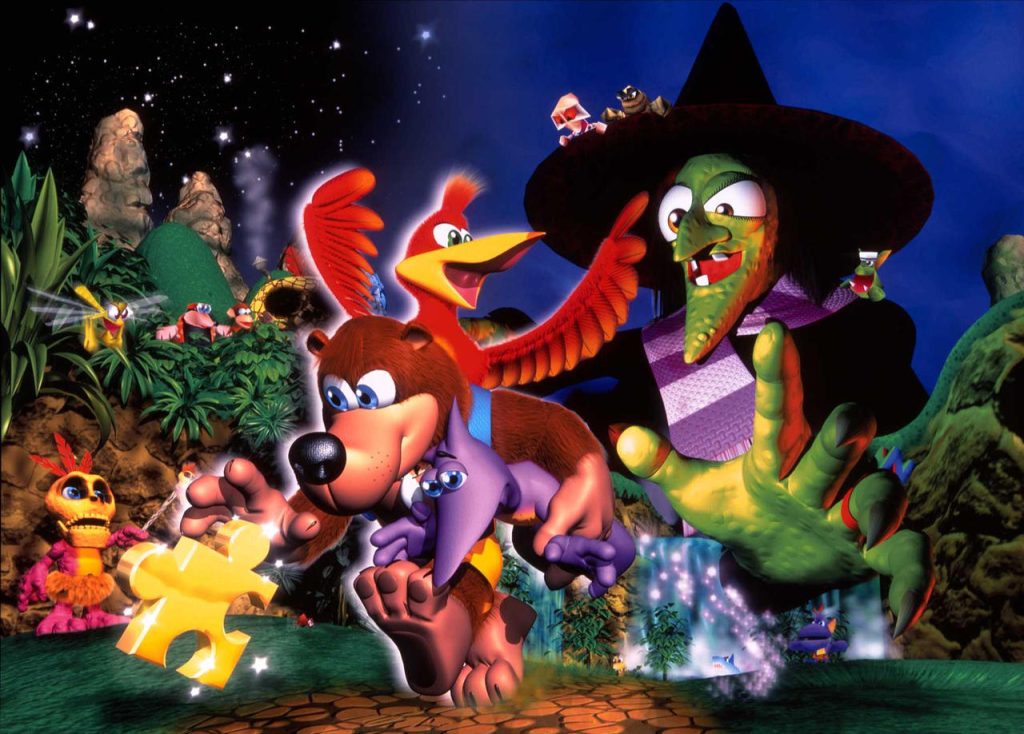
Happy 25th anniversary to the bear and the bird, the ones that managed to stand shoulder to shoulder with the plumber for a while.
“I look for the odd note”
Grant Kirkhope
That is it. The man himself in the fewest words possible encapsulates what is at the core of his style. This is why a game with fluffy animals and google eyed objects does not sound like your typical morning cartoon fable but rather like the twisted-circus music gone wrong we all associate with the Banjo-Kazooie series and Rareware as a whole; cheerful and oddly sinister at the same time, a style that is adapted to the humor and vibe of the wacky worlds; the quirkily dark genre. So what is meant by the wrong note? Well, a lot of things and a lot of notes, and even chords figure in all of this (hint: tritones galore—what British musicians deem Indonesian folk music—in harmony, melody; does not matter. Shove them in wherever and whenever you can). Like the characters themselves, this is all about dysfunctional harmony.
This music surely does not fit into the standard, basic major/minor harmony. And this is not due to some advanced music theory from the part of the composer or specialized music techniques. It all comes down to…looking for the note that feels off, or the odd chord (of course you shall not forget the oom-pah rhythms under any circumstances). So what is behind it? Better to dig into some tunes and what could be the precedents to these stylistic choices. And bring your tuba, baritone saxophone and a healthy amount of tuned percussion while you are at it. As we will see, there could be multiple reasons behind why the game sounds like but a single character might be the main one.
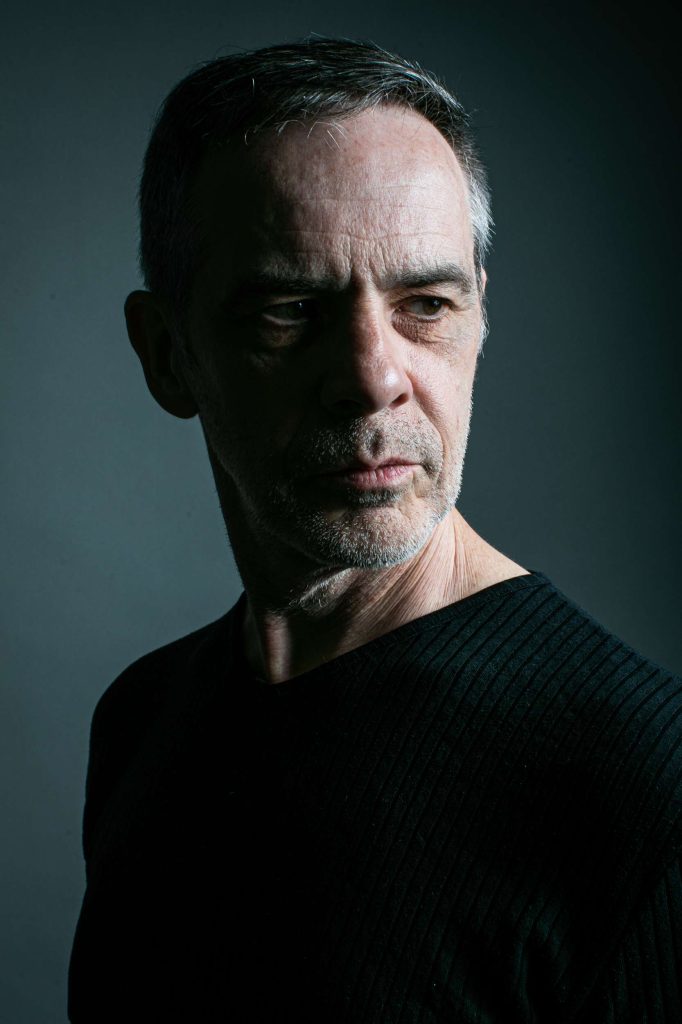
The music of Banjo-Kazzoie among other hits from British studio Rareware comes from Scottish composer Grant Kirkhope, who had been working at the company for a short while when the call to musicalize his first full game for the Nintendo 64 happened. It was a huge change of pace since, at the time, he was working on the landmark title Goldeneye 007 when he was abruptly moved to work on a project that started life as a SNES game dubbed Project Dream, a pirate themed RPG that slowly and for various reasons ended up becoming the first in the Banjo series. The project initially had composer David Wise of Donkey kong Country fame on board—Wise personally did the job interview when Kirkhope was joining Rare— but when the studio needed him to work on the upcoming Diddy Kong Racing then it was Grant alone, for both music and sound design. Many traits of the Kirkhope sound can be traced to this project and it became the project that keeps on giving since from it come a lot of tracks that became well known in other Rare made games.
The zany, twisted Hanna-Barbera that never was sound of Banjo-Kazooie has several reference lines. The first would be of course the composer’s background and environment, with Grant being raised in North Yorkshire, England by his mother who was a music hall dancer and his father who introduced him to big band music and exposed him to early influences such as Frank Sinatra and Dixieland jazz. The knack for those brass part writing for boss battles comes from Grant being a classically trained trumpet player. He also belongs to the old school of having to make a memorable melody due to not being able to hide behind big, epic orchestration and production values; many of the musical instruments were chosen because they could sound good without much and then reused for the entire game, this made the sounds themselves characters in the games as opposed to homogenous orchestral library sounds. You can recognize Banjo-Kazooie music just with timbres of the samples. He ended up at the company after sending various demo tapes for almost a year without hearing back from them while touring for bands.
“So you’ve got to make sure the music’s not repetitive and getting on the player’s nerves, and make it likeable. It’s a hard task. I remember when I first worked at Rare, Tim Stamper and Gregg Mayles constantly trooped out the Mario themes and said ‘these tunes can play for three hours and you don’t get bored of it.’ You’ve got to do that, and it was hammered home day after day, so we had to learn that skill or get fired!”
Grant Kirkhope
One of the cores of the sound we find in the game comes from Banjo, initially the only protagonist, being himself a bear. The main hub world of the game (Gruntilda’s Lair) is a song with a melody based around the well known 1907 song Teddy Bears’ Picnic from American composer John Walter Bratton and lyrics added in 1932 by Irish songwriter Jimmy Kennedy. It remains very popular in the United Kingdom as a children’s song.
The song has gained a slightly sinister aura—the style being a prototype for many a Disney villain song—and the main ingredients are there, especially the oom-pah rhythm, the kind of rhythm that fits with stories of witches and other Halloween standards due to these rhythms being popular all across the Germanosphere in the form of Alpine music, where this folklore was prevalent (everyone became increasingly obsessed with witches following the reformation after all). The artistic movement know as German expressionism is also the main influence of every horror and gothic trope in media today; and will be relevant since the poster child of gothic imagery, Tim Burton, shares a key component with the Banjo-Kazooie series.
However, the origins of the characteristic Banjo sound might come from far back, both for Grant and in general. There is also the low, bombastic and heavy music that Grant could have absorbed during his brass training and by his very first work at Rare: to convert and arrange the entire score of Donkey Kong Country 2 from the SNES to the Game Boy. Since for this score composer David Wise was inspired by the dark influence of Russian romantic composers like Sergei Prokofiev and Tchaikovsky due to the darker direction and environments the game took compared to the original Donkey Kong Country; plus the fact you were in Kremling territory, so Russia.
The same team from Donkey Kong Country 2 continued to work on another project. Perhaps the pirate theme which was the direction that the project that eventually became Banjo-Kazooie was originally having made them turn to the same influences David Wise had with Donkey Kong Country 2 which was also pirate themed.
So in practice, the oom-pah DNA of the Banjo-kazooie series might have also entered by way of it being originally a pirate game—oom-pahs are ideal to imitate the wave movement of boats in media and are standard in polka music. Lots of themes from the game originated in that project after all.
Turns out that when you grow up in a very cold environment under political turmoil, harsh conditions and being seen as the political enemy of the country with the strongest visual media industry, your music inevitably gains the cultural connotations of being sinister. Russian composer Prokofiev specially has a distinctive style that fits right there in any Rare game. His symphonic fairy tale for children Peter and the Wolf serves as a model for both the light side and heavy side of Banjo-Kazooie music.
And here we have Prokofiev writing final boss battle music before it was even a thing:
The fairy tale vibe of other Russian composers like Tchaikovsky are also appropriate since Kirkhope is a hopeless romantic (in the musical sense only..likely). In general the slavs were more melodic and adventurous with their harmony, mixing both Western and Oriental influences due to their geography, kickstarting what modern people will deem more easily as ‘soundtrack music’
Though Russian style music remains a key component in the series it nonetheless might have entered the picture most likely by way of another composer influence; the main influence actually in the whole Banjo-Kazooie sound.
Danny Elfman
The final jiggy of the puzzle would not come until later. Hollywood is usually a good source of inspiration for younger visual media, specially for Grant Kirkhope who is a big fan of film scoring. Having composed the forest theme of Click Clock Wood and the first few levels for the game, Grant and the developers felt there was a certain edge missing; it was only until they reached a certain Halloween themed level that the entire thing clicked, the fact that the villain was a Halloween trope come to life. Enter Danny Elfman, the skewed fairytale composer. Having listened to the orchestral scores for films like Beetlejuice, A Nightmare Before Christmas, Edward Scissorhands and Batman, defining landmarks of the Tim Burton gothic fantasy style, Grant realized that the wacky worlds, characters and witch thematic would benefit from Elfman’s touch and his trademarked tritone. A composer who honed his characteristic style by traveling with kind of an actual circus troupe in France, Elfman then developed his eccentric circus touch with the film Pee Wee’s Big Adventure; a perfect match was born.
Danny himself was of course heavily inspired by Russian romantic composers, the biggest influence being, you guessed, Sergei Prokofiev; he also has some slavic blood apparently. But before being a music fan he was a movie fan and enjoyed seeing all kinds of mystery, sci-fi and horror flicks. The most important ingredient in his music, the use of the tritone—as displayed in all of his glory on The Simpsons theme song— is likely born out of the love he has for these films, especially the classic output of Alfred Hitchcock alongside his main composer collaborator Bernard Herrmann, the kingpin of offbeat film music. One of Herrmann’s stylistic devices is tritone usage. You see and hear this in many scores. One of his most oft-used tritone intervals is C to F# (augmented 4th) seen in many Hitchcock cues. But just like with Donkey Kong Country 2, it all goes full circle to bring us back to the motherland and the bombastic compositions of Prokofiev since Herrman had that sense of old-style Russian orchestration that engaged in economical yet colorful textures.
What’s Up With All This Halloween Tone and Motifs? The Untold Story of the Bear, the Bird and the Witch
For that we are going to take a detour into some niche British media that the developers encountered during their formative years.
As stated, the music from the Mad Monster Mansion level went on to influence the musical direction of the rest of the series, overhauling many of the already completed tracks that sounded more in line with typical mascot platformer fare. The very first track that Grant composed specifically for the Banjo-Kazooie project was the only surviving one alongside the one for the snow level for the most part, ending up being used for the very last level Click Clock Wood. As you can hear they are more traditional tunes not relying in the tritone concept at all. This was also the case for the first batch that ultimately ended up being rejected after the tone of the project was settled.
Banjo-Kazooie is a great case study about how a project evolves with time since most of the beta stuff and development history is out there. The music, specially got overhauled heavily. The reason is most likely thanks to the association Grant Kirkhope and the Rare team made between the Halloween/horror motif and what came to be the main villain of the series, the evil witch Gruntilda straight from European fairy tales. But how does a witch end up as the ultimate foil to a bear and a bird in the first place? Perhaps some obscure cartoon influence or tradition? The Wizard of Oz? Not quite. The answer resides in the character of Kazooie, whose origin becomes the missing link between Banjo, the bear and Grunty, the witch.
It is well known that during development the game known as Project Dream went through multiple concepts, featuring different protagonists until the team finally settled into a surfer bear apt to be a mascot of the 90s; it went from a generic human being to his pet dog when the director at Rare wanted a more memorable main character, then to a short lived bunny. When the cool bear finally appeared into the picture Kazooie was nowhere to be found, not even when Banjo debuted in the game Diddy Kong Racing. Banjo just had a backpack to put all the things from his adventure inside and that was it. Apparently, the character was named after Nintendo president’s grandson Banjo Yamauchi.
As in other examples from video games, it wasn’t narrative considerations, neither the need for a friend for the lonely bear what brought to life the bird, it was good ol’ pesky gameplay considerations. Somebody at Rare just wanted for Banjo to perform a double jump and all the animations for it looked weird and unconvincing. So they decided to make it even more weird and unconvincing by making wings pop out from his backpack to give him a lift. Eventually, the team added other abilities like long feet also appearing to give a speed boost, the natural conclusion being that another character just lived there and a design and a personality was needed.
The British masterminds went looking for inspiration and found it right in real life. They realized Banjo was not the only creature condemned to be joined forever with an annoying, violent feathered companion. Kazooie was inspired by real life events telling of a man in Britain who biologically attached a bird to himself, creating an hybrid abomination that caused havoc and disaster wherever he went and engendering fear to those who put their sight on them…….Well, not quite as dramatic, just the Halloween spirit sinking in. In reality it was just the popular work of British entertainer and comedian Rod Hull what brought to fruition all the ensuing events. Famous across the United Kingdom thanks to his television appearances throughout the 70s and 80s, Rod Hull shtick was bringing his mute, insolent and highly aggressive arm-length puppet named Emu, modelled on the Australian bird of the same name. They went together everywhere, creating a kind of gleeful havoc, the bird infamously assaulting everything and everyone wether provoked or unprovoked. During these events Hull, playing the sane man in the relationship, would make half-hearted attempts to pull the bird away from its victim but would often become embroiled in the fracas, rolling around on the floor and creating theatrical mayhem.
The design, species and impertinent traits of Kazooie were modeled on those of Emu. The character gained such popularity that eventually the BBC gave it its own television series, Emu’s Broadcasting Company. Subsequently, The duo moved to other networks in the 1980s, where a succession of children shows were produced, developing the lore of the ongoing rivalry between Emu and Grotbags. Starring as the main antagonist since the show Emu’s World debuted, Grotbags was the evil green witch whose only objective was to torment poor Emu. Every episode consisted of Grotbags hatching a plan to get hold of Emu. In getting Emu, Grotbags believed she would be able to rule the world. She spent her time carrying out these plans, which would always fail, as well as hitting her assistant, Croc whenever he annoyed her. Here you can watch a little bit of the interaction between them on the show
Kids in the UK grew up watching the shenanigans of Emu and the rest of the gang, in similar vein to shows like Sesame Street in the US; there were also cartoon shows produced with the characters. Those same kids then went on to develop the video game Banjo-Kazooie, where the influences blossomed giving us the the trio of the bear, the bird and the witch.
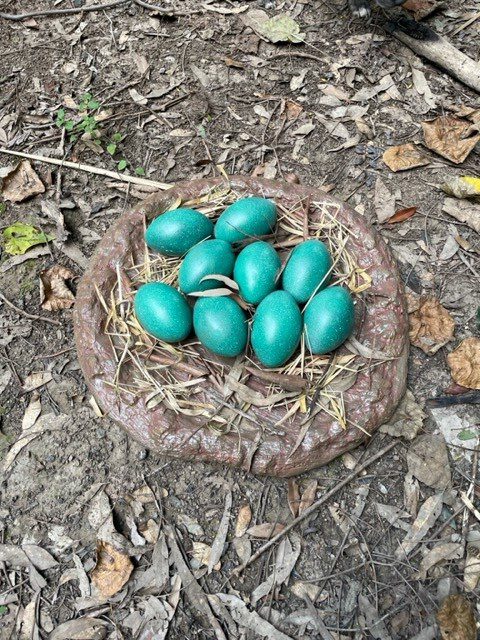
So that settles that Kazooie is not meant to be any ostrich, she is an emu. And if you are wondering what emu eggs look like in real life, Here are some of them:
From the double jump you get Kazooie, from Kazooie you get Grotbags and from the witch you get the music.
Ok, So What Makes It Sound Kirkhopian?
It is unclear when during development it was decided to make the witch the main antagonist but it is fair to say it came shortly after the design of Kazooie and influence from Emu’s World was settled. Then it was natural to make a connection between the tropes found in Mad Monster Mansion and the villain, which gave carte blanche to the development team to use elements which normally would be reserved to one level into the overall presentation of the series. This included the music, which would go on to be retroactively co-opted for previous levels which already had standard platforming game tunes. The entire tone of the game was altered after this eureka moment. The music influence of the level itself came to Grant Kirkhope when he started thinking about how to make creepy, gothic, monster music but still maintaining a quirky humorous twist to it—as opposed to the more straightforward horror from the haunted mansion from Super Mario 64—As he explained the philosophy, “I realized you can use really dark chords with dark harmonies, and as long as the rhythm’s quite comical it’s not going to scare the kids” That meant zeroing into perhaps the hottest film composer at that time in the 90s, who already had this particular ‘whimsically sinister’ tone down to a formula thanks to his multiple successful collaborations with the gothic fairy tale director Tim Burton. More specifically, the score made for the film Beetlejuice which was based around the macabre topics in the vein of Mad Monster Mansion; that means frantic oom-pah rhythms like twisted circus music and emphasis on tritone changes in both melodic and harmonic contexts, among other particular chord changes.
Musically, we have already talked about the frantic oom-pah rhythms and the tritone being key components. But as Grant himself has said, any odd or unconventional chord progression is fair game. The tritone is not used only in the context of melody but also in all harmonic combinations, like for example the I to bV, or the i to bV. Kirkhope says that this emphasis on the tritone also captures the disparate personalities of the bear and the bird since they are chords totally fall apart in the circle of fifths. You also have what we will call the Kirkhope cadence which is a way he often likes to end musical phrases. It consists of bII – V – I, such as Db – G – C. And if you look closer, you will notice that this cadence is nothing more than using the tritone chord of the dominant to then arrive at the tonic; it is tritones all the way down. With the use of them Grant will travel whimsically through multiple harmonic profiles in a single tune.
Another favorite progression of his that also plays with this modal mixture and balance between major/minor tonality is the back and forth between the I and the bVI or their minor chord equivalents. In general, practically all Banjo-Kazooie music is written in either C Ionian/major profile or its parallel minor for the dark, decayed cabaret levels such as Clanker’s Cavern and Rusty Bucket Bay. So he certainly likes to have C as his tonic; he is also fond of major chords for the most part. Thus, if you wanna make a Banjo-Kazooie tune right now just start with a vamp between C and Ab—in oom-pah rhythm of course—then maybe throw in a Gb. For the B Section you can go to the IV chord F as it is standard procedure and don’t forget to end your phrases and sections with Db – G – C.
Grant also says that he often picks the harmony first and then tries to fit a melody by force on top of it, challenging himself to make it cohesive and flow naturally no matter how abrupt or incompatible the chords are. Compared with Super Mario music which he studied judiciously in order to capture its catchiness but without taking its Latin-jazz influences, the music of Banjo-Kazooie has more sections, reaching often the D Section; only the Mario main theme has these four different sections.
We cannot forget also about the characteristic sound palette whose protagonists are not the banjo or a kazoo as you would expect—although they certainly are there—but the short samples of mallets like the marimba, xylophone and fairy tale celesta, which fit better with the memory constraints of the N64 and need little to sound faithful to the real deal; the Halloween theremin since you are against the witch of course; and the most Banjo-Kazooie sounding instrument which is the baritone saxophone. So much that its raspy, dirty sound opens the game and was also the first thing people heard from Yooka-Laylee which was purported to be the spiritual successor to the Banjo series when Grant wanted to show that he still had it.
All these will be accompanied by what we will call the cartoon orchestra, a bunch of woodwinds instruments that you find in all those classic animated shows…speaking of which…
Banjo-Kazooie is an Interactive Cartoon
Just like Walt Disney has its Silly Symphonies, Warner Bros their Merrie Melodies and Looney Tunes, and just like the Fleischer have the Car-Tunes and MGM its Happy Harmonies series, Rareware presents us with the modern update on classic cartoons in the modern medium of video games in the form of their own Banjo and Kazooie series, alongside its own musical connections thanks to the zany cartoon orchestra Grant Kirkhope brings to the picture—Not to mention its own opening musical number, plus no-reason-for-existing musical note symbols spread throughout the levels that only cement the importance of music for the project (perhaps a Banjo and a Kazoo need a constant supply of notes to play).
The alliterative names, the googly eyes on everything, the outlandish, irreverent humor, the sound effects; the Banjo-Kazooie series wears its golden age of animation influences on its sleeve. It was inevitable that the music would also take some cues from it. Unlike golden age cartoons, however, mickey mousing is usually not an option in a video game; nonetheless, its spirit, sensibilities and instruments remain part of the fabric and charm of the game. As the earliest level, Mumbo’s Mountain served as the test ground for the sound of the game and a small step towards the definitive musical direction of the series, hence why the original theme from this level was replaced by the end of development. In fact, most of the early levels until Mad Monster Mansion came along had a more traditional cartoon music approach before being taken over by the playfully sinister atmosphere that was ultimately a better fit to the series and made the music way more memorable.
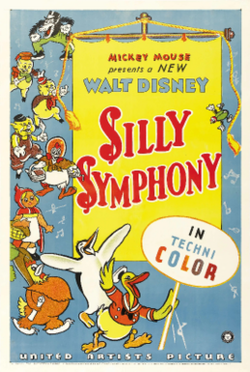
In the Western animation canon, comedy, cartoons and music became inseparable thanks to the American companies that popularized the medium in the early 30s and the vaudeville culture that served as a great source of inspiration for the gags. These companies began to make their mark in the silent era of film where, deprived of dialogue, visual comedy was easier to get across than narrative drama. Many composers also came from the era before synchronized sound was developed and brought their improvisational style—where the lines between score and sound effects were totally blurred—to the new booming medium of animation. And what anyone has in mind when they think of cartoon music is, nine of ten times, the kaleidoscopic scores beating at the heart of the classic cartoons produced under the aegis of Walt Disney and Warner Bros Studios courtesy of visionary composer and arranger Carl Stalling; in his world, melody, style, and form crashed together in a wacky pile-up of sound and image, making use of any stye available to convey the gags: jazz, orchestra, popular and beyond to the limits of avant-garde. Carl Stalling along with his peers like Scott Bradley have introduced countless generations to music they would probably never have heard otherwise.
No better distillation of the Carl Stalling essence was made than in the score for the love letter to the golden age of animation, the Who Framed Roger Rabbit project:
Famous film composer John Williams also crafted his own homage to the iconic style of Carl Stalling:
Mallets at the centerpiece of telegraphing character movements, whimsical bassoons and trombones, light woodwinds and heavy brass, rapid sliding notes; Grant Kirkhope makes use of them all to aid the eccentric world inhabited by the bear and the bird named after musical instruments; the mascots of this brand new interactive show. In lieu of having little mickey mousing—that is, when the instruments try to mimic the actions of the characters—the composer still managed to get dynamism out of the Nintendo 64 thanks to some programming wizardry that seamlessly transitioned pieces and instruments depending on where the player was located; so he became an expert in rearranging a main level theme to fit the different environments that the bear and the bird might find themselves in.
So there you go, a thread of all the possible influences that clash together in the idiosyncratic style of one of the last mascot characters of the 90s, a style that thanks to its particulars timbres and harmonies can be identified within seconds.
Help to keep the rites going around here by supporting the shrine:

Media Files, requests and support for more interactive content

Thou shall donate since this is a cult and you are now a sheep

Help staying awake analyzing game tracks and writing posts or else everything will end up being written by A.I
- Inside The Score – The Legend of Zeda: A Link to the Past – End Credits / Staff Roll
 The land rests As the last few minutes of this extensive journey that has now come to an end fly by, the nostalgia and reflective mood kicks in. Because such a massive enterprise as a Zelda game or a Lord of the Rings movie require multiple endings to convey everything… Read More »Inside The Score – The Legend of Zeda: A Link to the Past – End Credits / Staff Roll
 - Inside The Score – The Legend of Zelda: A Link to the Past – Ending / Epilogue ~ Beautiful HyruleFinal of the fantasy The Triforce has been touched. A wish has been granted. For the occasion, the newly undeceased king of Hyrule has commissioned a march in honor of the legendary hero to the Hylian Sousa, who might as well be composer Nobuo Uematsu since this piece is very… Read More »Inside The Score – The Legend of Zelda: A Link to the Past – Ending / Epilogue ~ Beautiful Hyrule
- Inside The Score – The Legend of Zelda: A Link to the Past – Triforce Chamber / Power of the GodsTake your boots off your feet And thus the Triforce spoke to men. And it became present in history. And you better treasure and contemplate this moment seldom witnessed in the course of the series. The elusive opportunity to interact and touch the most important artifact. You are now in… Read More »Inside The Score – The Legend of Zelda: A Link to the Past – Triforce Chamber / Power of the Gods
- Inside The Score – The Legend of Zelda: A Link to the Past – Ganon Battle / Prince of DarknessProgressive evil En Garde! And you better be prepared since you are about to duel the iconic enemy of the series at perhaps his canonically most powerful incarnation. Right after having touched the sacred Triforce which allowed him to conquer all of the Golden Land and whose evil and darkness… Read More »Inside The Score – The Legend of Zelda: A Link to the Past – Ganon Battle / Prince of Darkness
- Inside The Score – The Legend of Zelda: A Link to the Past – Boss Battle / Anger of the GuardiansQuick mayhem Ah, the simpler times when boss battles where not a multi epic orchestral suite but just an ostinato more basic that even what became the music for standard battle encounters out there. We are a long way from each boss having his own personalized track. And this early… Read More »Inside The Score – The Legend of Zelda: A Link to the Past – Boss Battle / Anger of the Guardians
- Inside The Score – The Legend of Zelda: A Link to the Past – Dark World Dungeon / Dungeon of ShadowsMemento mori We are getting closer to Ganondorf (or at least the wizard Agahnim who ultimately fulfills the same human side of evil role in this game) and that means getting closer to the profiles and motifs of his own theme song (which naturally was the theme of Agahnim at… Read More »Inside The Score – The Legend of Zelda: A Link to the Past – Dark World Dungeon / Dungeon of Shadows
Right here is the perfect blog for everyone who hopes to find out about this topic. You understand so much its almost hard to argue with you (not that I actually will need to…HaHa). You definitely put a freshspin on a topic that has been written about for decades.Excellent stuff, just great!
Really appreciate that you like it