The Zone Where Normal Things Don’t Happen Very Often
“You are entering the Twilight (realm) zone duriruriduriruri”
Or at least a place where a weird fella resides, one of those beings whose minds and specialized objects are able to peek into the fogs of the future; a brain that defies the known entropy laws as to direct their attention to the destiny that awaits anyone who is not wary of interacting with them…On the other hand, it is a neat way to help stuck players in a fantasy context.
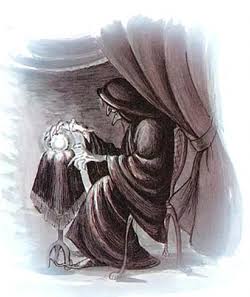
What the hell, we are almost all in anyway. Let’s get fully into some of the bizarre short sound vignettes found within the soundtrack of A Link to the Past. First one the predecessor to the curiosity shop and suspicious locales within the Zelda universe, the fortune teller shop where what appears to be either a magi or some Ku Klux Klan member in the midst of some meditation or trance can read you the cards or your hand or peer into the crystal ball, giving you some foggy advice about where you should be headed next in your quest. Certainly more useful than the generic advice of the real world ones who are just very attuned to emotional cues of the body.
This is a place you can smell, smoke filling the air and all kinds of artifacts belonging to the occult. Part of this vibe is conveyed by the music, which uses a kind of bell-like synth to create an otherworldly timbre or maybe some of those Gamelan gongs. The cue is meant to bring you closer to the trance mood, with three voices completely dissociated from each other. All doing their own thing and entering you into the dreamy vibe; somehow thanks to the ostnato this mess ends up being catchy. Just like a crystal ball deforms the objects it reflects, the cue is a reality bending device, a way for the senses to experience something outside their usual input; this genuinely can induce visions. The goal here is to hypnotize and hopefully get some clairvoyance out of the participants.
Musical Analysis
The three separate components are first the catchy ostinato flavored with that Latin rhythm thanks to that syncopation, the pager call noise in sixteenth notes and the harp in triplets that feels at home alongside the synthetic tones due to its high register. Each one is doing its own thing, the ostinato in 4/4 using two bars to complete its statement, the lead synth running faster can be though as going at its own tempo in 2/2, and then the harp with phrases in 3/4. The combination of all produces this hypnosis effect. Profile wise, we get the expected Whole Tone scale from the ostinato which is always called for in any trance context, and the other two pretty much their own independent use of notes; the harp is almost whole tone except for the G natural note; there is no harmony intended other than to confuse the listener.
The ostinato also uses two samples to create that old school video game reverb effect by means of delaying a note.
The piece was made even more confusing in its A Link Between World iteration which adds some experimental beat you would hear at the club after 3 AM either because the DJ is out of ideas or because of the substances operating in your body. You truly are now in the zone where normal things don’t Happen very often.
Here we add more confusion thanks to some panning tricks. We also use some official A Link to the Past guide art depicting a more traditional Romani witch in contrast to the fully robbed character sprite.

Help to keep the rites going around here by supporting the shrine:

Media Files, requests and support for more interactive content

Thou shall donate since this is a cult and you are now a sheep

Help staying awake analyzing game tracks and writing posts or else everything will end up being written by A.I
- Inside The Score – The Legend of Zeda: A Link to the Past – End Credits / Staff Roll
 The land rests As the last few minutes of this extensive journey that has now come to an end fly by, the nostalgia and reflective mood kicks in. Because such a massive enterprise as a Zelda game or a Lord of the Rings movie require multiple endings to convey everything… Read More »Inside The Score – The Legend of Zeda: A Link to the Past – End Credits / Staff Roll
 - Inside The Score – The Legend of Zelda: A Link to the Past – Ending / Epilogue ~ Beautiful HyruleFinal of the fantasy The Triforce has been touched. A wish has been granted. For the occasion, the newly undeceased king of Hyrule has commissioned a march in honor of the legendary hero to the Hylian Sousa, who might as well be composer Nobuo Uematsu since this piece is very… Read More »Inside The Score – The Legend of Zelda: A Link to the Past – Ending / Epilogue ~ Beautiful Hyrule
- Inside The Score – The Legend of Zelda: A Link to the Past – Triforce Chamber / Power of the GodsTake your boots off your feet And thus the Triforce spoke to men. And it became present in history. And you better treasure and contemplate this moment seldom witnessed in the course of the series. The elusive opportunity to interact and touch the most important artifact. You are now in… Read More »Inside The Score – The Legend of Zelda: A Link to the Past – Triforce Chamber / Power of the Gods
- Inside The Score – The Legend of Zelda: A Link to the Past – Ganon Battle / Prince of DarknessProgressive evil En Garde! And you better be prepared since you are about to duel the iconic enemy of the series at perhaps his canonically most powerful incarnation. Right after having touched the sacred Triforce which allowed him to conquer all of the Golden Land and whose evil and darkness… Read More »Inside The Score – The Legend of Zelda: A Link to the Past – Ganon Battle / Prince of Darkness
- Inside The Score – The Legend of Zelda: A Link to the Past – Boss Battle / Anger of the GuardiansQuick mayhem Ah, the simpler times when boss battles where not a multi epic orchestral suite but just an ostinato more basic that even what became the music for standard battle encounters out there. We are a long way from each boss having his own personalized track. And this early… Read More »Inside The Score – The Legend of Zelda: A Link to the Past – Boss Battle / Anger of the Guardians
- Inside The Score – The Legend of Zelda: A Link to the Past – Dark World Dungeon / Dungeon of ShadowsMemento mori We are getting closer to Ganondorf (or at least the wizard Agahnim who ultimately fulfills the same human side of evil role in this game) and that means getting closer to the profiles and motifs of his own theme song (which naturally was the theme of Agahnim at… Read More »Inside The Score – The Legend of Zelda: A Link to the Past – Dark World Dungeon / Dungeon of Shadows