The face behind the mask
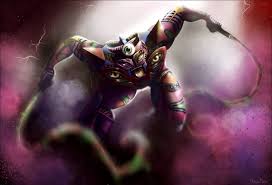
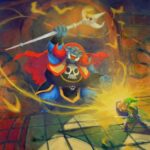
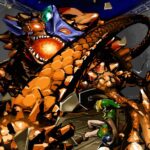
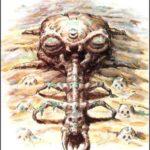
Our Chinese opera is closing the curtain and finally we get to see what was the feeling that Majora embodied all along. Its true form. A demonic figure who has fully opened its third eye (or if we wanna get technical this thing appears to have five eyes by now—turns out the eyes of the mask were…breasts?) The muscles grow up considerably and is now thrown into attacking Link head on with all of its might. It still retains some non-serious aspects till the end, seeing how it continues to taunt Link with its whips, laughs and even throws spinners at him. Perhaps Majora is not meant to represent a woman after all; perhaps what it really represents is a scarred childish mind with its antics, high pitched voice and the deafening screams of the mask, complementing the allegory of growing up. One last emotion Link has to conquer in order to save himself and the land of Termina. Wrath is also the counterpart to a fierce deity; both terms refer to the wrathful deities of Buddhism, so this indeed is meant to be a clash between gods of Termina. Nonetheless, now it truly looks like a Hannya mask, a demon totally consumed by its emotions.
Unlike Ganondorf, Majora has three forms, meaning Kondo has to get more mileage of his Majora theme one more time after three different iterations; it’s a self imposed imposing task seeing how angular the Majora theme is.
However, from all the themes this is the one that can be really called battle music, having all the standard characteristics of the style and cinematic action influences. It remains, perhaps forever, the very last battle theme contributed by Kondo to The Legend of Zelda series. As said, it still has to incorporate the Majora theme within this battle framework of loud brass and heavy percussion. Most people would probably never guess the previous cues were combat cues if thy were to be dissociated from the action.
Musical Analysis
Structure: Section 0 / Section 1 / Section 2 / Section 3 / Section 4 / Section 5
Time Signature: 3/4 (Section 0); 4/4
Tempo: 155
Melodic and Harmonic Profiles: Bb Diminished; Bb Chromatic; F Diminished; F Chromatic
The intro is the most different from the others; this is the most hardcore, violent opening of them all, putting even more emphasis on the accents with all the finality it has to pack and creating the sense of ultimate danger. Fast notes make the suona sound razor sharp, piercing the ears; gongs galore on the intro but then disappear for the remainder of the track except for one strategically placed hit to mark the beginning of the loop. Standard orchestral percussion takes over the main body of the music.
Kondo is once again matching the tempo of the battle with his music, the pumping percussion driving the track with its accents sometimes placed on the beat, sometimes on the upbeat; it’s strange to see Kondo not resorting to any kind of rhythmic displacement either with time signatures or odd rhythms, just a militaristic, constant pulse throughout the track. The percussion is made way bigger right at the end when the high timpani double the low timpani, an effect not seen since the ‘swordsman academy’ cue; that’s right, Majora’s Wrath has taiko drums at the very end. The suona is now sounding more alarming than ever by creating a flurry of notes at the beginning. The intro is also made more fierce and more wrathful by playing tritones at the very bottom of the sound spectrum. The female gong plays alongside the big chau gong.
The suona is playing at the original register that it did on the very first piece on the soundtrack, now at a faster tempo but still with the pitch bending intact; it is the one in charge of saying good bye to Majora. It really is its instrument. Like on that first theme, it is accompanied by the nylon guitar and accordion—good luck trying to find another final boss battle theme that employs this wacky set of instruments— The Chinese opera closes its curtain just as it opened it, with the monophonic line composed of tremolo yueqin, a sheng harmonica-like sound and the suona with its pitch bends (the fast tempo makes the yueqin performance almost impossible by normal human standards, making its tremolo effect more akin to a digital effect than performance effect). This time however it has the brass support with response phrases making small countermelodies material and also setting up the action-packed beginning; the tuba is the responsible of keeping the enraged moon vibe alive by playing a similar ostinato—as we will see, Majora and the moon are strictly linked—in fact we got two tubas for the first time, one playing very low; this truly feels like the film Jaws now with that characteristic minor second. The trumpets and trombones are playing the same figures just milliseconds apart to create an echo effect, making the locale feel more claustrophobic; they are paying parallel perfect fourths. This brass section is playing the exact same motif from the ‘Boss Battle’ from Ocarina of Time (Section 2) and the use of trumpets and trombones echoing their lines is taken verbatim from that same cue too.
Majora’s Mask, the only Zelda villain that ever got a cutscene of what happens when it wins and time runs out, can be taken off easily by an awakened Link. It’s up to players to uncover the true meaning of the battle through seemingly unassuming side quests that end up forming the core of the adventure; side quests never went on to play such an integral role conceptually in The Legend of Zelda series. But in Majora’s Mask they are essential to it; masks are the centerpieces of the game, the emotions of different beings, all of them contributing to Link being able to conquer Majora easily. Just as director Eiji Aounuma says, the Fierce Deity Mask truly contains all the memories of the people from Termina, people who were healed by the deeds of the Hero of Time. The Bombers Secret Society truly helped to save the people. And without realizing, they also ended up saving Link’s soul.
The clock can finally go past the evening, transforming the final day into just the third day, made possible because the Hero of Time has found what he was looking for on his personal journey. True to his name, the hero has gifted them a peaceful carnival of time. The five protector gods of Termina have fulfilled their oath.
Help to keep the rites going around here by supporting the shrine:

Media Files, requests and support for more interactive content

Thou shall donate since this is a cult and you are now a sheep

Help staying awake analyzing game tracks and writing posts or else everything will end up being written by A.I
- Inside The Score – The Legend of Zeda: A Link to the Past – End Credits / Staff Roll
 The land rests As the last few minutes of this extensive journey that has now come to an end fly by, the nostalgia and reflective mood kicks in. Because such a massive enterprise as a Zelda game or a Lord of the Rings movie require multiple endings to convey everything… Read More »Inside The Score – The Legend of Zeda: A Link to the Past – End Credits / Staff Roll
 - Inside The Score – The Legend of Zelda: A Link to the Past – Ending / Epilogue ~ Beautiful HyruleFinal of the fantasy The Triforce has been touched. A wish has been granted. For the occasion, the newly undeceased king of Hyrule has commissioned a march in honor of the legendary hero to the Hylian Sousa, who might as well be composer Nobuo Uematsu since this piece is very… Read More »Inside The Score – The Legend of Zelda: A Link to the Past – Ending / Epilogue ~ Beautiful Hyrule
- Inside The Score – The Legend of Zelda: A Link to the Past – Triforce Chamber / Power of the GodsTake your boots off your feet And thus the Triforce spoke to men. And it became present in history. And you better treasure and contemplate this moment seldom witnessed in the course of the series. The elusive opportunity to interact and touch the most important artifact. You are now in… Read More »Inside The Score – The Legend of Zelda: A Link to the Past – Triforce Chamber / Power of the Gods
- Inside The Score – The Legend of Zelda: A Link to the Past – Ganon Battle / Prince of DarknessProgressive evil En Garde! And you better be prepared since you are about to duel the iconic enemy of the series at perhaps his canonically most powerful incarnation. Right after having touched the sacred Triforce which allowed him to conquer all of the Golden Land and whose evil and darkness… Read More »Inside The Score – The Legend of Zelda: A Link to the Past – Ganon Battle / Prince of Darkness
- Inside The Score – The Legend of Zelda: A Link to the Past – Boss Battle / Anger of the GuardiansQuick mayhem Ah, the simpler times when boss battles where not a multi epic orchestral suite but just an ostinato more basic that even what became the music for standard battle encounters out there. We are a long way from each boss having his own personalized track. And this early… Read More »Inside The Score – The Legend of Zelda: A Link to the Past – Boss Battle / Anger of the Guardians
- Inside The Score – The Legend of Zelda: A Link to the Past – Dark World Dungeon / Dungeon of ShadowsMemento mori We are getting closer to Ganondorf (or at least the wizard Agahnim who ultimately fulfills the same human side of evil role in this game) and that means getting closer to the profiles and motifs of his own theme song (which naturally was the theme of Agahnim at… Read More »Inside The Score – The Legend of Zelda: A Link to the Past – Dark World Dungeon / Dungeon of Shadows