Burning with a passion
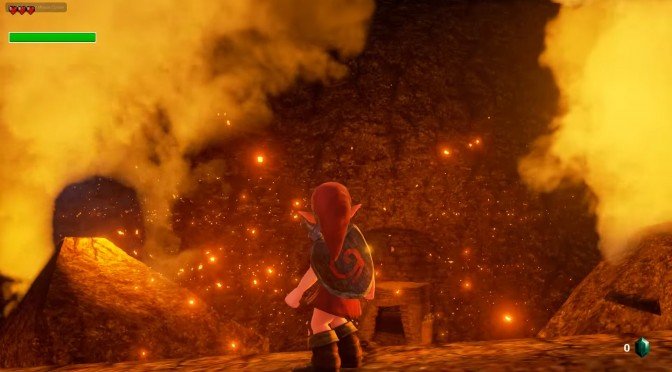
We get another opportunity to see Sheik (from countless angles as the developers get carried away with the cinematic aspects of their new 3D camera), learn one of her warp songs and witness yet another magical, inventive way in which she escapes; now we are playing with power, as the next dungeon is right inside the crater of Death Mountain itself, a place we only saw from afar as a child. Unlike the first game this is not the place of the final battle—even if Spectacle Rock is still here—but the temple of power, the second of the goddesses’ attributes that will help Link to grow more and cement his bond with the Goron race.
At last, after more than ten years, Koji Kondo manages to put the beloved classical piece ‘Bolero’ on a Zelda game after failing to secure it for the original. Well, sorta. He still had to compose a new song and was only able to appropriate its iconic rhythm.
Musical Analysis
Structure: Section 1 / Section 2
Time Signature: 3/4
Tempo: 61 (ritardando to 46)
Melodic and Harmonic Profiles: D Aeolian/Minor D Harmonic Minor D Ionian/Major
A bolero is a Spanish dance in 3/4 time popular during the late 18th century. Here, Kondo was clearly referencing the characteristic snare rhythm and the pizzicato patterns of the piece by Maurice Ravel:
The Bolero of Fire continues the question-answer format of the adult ocarina melodies; Sheik plays the question, Link answers it. After that, all the instruments go to a coda that, no matter what, has to end on a major chord—reaching the milestone of getting to a dungeon deserves a happy ending apparently. However this one piece, like the bolero of Ravel, reuses its question motif throughout the entire composition, here using it as the basis for the coda by transposing it to different starting points thus creating new interval relations but maintaining the same rhythmic profile and pattern. For example, the question-answer phrase is played within the D minor scale pattern (D F A) first and then is transposed to E but with a diminished profile (E G Bb) as the third phrase. After this the temperature keeps rising with the notes going higher and higher for more climax. The camera and editing also dances with the music.
The melody of the Bolero of Fire is built around the concept of two alternating notes. This alternating figure is repeated in sequence, moving through the notes outlining the chord; perhaps mimicking undulating flames; first rising and then descending to create the outro of the piece.
The harmony is imbued with tension-filled diminished chords and added sevenths. It might be interpreted as:
Dm – Dm – Edim
Dm – [ A- C#dim – Dm – Aaug ] – D
The combination of the piece, volcanic setting, uber-dramatic camerawork and the dialogues of Shiek about the power of friendship and the heart plays with the cultural connotations of both the element of fire, the sage of fire and the Spanish-Arabian romantic passion; making the bolero an apt piece preambling the Fire Temple, where an old friend of Link awaits, the one whom the dialogue of Sheik alludes to.

Help to keep the rites going around here by supporting the shrine:

Media Files, requests and support for more interactive content

Thou shall donate since this is a cult and you are now a sheep

Help staying awake analyzing game tracks and writing posts or else everything will end up being written by A.I
- Inside The Score – The Legend of Zeda: A Link to the Past – End Credits / Staff Roll
 The land rests As the last few minutes of this extensive journey that has now come to an end fly by, the nostalgia and reflective mood kicks in. Because such a massive enterprise as a Zelda game or a Lord of the Rings movie require multiple endings to convey everything… Read More »Inside The Score – The Legend of Zeda: A Link to the Past – End Credits / Staff Roll
 - Inside The Score – The Legend of Zelda: A Link to the Past – Ending / Epilogue ~ Beautiful HyruleFinal of the fantasy The Triforce has been touched. A wish has been granted. For the occasion, the newly undeceased king of Hyrule has commissioned a march in honor of the legendary hero to the Hylian Sousa, who might as well be composer Nobuo Uematsu since this piece is very… Read More »Inside The Score – The Legend of Zelda: A Link to the Past – Ending / Epilogue ~ Beautiful Hyrule
- Inside The Score – The Legend of Zelda: A Link to the Past – Triforce Chamber / Power of the GodsTake your boots off your feet And thus the Triforce spoke to men. And it became present in history. And you better treasure and contemplate this moment seldom witnessed in the course of the series. The elusive opportunity to interact and touch the most important artifact. You are now in… Read More »Inside The Score – The Legend of Zelda: A Link to the Past – Triforce Chamber / Power of the Gods
- Inside The Score – The Legend of Zelda: A Link to the Past – Ganon Battle / Prince of DarknessProgressive evil En Garde! And you better be prepared since you are about to duel the iconic enemy of the series at perhaps his canonically most powerful incarnation. Right after having touched the sacred Triforce which allowed him to conquer all of the Golden Land and whose evil and darkness… Read More »Inside The Score – The Legend of Zelda: A Link to the Past – Ganon Battle / Prince of Darkness
- Inside The Score – The Legend of Zelda: A Link to the Past – Boss Battle / Anger of the GuardiansQuick mayhem Ah, the simpler times when boss battles where not a multi epic orchestral suite but just an ostinato more basic that even what became the music for standard battle encounters out there. We are a long way from each boss having his own personalized track. And this early… Read More »Inside The Score – The Legend of Zelda: A Link to the Past – Boss Battle / Anger of the Guardians
- Inside The Score – The Legend of Zelda: A Link to the Past – Dark World Dungeon / Dungeon of ShadowsMemento mori We are getting closer to Ganondorf (or at least the wizard Agahnim who ultimately fulfills the same human side of evil role in this game) and that means getting closer to the profiles and motifs of his own theme song (which naturally was the theme of Agahnim at… Read More »Inside The Score – The Legend of Zelda: A Link to the Past – Dark World Dungeon / Dungeon of Shadows