A more heated fight
Because a king merits his own theme.
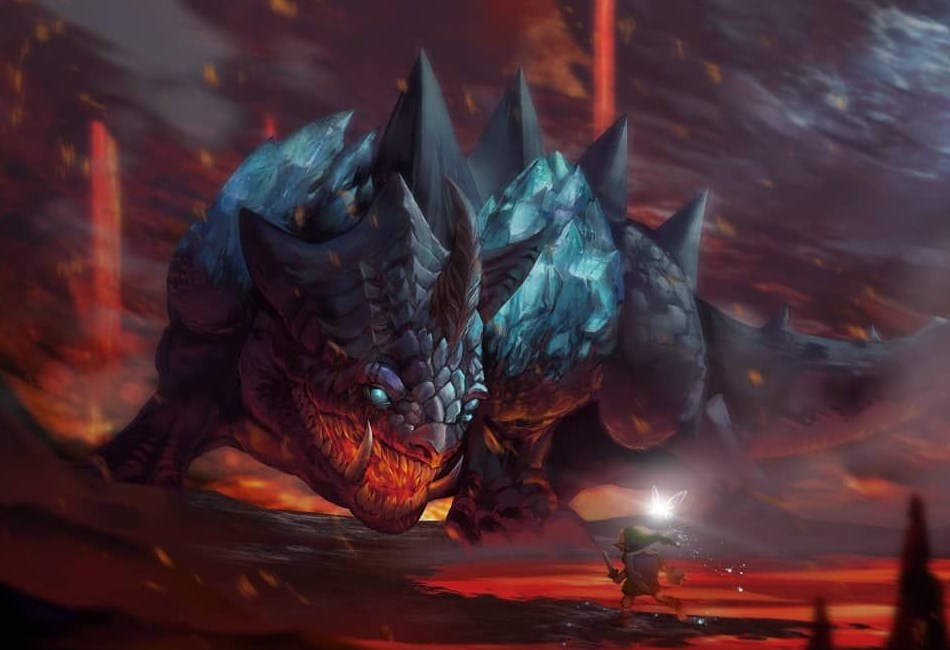
After 40 tracks we have arrived just to the second boss of the game—the soundtracks from previous Zelda games would have been finished a long time ago by this point (no wonder, Kondo would not continue to score the series all by himself after this game). That this particular track exists also points us to the fact that maybe the original ambitions were even higher.
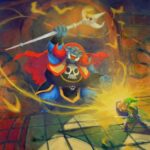
Only the mighty power of volcanoes and fire get their own exclusive boss battle themes that will be used only two times. This time Kondo has gone over the top for the battle by throwing everything but the kitchen sink onto this boiling track. There are more sections than in the first one; both male and female choirs, full orchestral percussion, woodwinds, strings plus piano and marimba are featured here alongside the loud brass section. Is this a final boss or what!? The piece also features ostinatos, heavy percussion and rhythmic dislocation as part of the standard battle language.
The first two dungeons having their own boss music give the impression that the plan was originally for each boss to have its own track, but it was possibly scraped due to time or memory limitations. At the end, this track ended up being used for the lava bosses of the game exclusively.
The cinematic sense of Ocarina of Time is also exemplified in the way that it creates suspense with its boss battles, fading to black when you enter their lairs and then creating more suspense by making the camera take the point of view of some of the bosses before their gargantuan appearance is shown; this is when the fanfare alarm sounds right on cue.
Music Analysis
Structure: Section 0 / Section 1 / Section 2 / Section 3 / Section 4 / Section 5
Time Signature: 4/4 (25/8)
Tempo: 148 (ritardando at the beginning to 100)
Melodic and Harmonic Profiles: B Diminished, Db Diminished, B Chromatic
If for the Mini Boss cue the perfect fourths were the main characters, here the tritones take center stage to show that this is a more desperate battle and that this is a more demonic monster as opposed to a warrior. The main ostinato played by timpani, piano and tuba is directly based on this interval and the opening interval of the melody is also this demonic diminished fifth, with the first note F# being the tritone note of the C based accompaniment; you are right in hell.
The piece opens with that Frankenstein of dissonances, the alarming diminished major seventh chords, composed of the malevolent tritone, minor second and perfect fourth at the same time; the whole gang of bad guys. In the remaining of the piece, different instruments take turns to emphasize various ostinatos (the contrabass male singers must have quite the extraordinary abilities). Like the other battle cues except for the standard battle which is all about suspense this is the alarming signal that your body needs the adrenaline rush right now to fight.
The cue has a proper second intro right after the alarm fanfare that establishes the accompaniment and generates more anticipation before the horn melody kicks in. The harmony is based around back and forth tritone chords separated by the bridge in a different time signature. We could say the “verses”of this song are when it goes from C(b5) to D(b5) and the “chorus” is from Eb5 to D(b5). The first melody is a question-answer block in which the answer is just the same question transposed from F# to G#. The chorus melody is also based around this parallel movement principle.
The piece continues the Kondo tradition of rhythm displacement for combat music, Section 3 features a dislocation of rhythm that could be counted in groups of 3s and 2s: like 3 3 2 3 with 3 3 3 2 3. This makes accents fall all over the place, as if you are receiving attacks from various angles or boulders and lava are raining down. It is all about enhancing that sense of chaos.
The ambiguous harmony seems to be based around two transposed diminished scales, alternating between B and Db (on the other hand, it can be seen as using the two octatonic scales that are produced by B). The ascending and descending scales that play as alarms through the track are transposed to fit each chord.
After the bridge the main progression returns and infernal choirs play descending notes falling into the abyss. The principle of just transposing a single melodic phrase continues. Last section is a reprise of the chorus—that is why it is called a chorus—now with male choirs. It does not need to be said that like other battle cues, the chromatic notes play a prominent roles in making these melodies apt for the dissonance of clashing against monsters.
The track could have been scored to the Volvagia fight since the cutscene and rhythms of the battle fit well with the timings of the cue.
For some inexplicable reason, the song was changed on the soundtrack release of Ocarina of Time by removing the choirs and replacing them with instruments:
Help to keep the rites going around here by supporting the shrine:

Media Files, requests and support for more interactive content

Thou shall donate since this is a cult and you are now a sheep

Help staying awake analyzing game tracks and writing posts or else everything will end up being written by A.I
- Inside The Score – The Legend of Zeda: A Link to the Past – End Credits / Staff Roll
 The land rests As the last few minutes of this extensive journey that has now come to an end fly by, the nostalgia and reflective mood kicks in. Because such a massive enterprise as a Zelda game or a Lord of the Rings movie require multiple endings to convey everything… Read More »Inside The Score – The Legend of Zeda: A Link to the Past – End Credits / Staff Roll
 - Inside The Score – The Legend of Zelda: A Link to the Past – Ending / Epilogue ~ Beautiful HyruleFinal of the fantasy The Triforce has been touched. A wish has been granted. For the occasion, the newly undeceased king of Hyrule has commissioned a march in honor of the legendary hero to the Hylian Sousa, who might as well be composer Nobuo Uematsu since this piece is very… Read More »Inside The Score – The Legend of Zelda: A Link to the Past – Ending / Epilogue ~ Beautiful Hyrule
- Inside The Score – The Legend of Zelda: A Link to the Past – Triforce Chamber / Power of the GodsTake your boots off your feet And thus the Triforce spoke to men. And it became present in history. And you better treasure and contemplate this moment seldom witnessed in the course of the series. The elusive opportunity to interact and touch the most important artifact. You are now in… Read More »Inside The Score – The Legend of Zelda: A Link to the Past – Triforce Chamber / Power of the Gods
- Inside The Score – The Legend of Zelda: A Link to the Past – Ganon Battle / Prince of DarknessProgressive evil En Garde! And you better be prepared since you are about to duel the iconic enemy of the series at perhaps his canonically most powerful incarnation. Right after having touched the sacred Triforce which allowed him to conquer all of the Golden Land and whose evil and darkness… Read More »Inside The Score – The Legend of Zelda: A Link to the Past – Ganon Battle / Prince of Darkness
- Inside The Score – The Legend of Zelda: A Link to the Past – Boss Battle / Anger of the GuardiansQuick mayhem Ah, the simpler times when boss battles where not a multi epic orchestral suite but just an ostinato more basic that even what became the music for standard battle encounters out there. We are a long way from each boss having his own personalized track. And this early… Read More »Inside The Score – The Legend of Zelda: A Link to the Past – Boss Battle / Anger of the Guardians
- Inside The Score – The Legend of Zelda: A Link to the Past – Dark World Dungeon / Dungeon of ShadowsMemento mori We are getting closer to Ganondorf (or at least the wizard Agahnim who ultimately fulfills the same human side of evil role in this game) and that means getting closer to the profiles and motifs of his own theme song (which naturally was the theme of Agahnim at… Read More »Inside The Score – The Legend of Zelda: A Link to the Past – Dark World Dungeon / Dungeon of Shadows