A bump in the level of despair
The alarm sounds letting you know that this is no standard monster to slash, the level of threat has risen and the cue adopts a more intimidating tone, dropping for the most part the suspense notions of the standard battle music.
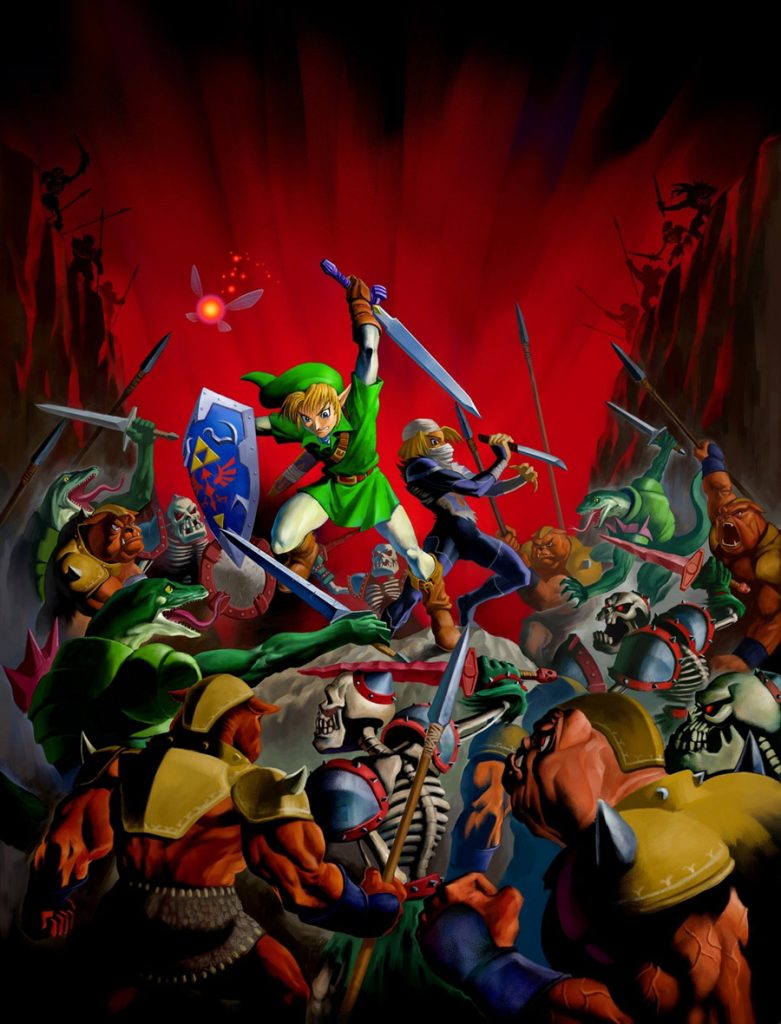
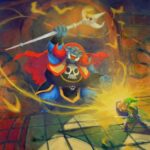
The concept of a proper sub boss with their own setpieces, exclusive designs and music was another of the innovations introduced in Ocarina of Time. They are some of the most memorable moments, from the first time you get on with the Lizalfos that went on to become classic staples in the series to the more challenging ones like Dark Link ans the Iron Knuckles. In the game they are introduced as a threat only with the second dungeon forwards. Naturally, they also serve as the final bosses of the mini-dungeons, which are exclusive locations to this N64 entry. They are the ideal test for the swordplay mechanic from Ocarina of Time, being less item based and more sword oriented; so get ready to practice you chanbara sword fighting style (which is why the Hero of Time appears as a samurai in Twilight Princess) and never let go of your Z-targeting system.
Still, the cue lives in the same headspace as other battle cues: percussion focused with militaristic snare, orchestral accents, loud brass, chromaticism and ostinato based accompaniment. This one introduces the reliance on the perfect fourth interval to signify a kind of malice in the air.
Musical Analysis
Structure: Section 0 / Section 1 / Section 2 / Section 3
Time Signature: 4/4
Tempo: 125
Melodic and Harmonic Profiles: D Chromatic; D Phrygian; D Harmonic Minor , D Diminished (Section 3)
The door closes with a thud behind Link, trapping you in the room. Is it a puzzle? The music immediately sounds the alarm that makes it clear that Link is in grave danger; it’s time to fight—unlike a boss room, where players are psychologically prepared for the challenge ahead, specially since we are in the series of dungeons without keys of any kind.
Again, this is battle music through and through; constant tempo plus driving, loud percussion and ostinatos abound. The main focus is on parallel chord movement and Kondo specially favors the marimba in his combat cues—mostly when lava is involved.
This is the rare piece that features timpani at the forefront in a melodic capacity, instead of using them for mere orchestral reinforcement; they are another ostinato. Unlike the first boss battle theme, the cue features actual sustained chords, with the high strings playing parallel sus2 chords in the first inversion. What matters in these specific sus2 chords is the two perfect fourth intervals that are produced in this configuration, because roughly in Koji Kondo’s lexicon:
Perfect Fifth= good guys, heroic
Perfect Fourth= not so good guys, more sophisticated villains
Tritone= no redemption guys, complete mindless monsters
The perfect fourth is •sigh• perfect for adversaries and rivals; it is not as diabolical as the tritone, sounding more sinister than pure evil. This feature combined with the chromatic movement creates the tension; everyone is doing perfect fourths over here. The minor third is also featured at the beginning ostinato, one that starts in octaves then transitions to the minor third and then a perfect fifths which serve as the basis of many low ostinatos. The trumpet fanfares introduce the suspended chords. All these intervals have parallel motion in chromatic steps. The melodic contours and use of perfect fourths have similarities to the iconic Ganondorf’s Theme which was introduced as the villain theme back in A Link to the Past. Fantasy RPGs have codified this use of parallel sus2 chords to generate the sense of darkness falling into the world. You can probably make a basic RPG intro story telling you about the fate of the magical crystals that sustained the harmony of the cosmos with those ambiguous harmonies of the sus chords (short for “suspect”chords) accompanying the text scroll. The interval that arises between the first and third note of this sus2 chords is a minor 7th also a kind of mysterious interval. Overall, stacked fourths sound more uncanny than sad or evil since most Western functional harmony is based on stacked thirds.
Only the last part sounds truly sad and more despairing, with a melody that sounds more tuneful, being based in question-answer blocks in a proper harmonic minor profile where the question remains the same as a pedal while the answers reach for higher and higher pitches.
The track is used for comedic effect on one of the last mini bosses of the game, where it has a false start due to the enemy not having its weapon at hand.
A fun reference to this specific song is found in the animated series The Powerpuff Girls, where they went out of their way to emulate the style Kondo employed here:
Help to keep the rites going around here by supporting the shrine:

Media Files, requests and support for more interactive content

Thou shall donate since this is a cult and you are now a sheep

Help staying awake analyzing game tracks and writing posts or else everything will end up being written by A.I
- Inside The Score – The Legend of Zeda: A Link to the Past – End Credits / Staff Roll
 The land rests As the last few minutes of this extensive journey that has now come to an end fly by, the nostalgia and reflective mood kicks in. Because such a massive enterprise as a Zelda game or a Lord of the Rings movie require multiple endings to convey everything… Read More »Inside The Score – The Legend of Zeda: A Link to the Past – End Credits / Staff Roll
 - Inside The Score – The Legend of Zelda: A Link to the Past – Ending / Epilogue ~ Beautiful HyruleFinal of the fantasy The Triforce has been touched. A wish has been granted. For the occasion, the newly undeceased king of Hyrule has commissioned a march in honor of the legendary hero to the Hylian Sousa, who might as well be composer Nobuo Uematsu since this piece is very… Read More »Inside The Score – The Legend of Zelda: A Link to the Past – Ending / Epilogue ~ Beautiful Hyrule
- Inside The Score – The Legend of Zelda: A Link to the Past – Triforce Chamber / Power of the GodsTake your boots off your feet And thus the Triforce spoke to men. And it became present in history. And you better treasure and contemplate this moment seldom witnessed in the course of the series. The elusive opportunity to interact and touch the most important artifact. You are now in… Read More »Inside The Score – The Legend of Zelda: A Link to the Past – Triforce Chamber / Power of the Gods
- Inside The Score – The Legend of Zelda: A Link to the Past – Ganon Battle / Prince of DarknessProgressive evil En Garde! And you better be prepared since you are about to duel the iconic enemy of the series at perhaps his canonically most powerful incarnation. Right after having touched the sacred Triforce which allowed him to conquer all of the Golden Land and whose evil and darkness… Read More »Inside The Score – The Legend of Zelda: A Link to the Past – Ganon Battle / Prince of Darkness
- Inside The Score – The Legend of Zelda: A Link to the Past – Boss Battle / Anger of the GuardiansQuick mayhem Ah, the simpler times when boss battles where not a multi epic orchestral suite but just an ostinato more basic that even what became the music for standard battle encounters out there. We are a long way from each boss having his own personalized track. And this early… Read More »Inside The Score – The Legend of Zelda: A Link to the Past – Boss Battle / Anger of the Guardians
- Inside The Score – The Legend of Zelda: A Link to the Past – Dark World Dungeon / Dungeon of ShadowsMemento mori We are getting closer to Ganondorf (or at least the wizard Agahnim who ultimately fulfills the same human side of evil role in this game) and that means getting closer to the profiles and motifs of his own theme song (which naturally was the theme of Agahnim at… Read More »Inside The Score – The Legend of Zelda: A Link to the Past – Dark World Dungeon / Dungeon of Shadows