The main theme of the game…which did not originate in the game
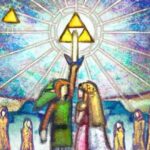
The first of many meetings between the hero and the princess, when they are just children and decide to set in motion their plan to save Hyrule.
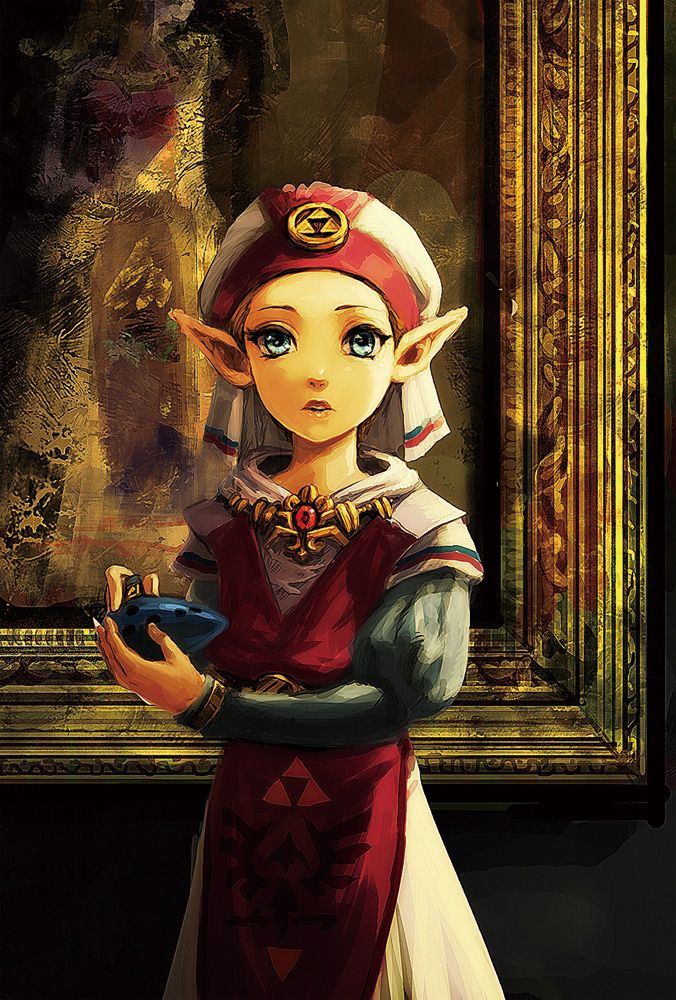
In the absence of the iconic Zelda series’ main theme from the soundtrack, this piece takes its place as arguably the main theme of The Legend of Zelda: Ocarina of Time. Fitting, as it is the theme of the titular princess and used on the most pivotal moments of the game.
It ends up having the honor of being the trifecta (triforce?) theme of the game since it works not only as a location cue for the garden where young Link and the princess of Hyrule meet for the first time but also her character theme and ultimately the main theme of the game. It is the definitive ocarina melody that shows the relationship between the hero and the princess which dignifies his quest through the lands under the kingdom.
We get various versions of it across the game, from the child version to the epilogue. And even though the piece question motif fits the ocarina scale, it has its origins on a previous Zelda title: A Link to the Past, so it is probable that this song combined with the flute melody from the original NES game, dictated the choice of notes for the ocarina.
Seeing as how she is right in the title of the series it is no wonder that this is one of the most used composition throughout its history, with countless arrangements made and even serving as the basis for new themes such as Skyward Sword main theme or Midna’s Theme which serve as inversions of this tune.
Musical Analysis: Child Version
Structure: Section 1 / Section 2
Time Signature: 3/4
Tempo: 110 (ritardando at the end of phrases to 94 and 80)
Melodic and Harmonic Profiles: G Ionian/Major (Section 1); C Ionian/Major (Section 2)
Naturally, the titular ocarina is the lead instrument on the main theme of the game. This is another chord progression that is strong by virtue of its voice leading—chromatic descending bass line— and melodic flow; Koji Kondo doesn’t just pick pretty or weird sounding chords as accompaniment for his main melodies, his arpeggiated chord progressions are virtually melodies in their own way.
The parent question-answer motif from the Zelda’s Lullaby ocarina tune—originally taught by the attendant of the princess via whistling—is the kind of child era melody that repeats the three note question twice since the players are just getting acquainted with playing the ocarina (the adult tunes use more notes and less repetition). Then the game provides the answer; this one is unfinished though since it ends on a D, the fifth note of the G Ionian/Major profile. There is nothing strange about the lack of resolution to the tonic on this piece; no need for weird narrative theories saying that it represents the uncertain nature of the princess or the unpredictable destiny of Hyrule, This is just video game music that needs to loop or to continue, not resolving is standard in this medium.
This is the only ocarina song where the melody Link plays on his instrument is a simplified version compared to the location cue. Since Link is a child with not that much experience with the ocarina he only plays the core notes of the melody not the ornamental ones like the G and A that lead back to the main motif. As we will see later, only Princess Zelda knows the right way to play her theme.
For the full piece heard in the courtyard The underlying harmony is slightly changed from the one in A Link to the Past—injecting more jazzy chords this time around— creating the definitive version we have come to know of the theme of the princess.
Here is the harmony even though the voice leading is the star of the show and the melodic flow of the notes is what it is important; there is not a Section 0, the melody starts right away:
C – F#dim – C – F#dim
Bm7 – A#dim7 – Am7 – D7
Jazzy. A lesson showing that diminished chords and dissonances can sound pretty in the right context. The diminished chords can also be replaced by their appropriate equivalent dominant 7th chord, for example F#dim is just the spicy part of a D7. By not focusing on the tonic G the theme feels more ambiguous, not overtly major or happy which gives more of a bittersweet tone.
The 3/4 time signature and melodic contour are apt for a lullaby, conjuring the image of a mother rocking her baby back and forth to the rhythm of the tune.
It’s better to see Section 2 as based on a C Ionian/Major profile. With this, the very last chord (G) would be the dominant chord. This will assure that the piece loops smoothy to that initial C chord from the different scale (G Ionian/Major). This section is characterized by its descending contour and a melody that retainst the same rhythm and only transposes the notes.
Section 2 is the more romantic section focusing almost exclusively on the major and minor 7th chords. The harp also gains confidence by arpeggiating continuously.
Fmaj7 – Em7 – Dm7 – Cmaj7
Fmaj7 – Em7 – Eb7 – Dm7 – G
The main motif of Zelda’s Lullaby might be inspired by the track ‘Concerto for Philodendron & Pothos’ from the influential electronic album Mother Earth’s Plantasia. An album that could pass for Super Nintendo music and informed generations of ambient, film, and new age composers in the years that followed:
But it can also be heard on other tunes that Kondo might have listened in his earlier days. For example, there is Japanese cover of a Beatles song that has the same melody on the intro:
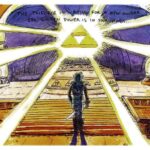
As a curiosity, there is a reason why you play this song whenever you see a Triforce symbol plastered on a pedestal; the shape that forms on the C-buttons melody in the game’s internal music notation is that of the Triforce, starting from the piece of wisdom which is the one of the princess. Fitting narratively as a song symbolizing ties with the royal family of Hyrule. You are literally playing the Triforce with the C-buttons.
Here we can also use the opportunity to explore the small cue that plays when the eyes of Link and the princess meet for the first time.
Musical Analysis: Enter Zelda
Structure: Section 1
Time Signature: 2/4
Tempo: 150 (ritardando to 110)
Melodic and Harmonic Profiles: D Ionian/Major; D Dorian
Hope and romance is in the air. Now to the least remembered fanfare in the game—heard only…seven short times? (for some reason, it plays too when you rescue the carpenter’s sons and when you meet the sages at the temples). The ‘meeting Zelda’ cue or meeting character I wanna meet cue. Named “Enter Zelda”, analogous to the “Enter Ganondorf” fanfare. It’s possible that this leitmotif was planned to be played each time Zelda appeared on screen, accentuating the operatic nature of the game. However, there weren’t many opportunities to use this piece in the story. Or maybe it just marks the importance of the encounter to the titular princess.
The music is composed of four ascending major chords (D E F G), in similar fashion to the intro to the Kokiri Forest cue. The piece is left suspended in the air without a cadence, giving a sense of anticipation to this meeting—like Link just took a deep breath, gasping at the sight of princess Zelda— But knowing Koji Kondo, he would probably have in mind the so called Mario cadence; if he wanted to end the cue on more secure footing, it would have ended on an A major chord, which would have served as the dominant of the D profile. It might also have ended on G since this is the key of the Zelda’s Theme that plays on the garden, giving continuity.
The strings and harp arpeggios include the sixth of the chords to add a more romantic feel to the princess. The semi Dorian ocarina scale (D F A B D) also plays adding the Zeldaesque feel to the proceedings.
Musical Analysis: Adult Version
The last chapter from the legend as told in Ocarina of Time
The pieces are all coming together in preparation for the grand finale, where the cinematic sensibilities will be turned up a notch and the slope of the exponential curve of tension the game has masterfully maintained becomes stepper. Just before that, Link makes a last stop at the Temple of Time before meeting his final challenge. There is someone waiting for him there. In the same place where they met, Sheik appears one last time and is about to deliver some startling revelations.
In one of the most fondly remembered plot twists from The Legend of Zelda Series, the titular princess reveals herself to the hero; she was there all along, guiding Link and helping the land of Hyrule behind the scenes. having who knows how many adventures of her own.
Back in those days, The Legend of Zelda was a series still very much stepped on the medieval knight errant tradition stemming from Chivalric Romances and fairy tales; the intrepid explorer who encountered insurmountable dangers, mysterious lands, monsters to slay and ladies to rescue in order become a true hero. Consequently, the expected thing in Ocarina of Time after seeing Ganon’s Castle floating over a giant pit of lava was that the princess was being held prisoner over there, in the end the hero would triumph over the evil, get the key to her prison cell and tell the princess everything was gonna be okay from now on, roll credits. But instead the game presents us a ninja warrior that allies with Link for most of his adventure and who will be right beside him even in the final battle, helping to deal the finishing blow to the antagonist of the game. Princess Zelda has guided the entire adventure since she was a child, and now that she is a woman—presumably the legitimate queen of the kingdom— her accompaniment cue has also grown up with her.
Wiser and more regal; her theme, essentially the main theme of Ocarina of Time, receives a similar treatment to that of the Kakariko Village music which also has two versions, one for each era; replacing child-like instruments with ones closer to full symphonic sensibilities. This overhauled orchestration even does away with the precious harp synonymous with Princess Zelda and femininity, replacing it with a modern, more mechanically complex piano. The delicate sounds of the glockenspiel are also no more; the melody is tackled now with just the strings reinforced by the orchestral flute for grown ups; she is no longer in possession of the ocarina of time after all, whose rendition of the theme will only return when Link gives back her instrument. Her royalty is represented here with the horn section added to the beginning section of the piece. and besides all that, all of the instruments are playing with an even more vigorous vibrato effect.
Revealing herself to Link was another mistake, now Ganondorf knows where all the Triforce pieces reside and this cunning villain knows exactly how to lure Link right into his hands.
Musical Analysis: The Ocarina of Time
The bittersweet parting between Link and Zelda, the pair who put the events into motion in this story. They ultimately won against evil, but the damage to the land and themselves is already caused. Zelda will have to work hard to bring Hyrule back to its luster while Link will go back to his own time to prevent the rise to power of Ganondorf, losing his accomplishments, purpose and identity in the process, which will kickstart the events of the next game. The theme that marks the connection between these two character plays. From here, it’s Zelda’s Lullaby all the way; the theme song of The Legend of Zelda: Ocarina of Time.
The cutscene starts with Princess Zelda’s theme in its new orchestrated version, then, at the moment Link entrusts back the ocarina, the cue fades out and diegetic music takes it from there, with Zelda herself playing Zelda’s Lullaby—it seems she knows the song better than Link since she actually plays the ornamental notes of her theme!— She is joined shortly after by the rest of the instruments, the theme has returned to its original version we heard when we first met Zelda. However, for the first time, the cue has an ending, albeit an incomplete ending saying that these characters and their stories will continue on.
It is as classic a fairytale ending as you can get, with the music slowing down in the last two chords Am7 – D7 and the graceful chromatic movements taken directly from “once upon a time, in a far away place” stories and the romantic tradition of classical music. The last dominant seventh chord wants desperately to resolve but this legend has to continue.

Help to keep the rites going around here by supporting the shrine:

Media Files, requests and support for more interactive content

Thou shall donate since this is a cult and you are now a sheep

Help staying awake analyzing game tracks and writing posts or else everything will end up being written by A.I
- Inside The Score – The Legend of Zeda: A Link to the Past – End Credits / Staff Roll
 The land rests As the last few minutes of this extensive journey that has now come to an end fly by, the nostalgia and reflective mood kicks in. Because such a massive enterprise as a Zelda game or a Lord of the Rings movie require multiple endings to convey everything… Read More »Inside The Score – The Legend of Zeda: A Link to the Past – End Credits / Staff Roll
 - Inside The Score – The Legend of Zelda: A Link to the Past – Ending / Epilogue ~ Beautiful HyruleFinal of the fantasy The Triforce has been touched. A wish has been granted. For the occasion, the newly undeceased king of Hyrule has commissioned a march in honor of the legendary hero to the Hylian Sousa, who might as well be composer Nobuo Uematsu since this piece is very… Read More »Inside The Score – The Legend of Zelda: A Link to the Past – Ending / Epilogue ~ Beautiful Hyrule
- Inside The Score – The Legend of Zelda: A Link to the Past – Triforce Chamber / Power of the GodsTake your boots off your feet And thus the Triforce spoke to men. And it became present in history. And you better treasure and contemplate this moment seldom witnessed in the course of the series. The elusive opportunity to interact and touch the most important artifact. You are now in… Read More »Inside The Score – The Legend of Zelda: A Link to the Past – Triforce Chamber / Power of the Gods
- Inside The Score – The Legend of Zelda: A Link to the Past – Ganon Battle / Prince of DarknessProgressive evil En Garde! And you better be prepared since you are about to duel the iconic enemy of the series at perhaps his canonically most powerful incarnation. Right after having touched the sacred Triforce which allowed him to conquer all of the Golden Land and whose evil and darkness… Read More »Inside The Score – The Legend of Zelda: A Link to the Past – Ganon Battle / Prince of Darkness
- Inside The Score – The Legend of Zelda: A Link to the Past – Boss Battle / Anger of the GuardiansQuick mayhem Ah, the simpler times when boss battles where not a multi epic orchestral suite but just an ostinato more basic that even what became the music for standard battle encounters out there. We are a long way from each boss having his own personalized track. And this early… Read More »Inside The Score – The Legend of Zelda: A Link to the Past – Boss Battle / Anger of the Guardians
- Inside The Score – The Legend of Zelda: A Link to the Past – Dark World Dungeon / Dungeon of ShadowsMemento mori We are getting closer to Ganondorf (or at least the wizard Agahnim who ultimately fulfills the same human side of evil role in this game) and that means getting closer to the profiles and motifs of his own theme song (which naturally was the theme of Agahnim at… Read More »Inside The Score – The Legend of Zelda: A Link to the Past – Dark World Dungeon / Dungeon of Shadows