Andean volcano
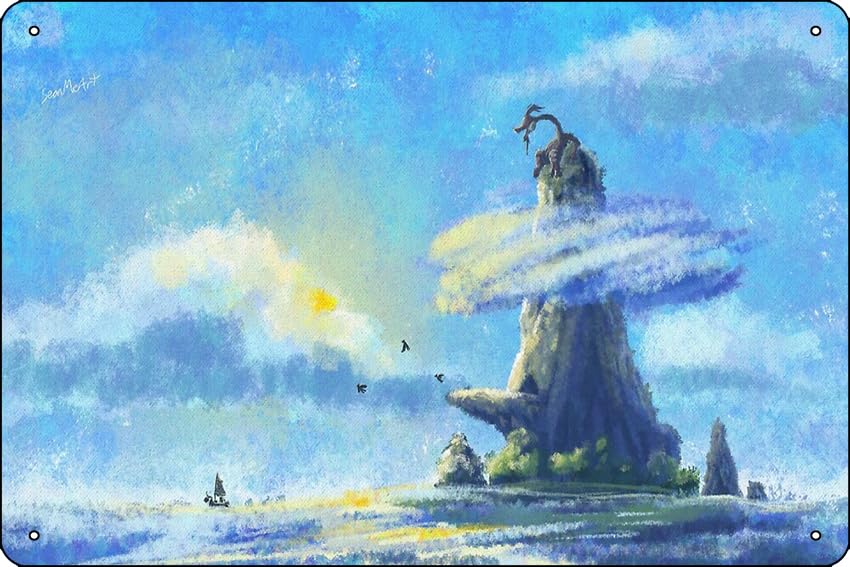
The Island where the wind wakes…up in many forms.
We arrive at the Nintendo Gamecube era—although don’t expect too many games since it is a nightmare to convert from the proprietary BMS sequences to MIDI— and what better way to kickstart it than to peek inside the ambitious interactive, playable cartoon known as The Wind Waker; as part of the Legend of Zelda series it is a bold and surprising continuation to Ocarina of Time, departing from the more realistic look from the N64 era on a system capable of very realistic graphics as showcased in a demo from the console when it originally released. The Legend of Zelda: The Wind Waker may resemble a cutesy animated series with bright colors, simple shading, and extremely fluid animation. Yet this childlike shift in presentation doesn’t mean the series has been reduced to kids’ entertainment, cartoon physics, and pratfalls. Instead, its whimsical look is used as a platform to support a genuinely epic, touching, and dramatic storyline that has an unusually strong sense of history. It is all about sailing the seven seas (technically just one), pirates and exploring island dweller cultures. And even though the endearing graphics were controversial at first and when seeing them in static press images, it was only a matter of watching the game in movement before people were sold on it. This bold decision has helped the game stand the test of time and look as pretty many years later as it did on release.
We also arrive at an era where, instead of a single auteur composer, video games now required teams of music composers and sound designers in order to fulfill the high volume of interactive tracks needed in short development times. The score for The Wind Waker was composed by Kenta Nagata as main sound director, Hajime Wakai, Toru Minegishi, and a Koji Kondo beginning to leave the realms of the series in favor of more of a supervising role. Due to the setting the soundtrack is inspired by gaelic seafaring tunes alongside the primary environments and classic Zelda tunes rearranged to fit historical characters and locations.
During the Gamecube era it was easier to include pre-recorded music on the games as opposed to sequence it; nevertheless, it was decided that Zelda would still use sequences akin to MIDi since it allowed for more interactivity at the time and occupied less memory, plus the advancement of MIDI technology allowed the soundtrack to more closely approximate the sounds of real instruments than was possible in previous installments.
Just like Ocarina of Time featured an instrument as its main source of magic, here we have the titular Wind Waker as a conductor baton directing an unseen choir in D major. It is a game that has the themes of controlling creatures and the environments. As an instrument, it has not the same level of control as the Ocarina though. The development team initially considered using a theremin since it also control sound with the movement of hands but discarded it in favor of the conductor baton even though the later required an off-screen magical choir; magic instrument triumphed over futuristic one in this fantasy world.
Of course ever since the track ‘Gerudo Valley’ found in Ocarina of Time every Zelda game has to have at least one exotic, not quite fantasy appropriate tune on their soundtrack. Hence we end up with ‘Dragon Roost Island’ as the spiritual successor of both ‘Gerudo Valley’ and Deku Palace, and the precursor to tracks such as ‘The Hidden Village’ in Twilight Princess and the overworld track in Spirit Tracks. However, just like ‘Gerudo Valley’ was not just a random flamenco thrown in just to be its catchy self but was connected to the Islam-Arabic inspired Gerudo race and its closeness to the Western inspired kingdom of Hyrule mirroring the Muslim conquest of the Iberian Peninsula which led to the establishment of a state, Al-Andalus (origin of the Andalusian progression of course), the music from this ultra high volcanic island is not your typical beach music of any kind; instead, it is also directly connected with the design and inspiration of a brand new race for the series, the bird-like Rito who dwell in high mountainous places.
The train of thought went pretty much like this: developers knew how iconic the sigh of Death Mountain was for Hyrule by now; but the problem is that, as per their own story, the entire kingdom was sunk below the ocean. So what kinds of volcanoes could survive? what kind of people could live in those places? Enter the real world location home to the highest volcanoes on planet earth, the Andes mountain range in South America. It is the longest continental mountain range in the world, forming a continuous highland along the western edge of South America; The Andes extend from South to North through seven South American countries: Argentina, Chile, Bolivia, Peru, Ecuador, Colombia, and Venezuela. Naturally, the bird like tribe Rito, possibly inspired by the trademarked Andean condor, also live there (specially on Breath of the Wild).
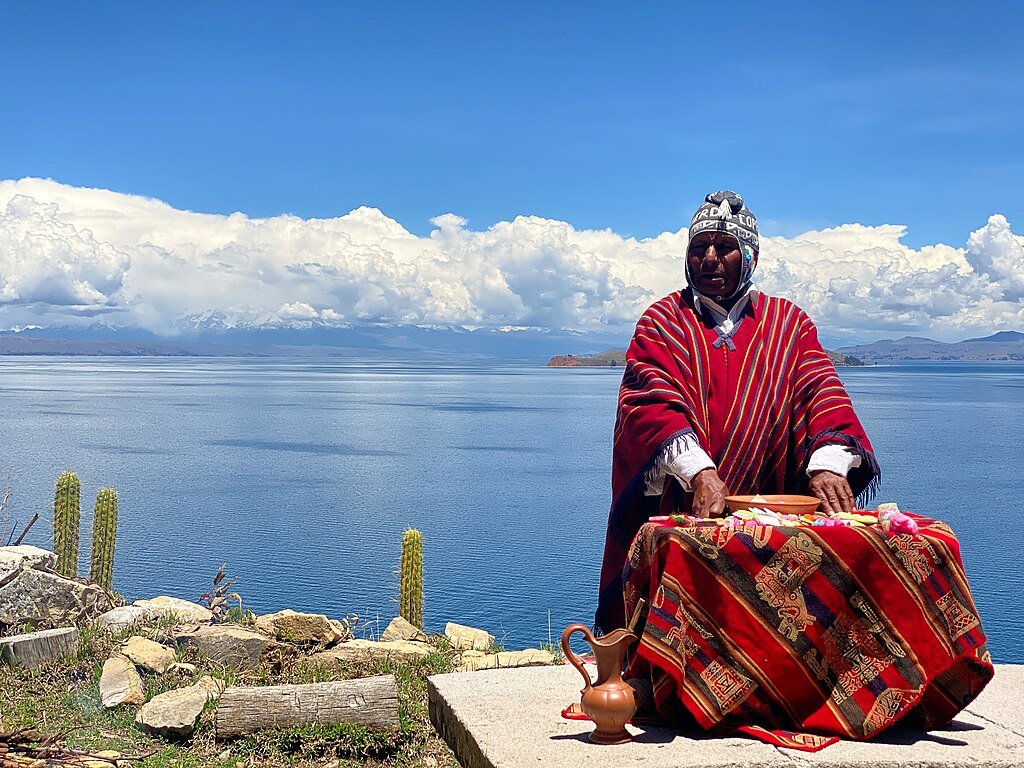
Following this environment, the designers then went on to splash the Rito tribe with South American indigenous people traits, such as the poncho like clothing, chullo hats, beak like noses, all expertly incorporated in bird like features. The Rito culture and garments are all engulfed with both Aymara and Quechua people characteristics.
Musical Analysis
And so, naturally, the music follows suit and also needs to appropriate the proper Andean folk music which is a mix of the easy to construct pipe instruments that carry the sound of the wind for these windy locations (plus a literal wind god that will allow Link to control the winds) with the influence of the Spanish colonists who brought with themselves some neat plucked string instruments like the mandolin, which in Latin America became the charango. Original wistful and longing chants heard since the times the Inca empire mixed with Spanish rhythms to create a brand new genre that serves as a regional motif for any work set in the region; alongside some llamas It establishes that you are on this terrain.
An example of the Andean music which inspired ‘Dragon Roost Island’:
Composer Kenta Nagata who previously helmed the Mario Kart 64 ost was tasked with bringing to life the Rito tribe with some Andean music. Still, just like ‘Gerudo Valley’ mixed in some mariachi trumpets, the theme from ‘Dragon Roost Island’ adopts further flamenco influences by using handclaps and castanets which are not commonly found in Andean music, creating another original mix which could only be found in video game music. The rhythms can be counted in fast 3/4 time or slower 12/8 since it is the time it takes for the palms and castanets to finish their pattern or the melodic lines to rest. There is also the traditional modal music from Zelda which is never content with staying in a single key throughout (here we have a G minor tune which travels to other chords outside it).
The piece consists of a pre-intro, an intro that is incorporated within the track again, plus two main melodic sections A and B. It starts with the dominant major D chord before going to the main vamp of Gm to F; so from the beginning we are using some outside the key chords. Composer Kenta uses very few instruments creating a track with a lot of space and air. Most of the work went into creating a performance instrument-accurate for the charango. You can see how dynamic the different notes from the chords are, creating different rhythms even within the notes of the chord. Not to mention the amount of work that went into the velocity (a MIDI concept that denotes how strong you hit a note) of each individual note, which cannot be pictured in the visualization; it makes some notes pop more than others within the chord, all contributing to a realistic, faithful adaptation of the charango strumming patterns plagued with the open chords from plucked stringed instruments as opposed to the close together notes in the chords of a piano. Programming this mandolin must have been a nightmare; the samples selected even contain the strong pitchless attack from strumming forcefully string instruments, which is used for the pre-intro in rhythmic fashion by cutting the length of the notes down to just the first milliseconds, creating a realistic mute strum pattern that sets the mod for the intro.
The pan flutes (or siku as they are known in the region) complete both the accompaniment and melodies, with the accompaniment in fifths sometimes mixing in with the melodic notes since they end up in similar registers. Some other chords outside the key include the Andalusian like Ab which brings to mind the Zelda main tune that has a bVII – bVI – I movement somewhere during its own A section. The melody uses two pan flutes to create a delay effect used since Super Nintendo times; meanwhile, the accompaniment flute uses a second low velocity secondary note to create a more real pan flute accurate sound, putting forward the blowing attack.
The full harmony from Dragon Roost Island would be something like:
Pre-Intro
D – chikchikchikchik
Intro
Gm – F – Gm – F
A section
Gm – F – Gm – F
Gm – F – Bb – Ab – Gm
F – Eb –
The pan flute melody retaining the same notes while the underlying harmony descends. (if we include the pan flute accompaniment some chords would result in the likes of Ebmaj7 and Ab maj 7/ #11 thanks to pan flute that stays as pedal).
Intro
A Section
Gm – F – Gm – F
Gm – F – Bb – Ab – Gm
F – Eb – Bb – C(7/9) – Abmaj7
Intro
B Section
Eb – Dm7 – Eb – F
Eb – Dm7 – C(7/9) -Abmaj7 – Abmaj7 (alt)
As you can see both of the melodic sections end with the same extended harmony progression, giving cohesiveness to the whole package. No pan flute accompaniment during B section.
The wistful, longing B Section beginning with a perfect fourth interval might have been inspired by the iconic Andean song known as ‘El Condor Pasa’ which also features this interval prominently and most likely served as a reference for Dragon Roost Island music.
So you might be asking, what about the bouncy, infectious bass line? I remember there was a bass line on this track!” well you are just remembering as some kind of Mandela effect since the bass was never in the game to begin with; you are just used to the soundtrack versions uploaded and the versions found in the Super Smash Bros games. Perhaps for the soundtrack release someone wanted to add more Latin sabor to the track. Could this acoustic bass be the first instance of a recorded instrument in Zelda music? Perhaps. For some reason it was still not included on the HD version for the WII U; maybe they feel it could be too distracting in game. In any case this is the original straight from the game.

Help to keep the rites going around here by supporting the shrine:

Media Files, requests and support for more interactive content

Thou shall donate since this is a cult and you are now a sheep

Help staying awake analyzing game tracks and writing posts or else everything will end up being written by A.I
- Inside The Score – The Legend of Zeda: A Link to the Past – End Credits / Staff Roll
 The land rests As the last few minutes of this extensive journey that has now come to an end fly by, the nostalgia and reflective mood kicks in. Because such a massive enterprise as a Zelda game or a Lord of the Rings movie require multiple endings to convey everything… Read More »Inside The Score – The Legend of Zeda: A Link to the Past – End Credits / Staff Roll
 - Inside The Score – The Legend of Zelda: A Link to the Past – Ending / Epilogue ~ Beautiful HyruleFinal of the fantasy The Triforce has been touched. A wish has been granted. For the occasion, the newly undeceased king of Hyrule has commissioned a march in honor of the legendary hero to the Hylian Sousa, who might as well be composer Nobuo Uematsu since this piece is very… Read More »Inside The Score – The Legend of Zelda: A Link to the Past – Ending / Epilogue ~ Beautiful Hyrule
- Inside The Score – The Legend of Zelda: A Link to the Past – Triforce Chamber / Power of the GodsTake your boots off your feet And thus the Triforce spoke to men. And it became present in history. And you better treasure and contemplate this moment seldom witnessed in the course of the series. The elusive opportunity to interact and touch the most important artifact. You are now in… Read More »Inside The Score – The Legend of Zelda: A Link to the Past – Triforce Chamber / Power of the Gods
- Inside The Score – The Legend of Zelda: A Link to the Past – Ganon Battle / Prince of DarknessProgressive evil En Garde! And you better be prepared since you are about to duel the iconic enemy of the series at perhaps his canonically most powerful incarnation. Right after having touched the sacred Triforce which allowed him to conquer all of the Golden Land and whose evil and darkness… Read More »Inside The Score – The Legend of Zelda: A Link to the Past – Ganon Battle / Prince of Darkness
- Inside The Score – The Legend of Zelda: A Link to the Past – Boss Battle / Anger of the GuardiansQuick mayhem Ah, the simpler times when boss battles where not a multi epic orchestral suite but just an ostinato more basic that even what became the music for standard battle encounters out there. We are a long way from each boss having his own personalized track. And this early… Read More »Inside The Score – The Legend of Zelda: A Link to the Past – Boss Battle / Anger of the Guardians
- Inside The Score – The Legend of Zelda: A Link to the Past – Dark World Dungeon / Dungeon of ShadowsMemento mori We are getting closer to Ganondorf (or at least the wizard Agahnim who ultimately fulfills the same human side of evil role in this game) and that means getting closer to the profiles and motifs of his own theme song (which naturally was the theme of Agahnim at… Read More »Inside The Score – The Legend of Zelda: A Link to the Past – Dark World Dungeon / Dungeon of Shadows