Alluding to the ancient past through real world connections
Introduction
“Navi… Navi, where art thou? Come hither…. Oh, Navi the fairy… Listen to my words, the words of the Deku Tree… Dost thou sense it? The climate of evil descending upon this realm… Malevolent forces even now are mustering to attack our land of Hyrule…
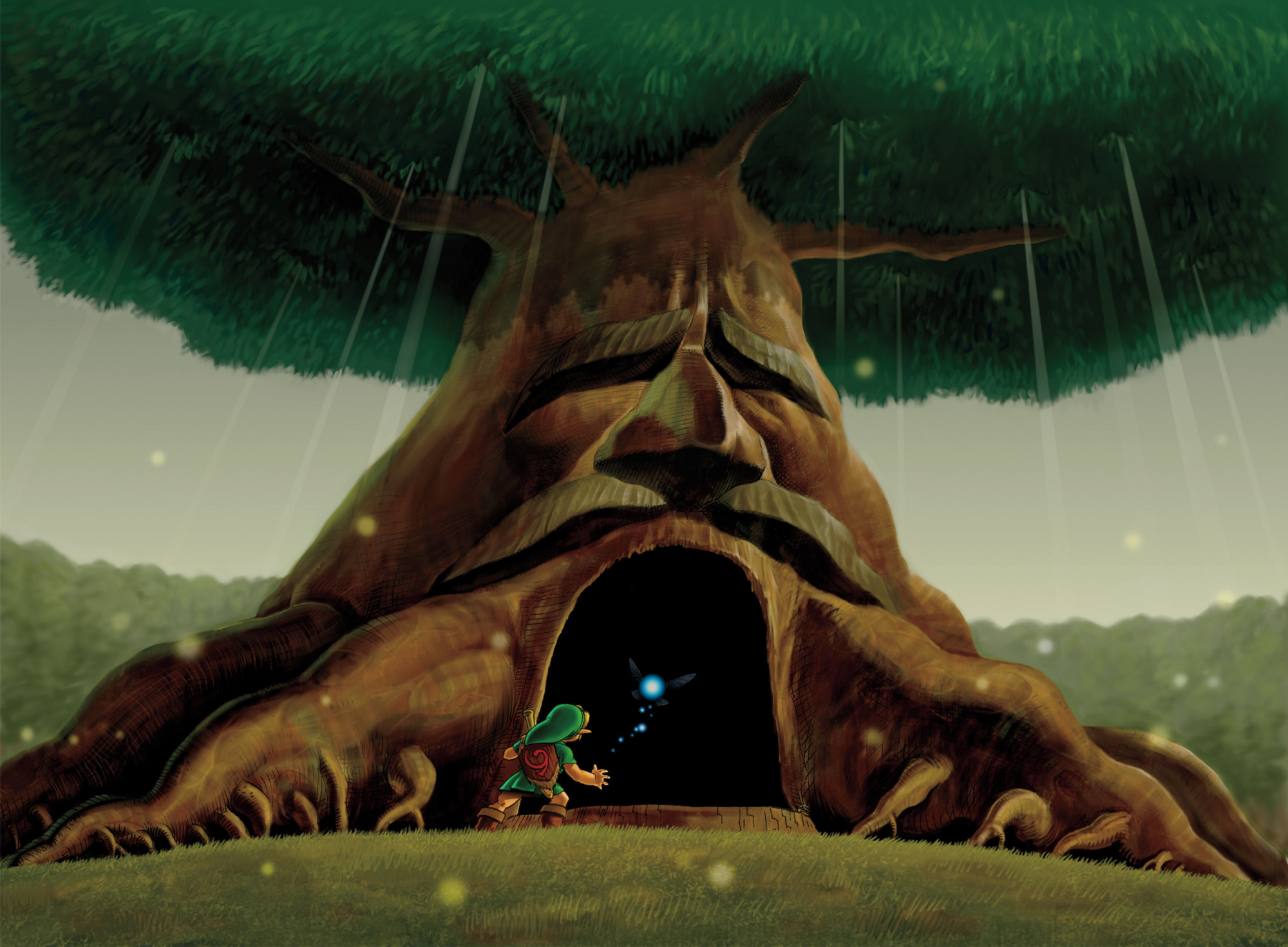
Great Deku Tree
Shintoism, where everything in nature is infused with spirits, is the main responsible for you seeing all kinds of weird deities, guardians and supernatural animals all over Japanese media. This religion has made an indelible mark on The Legend of Zelda series; elemental temples, elemental stones, purification on springs… you know that something is wrong in Hyrule when something is wrong with the environment.
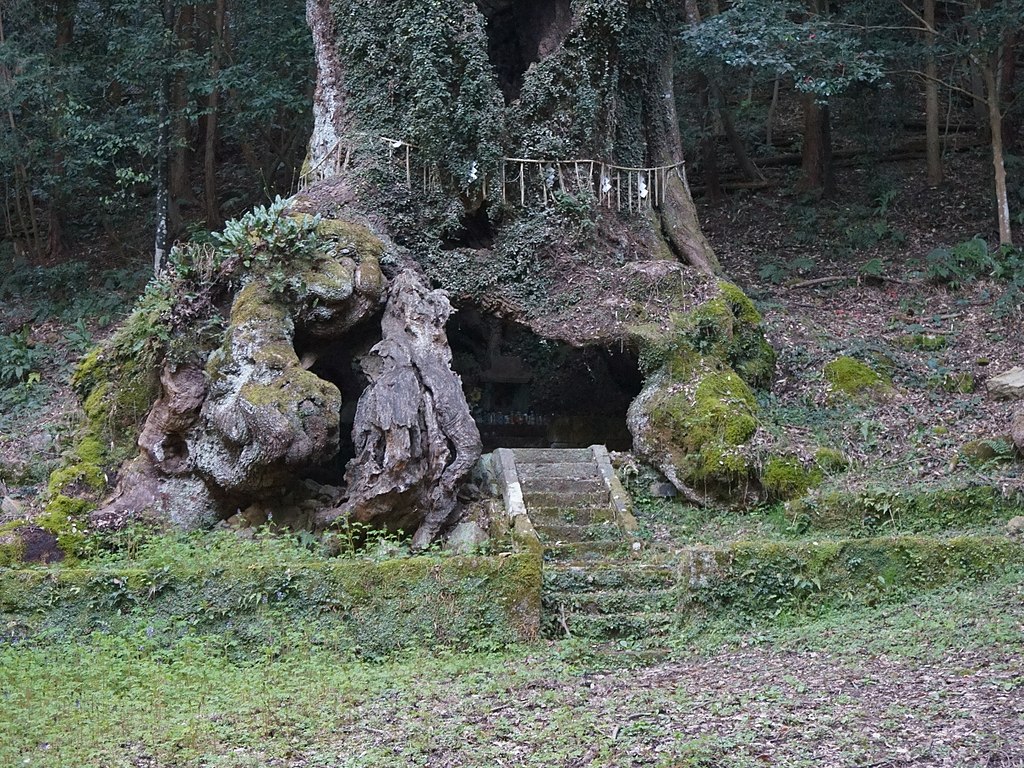
And something is wrong, indeed, as the Great Deku Tree, guardian spirit of the forest (echoing the definition of a Shinto kami), must summon the child whose destiny is to play a role within this lands.
Yet, the association between wisdom and trees is not a Japanese exclusive thing. Some big trees tend to stick around for multiple generations and you know that time means experience means wisdom. So the Deku Tree we find in Zelda games is just the latest of the wise tree beings found in cultures al around the world. Some trees offer shade, others offer enlightenment, from the Biblical Tree of Knowledge the Buddhist Bodhi tree to the World tree that connects the heavens and the earth. The Deku tree having a proper old man’s face is just the overt iteration of this motif, serving as the father figure for child Link, the one narrating the story and the one who sets the journey in motion.
Notwithstanding, Koji Kondo decided to draw a parallel with a different musical sensibility for the sonic identity of this character. The idea here is to sound as ancient as possible.
The Middle East is generally considered the “cradle of civilization”; the earliest civilizations in the world developed in Mesopotamia (modern-day Iraq) and the surrounding areas about 5000 years ago; Ancient Egypt is still today the poster child for ancient cultures in the collective consciousness. Hence, it’s not surprising that Kondo channeled middle eastern influences in the music for the sacred tree from a bygone era. Listen to this:
The song you just listened uses a musical scale that can’t help but conjure the middle east at once, it is known as the Phrygian dominant scale (Harmonic tetrachord + Phrygian tetrachord; so [C Db E F + G Ab Bb C. A scale is made of a head and a tail). Incidental composers have milked it to death to represent deserts and pyramids; actually, the Great Deku Tree’s Theme would cut for exciting ‘desert level’ music with minuscule tempering:
It seems that Howard Shore, the composer behind The Lord of the Rings films, arrived at the same conclusion that Kondo did and decided to offer a similar treatment to the eternal elves that have lived in the forest for millennia; a soft and ethereal melody stepped in middle eastern musical tradition to convey antiquity, just watch the opening to the trilogy and you will see that it could also work for the Deku Tree speech –the Nintendo 64 had more limited resources though.
Music Analysis
| Stylistic References | Middle Eastern Traditions; Organum The Lord of the Rings – Lothlórien / Prologue Donkey Kong 64 – Angry Aztec (Underground) Banjo Kazooie – Gobi’s Valley (Inside the Pyramid) Aladdin – Arabian Nights The Lord of the Rings – Theme or The One Ring |
| Instruments | High Strings – Melody and Harmony Low Strings – Melody, Countermelody and Harmony Horn – Bass (Single Note) |
| Structture | Section 1 |
| Time Signature and Tempo | 4/4 74 |
| Melodic and Harmonic Profiles | C Phrygian Dominant |
When we hear this theme for the first time, the Great Deku Tree is describing the impending doom that looms on the horizon for the kingdom of Hyrule. This theme, with its slow tempo and bass changes, reflects this ominous tale.
Melody at its most broad-ranging conception is all about call and response. Take any popular tune and you are likely to easily identify patterns of call and response inside the music; it can even be said that music itself is just chains of calls and responses nested inside bigger calls and responses, like those Russian Matryoshka dolls, until you have a full piece. Question/answer. Verse/chorus. Head/tail. Whatever you call it, music usually has a dualistic quality. A good melody, then, for the most part will come down to how the composer plays with the expectations of those question/answer knots; an example of how a composition process could develop looks like this:
1. Build your first question/answer block
I have used what is arguably the most recognizable pattern of call and response in all of humanity—or at least as far as pop culture is concerned. So indelibly it is that you don’t even need the pitches, just the rhythm of the question for someone on the other side of the room to feel compelled to complete the answer. It means that with this, you already have a song, a pretty short and boring one, but a song nonetheless; a motif at most. To continue composing you will need to…
2. convert your initial question/answer block into a new question and find its answer; you will have a bigger block
The new answer itself is also composed of a smaller question/answer block at its molecular level. Now you have what somebody would recognize as a riff or ostinato –you can loop it and bring a rapper into the fold to put lyrics over it!
3. Rinse and repeat to your heart’s content, connecting the beads like in a rosary, having in mind that you can vary the rhythm and/or pitches of the question/answer blocks to make the piece more interesting.
Back to the Deku Tree, we can see that the cue is composed of 4 melodic blocks, played by two string patch instruments in perfect fourths across the Phrygian dominant scale. Interestingly, sometimes they swap their role as the upper or lower voice, and in the last phrase they disengage completely from each other, with the low strings playing an ascending countermelody; nevertheless, the human ear will tend to perceive as the melody the highest pitch playing on a certain moment. What was the melody on the first block ends up being the harmony on the third block.
The entire support of the track rests in the horns playing the octave chords C and Db back and fort; the first and second degree of the scale for maximum Arabian flavor. The first couple of questions are the same melody (C Db F E – ) which, as a pedal melody, the same set of notes gain different flavors depending on what chord is playing underneath it.
We don’t actually see the Great Deku Tree at the beginning of the game; we just listen to his “voice” on screen. With this cue as the background, the character we see is a little light bulb referred to as Navi. This fairy will be our companion for the rest of the adventure, having the hard task of not only helping Link to find his way across Hyrule, but actually help us, the players, to ‘navi’gate our first fully 3D Zelda. We can only control our character when she arrives. She doesn’t have her own theme, but that doesn’t mean she is left without her own sonic identity, as can be heard in the next cue which is as sparkly as her.

Help to keep the rites going around here by supporting the shrine:

Media Files, requests and support for more interactive content

Thou shall donate since this is a cult and you are now a sheep

Help staying awake analyzing game tracks and writing posts or else everything will end up being written by A.I
- Inside The Score – The Legend of Zeda: A Link to the Past – End Credits / Staff Roll
 The land rests As the last few minutes of this extensive journey that has now come to an end fly by, the nostalgia and reflective mood kicks in. Because such a massive enterprise as a Zelda game or a Lord of the Rings movie require multiple endings to convey everything that the adventure represented. You… Read More »Inside The Score – The Legend of Zeda: A Link to the Past – End Credits / Staff Roll
 - Inside The Score – The Legend of Zelda: A Link to the Past – Ending / Epilogue ~ Beautiful HyruleFinal of the fantasy The Triforce has been touched. A wish has been granted. For the occasion, the newly undeceased king of Hyrule has commissioned a march in honor of the legendary hero to the Hylian Sousa, who might as well be composer Nobuo Uematsu since this piece is very similar to the main theme… Read More »Inside The Score – The Legend of Zelda: A Link to the Past – Ending / Epilogue ~ Beautiful Hyrule
- Inside The Score – The Legend of Zelda: A Link to the Past – Triforce Chamber / Power of the GodsTake your boots off your feet And thus the Triforce spoke to men. And it became present in history. And you better treasure and contemplate this moment seldom witnessed in the course of the series. The elusive opportunity to interact and touch the most important artifact. You are now in the presence of something truly… Read More »Inside The Score – The Legend of Zelda: A Link to the Past – Triforce Chamber / Power of the Gods
- Inside The Score – The Legend of Zelda: A Link to the Past – Ganon Battle / Prince of DarknessProgressive evil En Garde! And you better be prepared since you are about to duel the iconic enemy of the series at perhaps his canonically most powerful incarnation. Right after having touched the sacred Triforce which allowed him to conquer all of the Golden Land and whose evil and darkness are pouring out into Hyrule.… Read More »Inside The Score – The Legend of Zelda: A Link to the Past – Ganon Battle / Prince of Darkness
- Inside The Score – The Legend of Zelda: A Link to the Past – Boss Battle / Anger of the GuardiansQuick mayhem Ah, the simpler times when boss battles where not a multi epic orchestral suite but just an ostinato more basic that even what became the music for standard battle encounters out there. We are a long way from each boss having his own personalized track. And this early boss battle cue is one… Read More »Inside The Score – The Legend of Zelda: A Link to the Past – Boss Battle / Anger of the Guardians
- Inside The Score – The Legend of Zelda: A Link to the Past – Dark World Dungeon / Dungeon of ShadowsMemento mori We are getting closer to Ganondorf (or at least the wizard Agahnim who ultimately fulfills the same human side of evil role in this game) and that means getting closer to the profiles and motifs of his own theme song (which naturally was the theme of Agahnim at this point) on this dungeon… Read More »Inside The Score – The Legend of Zelda: A Link to the Past – Dark World Dungeon / Dungeon of Shadows