The 3D Navigation system is deployed

Navi is in charge of showing us the world of the first 3D Zelda. That’s appropriate since Navi is short for ‘navigation’ She was designed first and foremost for this role of navigating the brand new 3D environments. Like most things Nintendo, it predates narrative considerations. It went like this: after getting a system to indicate directions in 3D, the developers thought of a fairy, the fairy plus the green robes of Robin Hood made them think of Tinker Bell, Peter Pan and Neverland; kickstarting the whole concept of the Kokiri Forest.
So after all maybe is in Navi that we find the seed for the entire story, after the Peter Pan connection, it followed the Kokiri, maybe even the child version of Link.
The whole concept of it being just a ball of light as opposed to just a small girl like Tinker Bell or the early Zelda fairies not only made the N64 fairies look more unique but was also a pragmatic consideration since having the model of a little human following you and flapping around would be way more difficult. It is also more mystical since if you encounter a fairy in the middle of a thick forest it would probably be engulfed by light, giving the sensation of it being an orb even though they might indeed be little girls with insect wings as they have been traditionally depicted in art —you know, mixing traits of the most common inhabitants of actual forests with legendary tales of the European fair folk—And some insects actually glow like the fairies that inhabit the Kokiri Forest.
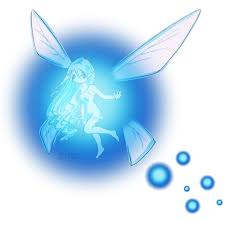
Small, little fairies are a rather modern development of English folklore popularized by Shakespeare’s A Midsummer Night’s Dream. The modern depiction of fairies we all know was then shaped in the literature of Romanticism during the Victorian era. In turn, they were immortalized in painting where they gained the wings of their fellow forest companions.
So don’t hate Navi, Navi is good, and it never was more charming than in this little intro, an intro that wasn’t possible before, even in live action movies, as drones had not being invented yet. Moving a camera in this way, Nintendo managed to show a mastery of 3D, with humor and giving us a glimpse of the forest, seeming like they had been doing this for decades. Navi is also the only character with recorded English words that became iconic and remembered for better and worse.
The closest thing to a theme for Navi would be this little ditty of whimsical music that mimics the flapping of wings, as if you go up and up, get tired so you start again the rise; then you also go down or side by side as only the stuff that flies can do easily.
In truth, this is a theme for flying overall since you will hear it too whenever the owl takes you for a ride in his claws. It takes over from the seriousness of the previous cues and is the first instance of playfulness in the game. We see the world through the eyes of Navi and only after she reaches the hero can we control the game.
Musical Analysis
Structure: Section 0 / Section 1 / Section 2
Time Signature: Section 0: 4/4, Section 1: 13/16, Section 2: 12/16
Tempo: 110 ( Last note of Section 0: 59)
Melodic and Harmonic Profiles: C Flamenco (Section 0) C Ionian/Major (Section 1) Ab Lydian (Section 1) C Flamenco (Section 2)
The sparkly, like a fairy, cue was definitively composed for the flying cutscene at the beginning of the game and its asymmetrical metric is product of that initial corridor that the fairy crosses to reach the forest, with each restart of the scales that are played matching the turns that the fairy makes. Section 2 is synced with the wonder of the fairy overseeing the entire village of the Kokiri. It then loops but some cutscene beats still manage to be accented with the music, usually Section 1 for fast flying and Section 2 for observing the environment. The modal and Lydian profiles capture the enchanted and whimsical feel of the scene and the environment. The back and forth between chords also add a sense of confusion ideal for when the fairy is unsure of which path to go.
In a sense it is a mickey mousing cue that matches the patterns of wings flapping and camera motions; we can also be sure it was originally meant for Navi since these fast movements match the size of her wings and are not as appropriate for the huge owl. The fragmented nature of the track is typical of classic animation where the music follows the kinetic action as opposed to just an emotion. The cue is made with delicate instruments apt for a small creature like Navi
Here we get the short descending intro that accompanies Navi when she starts her travel, a quick set of descending major seventh chords that instantaneously capture the magic of the forest.
Cmaj7 – Bbmaj7 – Abmaj7 – Db
The first three chords also bring to mind the Zelda Cadence (I – bVII – bVI – V)
Section 1 is a three note ascending sequence within a C Ionian/Major accompaniment with a time signature that matches the the initial movements of the camera through the narrow corridor. The descending parts play the notes of the Ab Lydian profile
The 13/16 time signature not only matches the flying pattern but also functions with how flying insects move, flapping in short bursts, getting tired and then restarting their motion again, that is what the extra sixteenth note there does, you can picture the wavelike motion of a fairy and the 13 note is where she rests briefly before starting again.
The last section gives us a glimpse of the mystery and confusing side of the forest, changing yet again the metre back to a more stable 12/16 but with the harmony accompaniment becoming more frenetic. It uses the flamenco or Phrygian major profile that is basically the Phrygian mode but retaining the I chord as major; it goes Db – C – Db – Eb. Navi is overseeing the forest and thinking where to go next.
Not even a fence deters our fairy companion of reaching the house of the chosen one in order to fulfill the Deku Tree mission entrusted upon her. We are about to get moving; but before we experience the world in all of its 3D glory, the developers ease gamers and veterans of previous Zelda games by allowing us to explore the easier to navigate 2D environment of our own house. As we will see, the music is also a callback. There is a reason this feels like home.

Help to keep the rites going around here by supporting the shrine:

Media Files, requests and support for more interactive content

Thou shall donate since this is a cult and you are now a sheep

Help staying awake analyzing game tracks and writing posts or else everything will end up being written by A.I
- Inside The Score – The Legend of Zeda: A Link to the Past – End Credits / Staff Roll
 The land rests As the last few minutes of this extensive journey that has now come to an end fly by, the nostalgia and reflective mood kicks in. Because such a massive enterprise as a Zelda game or a Lord of the Rings movie require multiple endings to convey everything… Read More »Inside The Score – The Legend of Zeda: A Link to the Past – End Credits / Staff Roll
 - Inside The Score – The Legend of Zelda: A Link to the Past – Ending / Epilogue ~ Beautiful HyruleFinal of the fantasy The Triforce has been touched. A wish has been granted. For the occasion, the newly undeceased king of Hyrule has commissioned a march in honor of the legendary hero to the Hylian Sousa, who might as well be composer Nobuo Uematsu since this piece is very… Read More »Inside The Score – The Legend of Zelda: A Link to the Past – Ending / Epilogue ~ Beautiful Hyrule
- Inside The Score – The Legend of Zelda: A Link to the Past – Triforce Chamber / Power of the GodsTake your boots off your feet And thus the Triforce spoke to men. And it became present in history. And you better treasure and contemplate this moment seldom witnessed in the course of the series. The elusive opportunity to interact and touch the most important artifact. You are now in… Read More »Inside The Score – The Legend of Zelda: A Link to the Past – Triforce Chamber / Power of the Gods
- Inside The Score – The Legend of Zelda: A Link to the Past – Ganon Battle / Prince of DarknessProgressive evil En Garde! And you better be prepared since you are about to duel the iconic enemy of the series at perhaps his canonically most powerful incarnation. Right after having touched the sacred Triforce which allowed him to conquer all of the Golden Land and whose evil and darkness… Read More »Inside The Score – The Legend of Zelda: A Link to the Past – Ganon Battle / Prince of Darkness
- Inside The Score – The Legend of Zelda: A Link to the Past – Boss Battle / Anger of the GuardiansQuick mayhem Ah, the simpler times when boss battles where not a multi epic orchestral suite but just an ostinato more basic that even what became the music for standard battle encounters out there. We are a long way from each boss having his own personalized track. And this early… Read More »Inside The Score – The Legend of Zelda: A Link to the Past – Boss Battle / Anger of the Guardians
- Inside The Score – The Legend of Zelda: A Link to the Past – Dark World Dungeon / Dungeon of ShadowsMemento mori We are getting closer to Ganondorf (or at least the wizard Agahnim who ultimately fulfills the same human side of evil role in this game) and that means getting closer to the profiles and motifs of his own theme song (which naturally was the theme of Agahnim at… Read More »Inside The Score – The Legend of Zelda: A Link to the Past – Dark World Dungeon / Dungeon of Shadows