A musical motif that takes the series back home
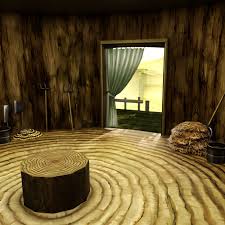
A staple of The Legend of Zelda series since its inception here in Ocarina of Time, the house theme motto is familiarity, not only in style but also in relation to the concept the developers were presenting.
This will be the track we hear when we are for the first time in control of Link, the character protagonist of the story. Players familiar with previous Zelda games would be accustomed to the top down view of 2D Zelda, so the developers make them feel at ease, setting up the surprise by starting the game in this 2D view from above, making the moment when they first see the Kokiri Forest more special. This will be also the cue that will welcome players each time they start the game during the beginning portion of the game, so a sense of comfort was to be created. When Navi, the fairy arrives, the game gives you the control and shows you what ‘safe’ and ‘home’ sound like, the whimsical starting point that contrasts with the musical explorations to come.
This is a type of recurrent track in the game that is tied to a specific set of locations as opposed to a single one. In the case of this Zelda, fairy fountains, shops, mini-game places, grottoes, potion shops and houses all share their own type of cue no matter where in the Hyrule’s geography you find them, allowing you to notice where you are and connecting the similar places across the game world.
Musical Analysis
Structure: Section 0 / Section 1 / Section 2
Time Signature: 4/4
Tempo: 147
Melodic and Harmonic Profiles: D Ionian/Major (Section 0); D Lydian, C Lydian, Bb Lydian, D Ionian/Major (Section 1 / Section 2); D Aeolian Dominant (Harmony)
The music also has this job to do, tying the past and the future by using the ‘Zelda chord progression’; The Zelda cadence, a harmony framework that could be dubbed the ‘major Andalusian cadence’ in contrast to the well known Andalusian cadence used in flamenco—The music of Spain is a core influence on the Zelda main theme and Kondo also wanted to use bolero, a piece inspired by a Spanish dance, for the opening of the first game— this harmony progression dubbed a cadence and usually found in flamenco music, consists of four descending chords descending stepwise; a iv–III–II–I progression with respect to the Phrygian mode (descends a tone each chord except for the last, which is a semitone). But the one found all over the Legend of Zelda is heroic and triumphant, making all the chords major: IV–III–II–I. In the normal major profile it would be I – bVII – bVI – V It means Zelda aurally; the closest profile to this would be what is known as the Aeolian Dominant, which is a scale that has a major tetrachord head with a Phrygian tetrachord tail, so it is like it starts as the major scale but ends in the same way as the natural minor. Style appropriate for such swashbuckler films as the Mask of Zorro.
This can be found right here on this cue, for players to immediately feel and identify that this is the new Zelda game, using the progression played in fifths by the pizzicatos. The intro or Section 0 starts with a Dsus2 chords that goes to a descending arpeggio of the dominant A chord. The standard progression is:
D5 – C5 – Bb5 – A5
The piece contains clear textures and continues the playful feel introduced with Navi’s flight, using modal mixture to stray from more simple major profiles by employing the Lydian note of each chord.
The melody is quirky and jumpy, going along with each chord change while transposing the same motif, a figure harmonized in thirds. After the flute enters, what was the melody magically becomes an ostinato, a repeated pattern that serves as the bed where the new instrument can improvise freely. It is characterized by the quick exchange between the on-beat bassoon and the off-beat clarinets. With all the instruments made of wood it captures also the setting of Link’s house adequately, a living space carved into the trunk of a giant tree.
Secure, unthreatening, and well defined, the first gameplay cue we hear is the song accompanying every humble home across Hyrule, a reminder of the roots to both the hero of time and the seasoned player of The Legend of Zelda Series. Link usually begins his adventures in a sleeping state, signifying the awakening of both him and the player to the game’s world. We are about to enter it.
And if you wanna see that any piece can be epic with the right orchestration and mindset just listen to the version in Hyrule Warriors that decided to give the more heroic treatment that the pice already had latent thanks to the Zelda Cadence:

Help to keep the rites going around here by supporting the shrine:

Media Files, requests and support for more interactive content

Thou shall donate since this is a cult and you are now a sheep

Help staying awake analyzing game tracks and writing posts or else everything will end up being written by A.I
- Inside The Score – The Legend of Zeda: A Link to the Past – End Credits / Staff Roll
 The land rests As the last few minutes of this extensive journey that has now come to an end fly by, the nostalgia and reflective mood kicks in. Because such a massive enterprise as a Zelda game or a Lord of the Rings movie require multiple endings to convey everything… Read More »Inside The Score – The Legend of Zeda: A Link to the Past – End Credits / Staff Roll
 - Inside The Score – The Legend of Zelda: A Link to the Past – Ending / Epilogue ~ Beautiful HyruleFinal of the fantasy The Triforce has been touched. A wish has been granted. For the occasion, the newly undeceased king of Hyrule has commissioned a march in honor of the legendary hero to the Hylian Sousa, who might as well be composer Nobuo Uematsu since this piece is very… Read More »Inside The Score – The Legend of Zelda: A Link to the Past – Ending / Epilogue ~ Beautiful Hyrule
- Inside The Score – The Legend of Zelda: A Link to the Past – Triforce Chamber / Power of the GodsTake your boots off your feet And thus the Triforce spoke to men. And it became present in history. And you better treasure and contemplate this moment seldom witnessed in the course of the series. The elusive opportunity to interact and touch the most important artifact. You are now in… Read More »Inside The Score – The Legend of Zelda: A Link to the Past – Triforce Chamber / Power of the Gods
- Inside The Score – The Legend of Zelda: A Link to the Past – Ganon Battle / Prince of DarknessProgressive evil En Garde! And you better be prepared since you are about to duel the iconic enemy of the series at perhaps his canonically most powerful incarnation. Right after having touched the sacred Triforce which allowed him to conquer all of the Golden Land and whose evil and darkness… Read More »Inside The Score – The Legend of Zelda: A Link to the Past – Ganon Battle / Prince of Darkness
- Inside The Score – The Legend of Zelda: A Link to the Past – Boss Battle / Anger of the GuardiansQuick mayhem Ah, the simpler times when boss battles where not a multi epic orchestral suite but just an ostinato more basic that even what became the music for standard battle encounters out there. We are a long way from each boss having his own personalized track. And this early… Read More »Inside The Score – The Legend of Zelda: A Link to the Past – Boss Battle / Anger of the Guardians
- Inside The Score – The Legend of Zelda: A Link to the Past – Dark World Dungeon / Dungeon of ShadowsMemento mori We are getting closer to Ganondorf (or at least the wizard Agahnim who ultimately fulfills the same human side of evil role in this game) and that means getting closer to the profiles and motifs of his own theme song (which naturally was the theme of Agahnim at… Read More »Inside The Score – The Legend of Zelda: A Link to the Past – Dark World Dungeon / Dungeon of Shadows